





















 Back
Back
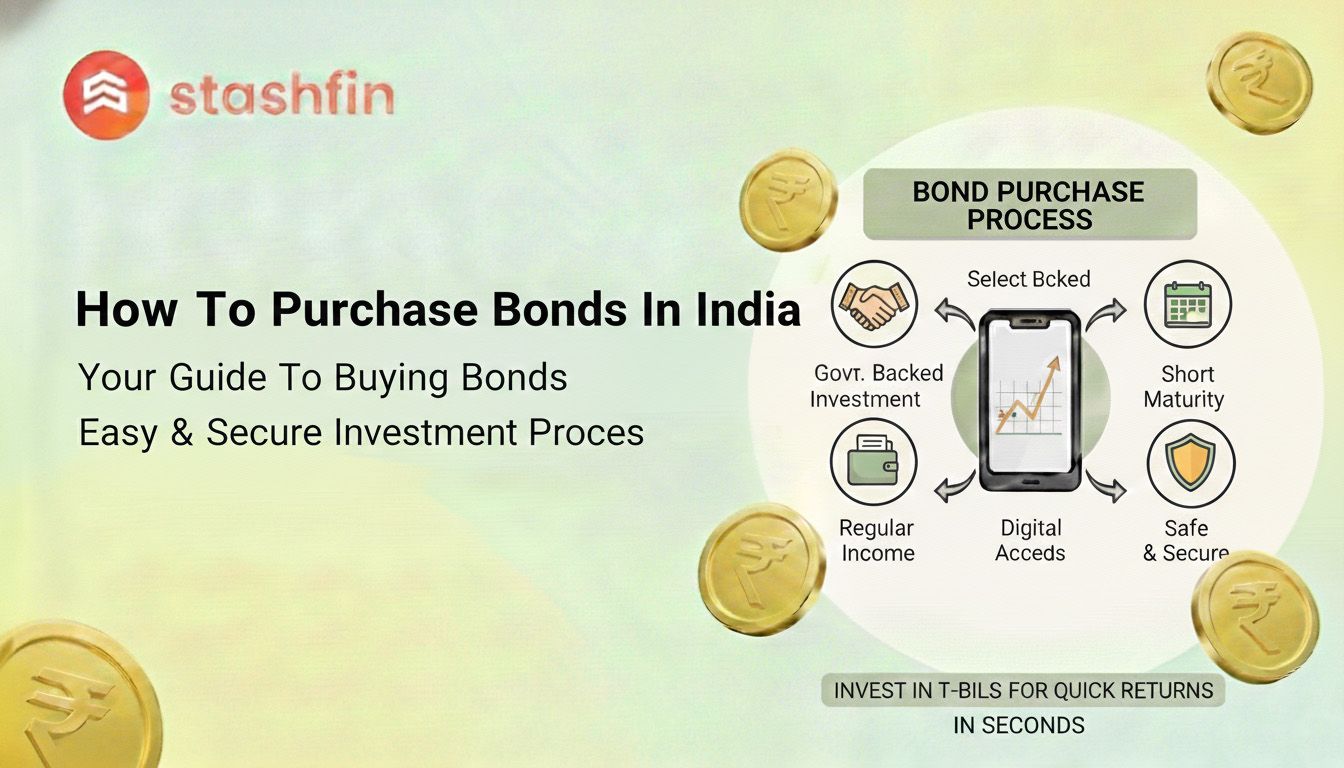

How to Purchase Bonds in India: The 2026 Master Guide
Purchasing a bond is essentially acting as a bank. You are lending your capital to an entity—a government or a company—and in exchange, they promise to pay you regular interest (coupons) and return your principal at a fixed date (maturity).


With the Budget 2026 updates, the tax landscape has shifted, making it even more important to know exactly where and how you are buying.
1. The Bond Hierarchy: What’s on the Menu?
Before you buy, you need to know which "risk bucket" you’re comfortable with:
- Sovereign Bonds (G-Secs): The gold standard. Backed by the Government of India. Zero default risk.
- PSU Bonds: Issued by government-owned companies (like NABARD or NHAI). High safety with slightly better yields than G-Secs.
- Corporate Bonds: Issued by private companies. Higher risk, but higher reward.
- Sovereign Gold Bonds (SGBs): A unique hybrid that tracks gold prices and pays a 2.5% annual interest.
2. Four Ways to Invest in 2026
Method 1: The Direct Path (RBI Retail Direct)
If you want to buy government bonds (G-Secs), Treasury Bills, or State Development Loans (SDLs) without paying a single rupee in commission, this is your portal.
- Register: Open a "Retail Direct Gilt" (RDG) account on the official RBI Retail Direct website.
- KYC: You’ll need your PAN, Aadhaar, and a cancelled cheque.
- Primary Auction: Every week, the RBI auctions new bonds. You place a "Non-Competitive Bid," meaning you accept the average price of the professional bidders.
- Payment: Use UPI or Net Banking. The bonds are held in your RDG account (no Demat required, though you can move them later).
Method 2: Online Bond Platform Providers (OBPP)
For corporate bonds, use SEBI-regulated platforms like GoldenPi, Wint Wealth, or Stable Money. They simplify complex bond prospectuses into clean dashboards.
- Log In: Connect your existing Demat account (Zerodha, Groww, etc.).
- Select & Filter: Filter by "Regular Monthly Income" or "AAA Rated."
- Transact: Pay via the platform. Bonds are transferred to your Demat account in T+1 days.
Method 3: Stock Exchanges (Secondary Market)
Just like stocks, bonds trade on the NSE and BSE.
- The Pro: You can find "discounted" bonds where the market price is lower than the face value.
- The Con: Liquidity can be low. You might see a bond you want, but there may be no sellers at that moment.
3. The 2026 Tax Update: What You Must Know
The 2026 Union Budget introduced major changes to the tax treatment of debt instruments:
Sovereign Gold Bonds (SGBs)
- Primary Subscription: Capital gains are tax-free ONLY if you subscribe during the original RBI issuance and hold until maturity (8 years).
- Secondary Market: If you buy SGBs from the exchange (secondary market), you no longer get the tax-free redemption benefit. Gains are now taxed as Long-Term Capital Gains (LTCG).
- Premature Redemption: Early exit before maturity is now taxable for all holders.
Listed Corporate Bonds & Debentures
- LTCG: Gains on bonds held for more than 12 months are taxed at 12.5% (indexation benefits have been removed).
- STCG: Gains held for less than 12 months are added to your income and taxed at your Slab Rate.
Interest Income
The annual interest (coupons) you receive from any bond is added to your "Income from Other Sources" and taxed at your applicable income tax slab rate.
4. Summary Checklist for Buyers
- Check the Credit Rating: Never ignore this. AAA is the safest. A or BBB is for those chasing high yields who can afford the risk.
- Yield to Maturity (YTM): Don't just look at the coupon rate. YTM tells you the real return you’ll get if you hold the bond until it ends.
- Payout Frequency: Do you want the money monthly to pay bills, or a lump sum at the end?
5. Frequently Asked Questions
1. Do I need a Demat account to buy bonds? For government bonds via RBI Retail Direct, you don't need one (the RDG account works). For corporate bonds and secondary market trading, a Demat account is mandatory.
2. What is the minimum investment for bonds in India? It varies. Government bonds (G-Secs and T-Bills) typically start at ₹10,000. Many corporate bonds on retail platforms now start at just ₹1,000 to ₹10,000.
3. Can I sell my bonds before they mature? Yes, if they are listed on the exchange. However, you might have to sell at a loss if market interest rates have risen since your purchase.

