


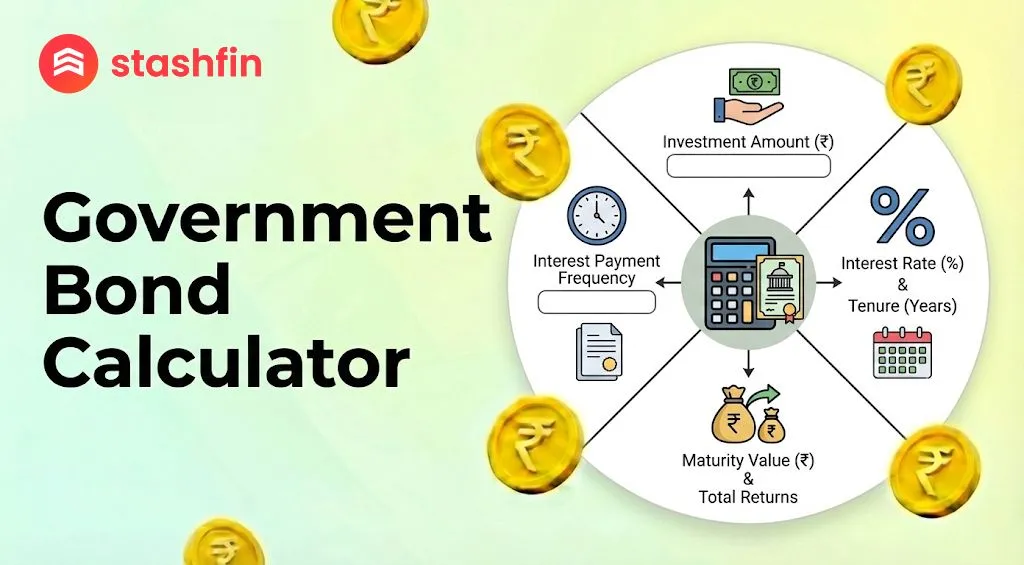
Government Bond Calculator: The Ultimate Guide for Beginners
Investing in government bonds is one of the safest ways to grow your money. Whether you are saving for a new home, your child’s school, or your own retirement, knowing how much you will earn is the first step. This guide will explain everything you need to know about using a government bond calculator and why bonds are a great choice in 2026.

What is a Government Bond?
Imagine you have a friend who needs to borrow $1,000 to build a small shop. You give them the money, and they promise to pay you $50 every year as a "thank you." After five years, they give your $1,000 back.
A government bond works exactly like that, but your "friend" is the government. When you buy a bond, you are lending money to the government so they can build roads, schools, and hospitals. Because the government is very unlikely to "go broke," these are some of the safest investments in the world.
Why Use a Government Bond Calculator?
While you can do basic math yourself, a calculator is essential for several reasons:
- Handles Semi-Annual Math: Most bonds pay interest every six months. A calculator tracks this "compound interest" accurately.
- Accounts for Inflation: In 2026, many bonds are "inflation-indexed." If grocery prices rise, your bond payout might too. The calculator handles these adjustments.
- Calculates Post-Tax Returns: The calculator can show you your "real" profit after the tax office takes its share.
Types of Government Bonds in 2026
Before using the calculator, identify which bond type you hold:
| Bond Type | How it Works | Best For... |
|---|---|---|
| Fixed-Rate Bond | The interest rate never changes. | People wanting a steady, predictable "paycheck." |
| Floating-Rate Bond | Interest goes up and down with the market. | People who think interest rates will rise soon. |
| Sovereign Gold Bond | Value is linked to the price of gold. | Saving in gold without owning physical bars. |
| Treasury Bills (T-Bills) | Short-term loans (usually < 1 year). | People who need their money back quickly. |
Understanding the Math: How the Calculator Works
The calculator uses a logic based on simple and compound interest.
The Basic Interest Formula
The simplest way to think about bond profit is:
$$Profit = \text{Principal} \times \text{Interest Rate} \times \text{Time}$$
For example, if you invest $1,000 at a 5% interest rate for 10 years:
- Annual Interest: $1,000 \times 0.05 = $50$
- Total Interest (10 years): $$50 \times 10 = $500$
- Total Money Back: $$1,500$
The "Yield" Secret
Calculators often display Yield to Maturity (YTM). This represents your total average profit per year. If you buy a $1,000 bond at a "discount" (e.g., for $980), your yield is higher because you paid less but still receive the full $1,000 back at the end.
Bonds vs. Bank Fixed Deposits (FDs)
In 2026, many investors are shifting from Bank FDs to Government Bonds due to:
- Safety: The government is the ultimate guarantor.
- Higher Limits: Bonds have no investment ceiling, unlike bank insurance limits.
- Liquidity: You can often sell your bond on an exchange without the heavy penalty fees associated with breaking an FD early.
Step-by-Step: How to Use the Calculator
- Find the "Face Value": Check your certificate for the round number (e.g., $1,000 or ₹10,000). Enter this as the Principal.
- Enter the "Coupon": This is your interest rate percentage (e.g., 7.2%).
- Set Payment Frequency: Most bonds are Semi-Annual (twice a year).
- Add the Maturity Date: Calculate the years remaining (e.g., from 2026 to 2035 is 9 years).
Tips for Maximum Profit
- Re-invest your interest: Don't spend your interest checks; put them back into new bonds to trigger compounding.
- Watch the News: Central Bank decisions in 2026 affect interest rates.
- Don't Panic: If market prices dip, simply wait until the maturity date to receive your full promised principal.


