


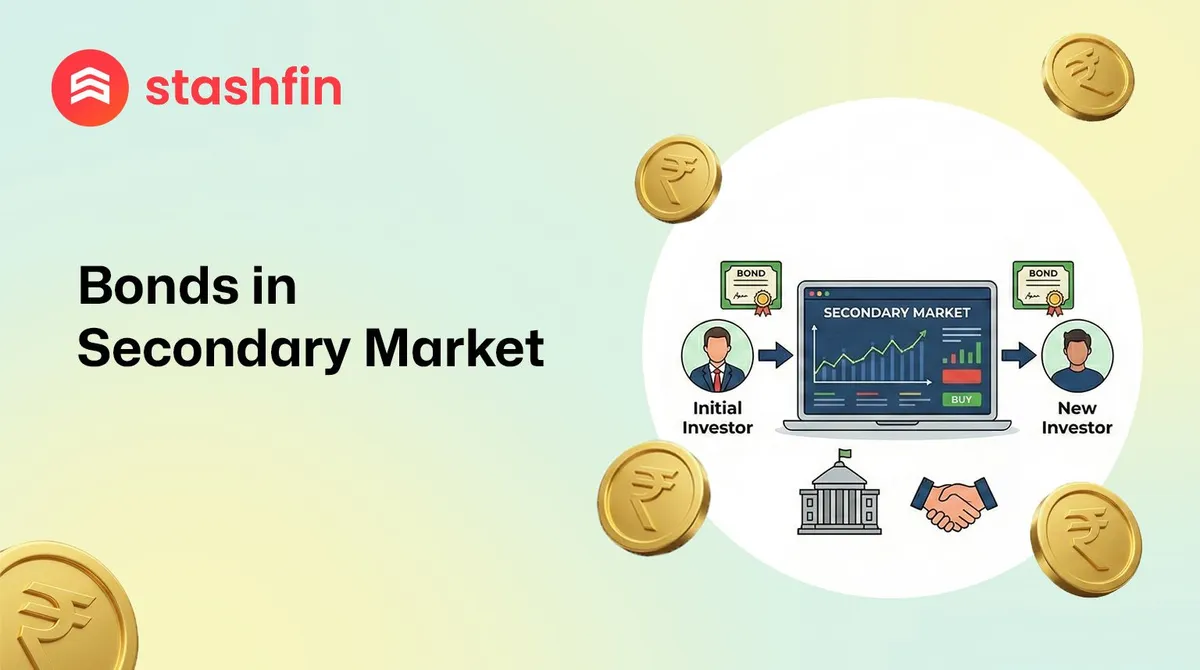
What are Bonds in the Secondary Market?
The secondary market is where investors trade existing bonds among themselves, rather than buying them directly from the issuer (the company or government).
If the primary market is where a bond is "born," the secondary market is where it "lives." This ecosystem ensures that you aren't trapped in an investment until its maturity date. For instance, if you hold Akara Capital Bonds and need your principal back before the 12-month tenure ends, you can simply sell them to another investor on the exchange.

Features and Benefits of Trading in the Secondary Market
Trading bonds in the secondary market offers strategic advantages that traditional fixed deposits simply cannot match:
- Exit Before Maturity: Unlike FDs with heavy premature withdrawal penalties, the secondary market lets you liquidate your bonds at current market prices.
- Price Discovery: Real-time demand and supply determine the bond's value, allowing for potential capital gains.
- Access to Shorter Tenures: You can buy a bond that was originally for 24 months but now has only 10 months remaining, fitting your specific goal.
- No Issuer Involvement: Trades happen between investors, making the process fast and efficient.
- Portfolio Rebalancing: Easily shift your funds from low-yield assets into high-yield 14.5% corporate bonds as market conditions change.
Primary vs. Secondary Bond Market
To be a successful investor, you must understand where you are buying your assets.
| Feature | Primary Market | Secondary Market |
|---|---|---|
| Seller | The Issuer (e.g., Akara Capital) | Another Investor |
| Price | Fixed at Face Value | Market-driven (Par, Premium, or Discount) |
| Funds Go To | The Company for business growth | The Selling Investor |
| Availability | Only during the "Issue" period | Anytime during market hours |
| Returns | Pre-determined Coupon | Yield to Maturity (YTM) |
How Bonds are Priced in the Secondary Market
In the secondary market, a bond's price is rarely exactly its "Face Value." It fluctuates based on the Inverse Relationship with interest rates.
As of January 2026, with the RBI Repo Rate at 5.25%:
- Trading at Premium: If you hold a bond with a 14.5% coupon, and new bonds are being issued at 10%, your bond is more valuable. You can sell it at a Premium (higher than face value).
- Trading at Discount: If market rates rise above your bond's coupon, your bond price may fall, allowing new buyers to get it at a Discount.


