


What is a Credit Purchase? The Modern Guide to Buying Now and Paying Later
Imagine you are standing at a checkout counter for a new laptop. You have the funds in your savings account, but instead of swiping your debit card, you use a credit card or a "Buy Now, Pay Later" (BNPL) option. You walk out with the laptop today, but the money stays in your account for another 30 days.
This is the essence of a Credit Purchase.

In the financial landscape of 2026, credit purchases are no longer just "loans for people who don't have money." They have evolved into a sophisticated strategic tool used by savvy consumers and multi-billion-dollar corporations alike to manage liquidity, earn rewards, and optimise cash flow.
This guide provides a deep dive into what credit purchases are, how they function structurally, and how you can use them to your advantage without falling into a debt trap.
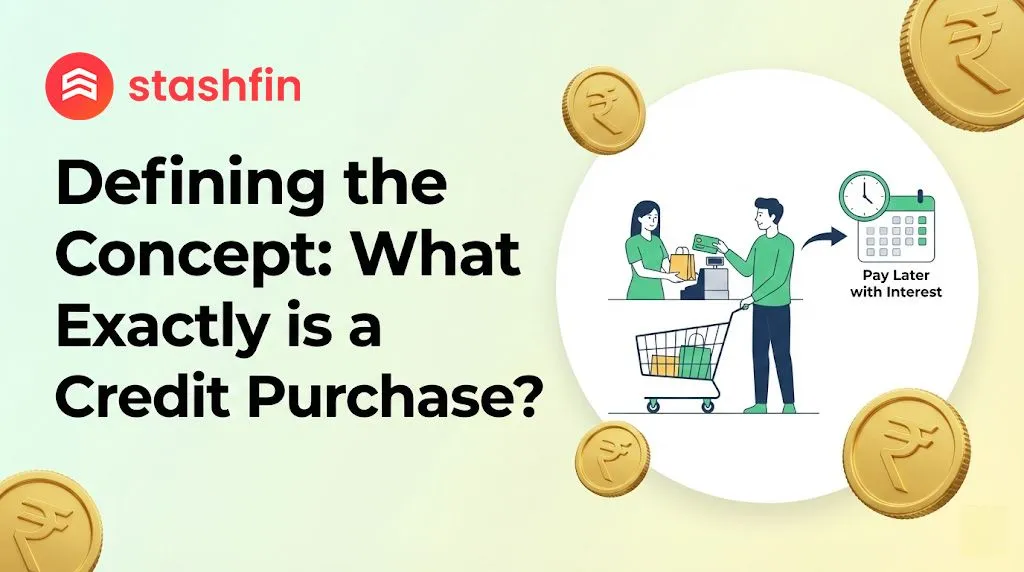
Defining the Concept: What Exactly is a Credit Purchase?
A Credit Purchase occurs when a buyer acquires goods or services immediately but agrees to pay the seller (or a third-party lender) at a future date. Unlike a cash transaction, where value is exchanged instantly, a credit purchase is based on a promise to pay.
In a credit purchase, the "payment" is effectively a liability created on your balance sheet. You get the utility of the product today, while the financial settlement is deferred.
The Two Main Arenas of Credit Purchases:
- B2C (Business to Consumer): This includes everyday transactions like using a credit card at a grocery store, taking a car loan, or using an EMI facility for a smartphone.
- B2B (Business to Business): Often called Trade Credit, this is where companies buy raw materials or inventory on "Net-30" or "Net-60" terms, meaning they pay the supplier 30 or 60 days after delivery.
How a Credit Purchase Works: The Mechanics
The process of a credit purchase involves more than just a buyer and a seller. In the digital age, a complex web of intermediaries ensures that the transaction is secure and the seller is guaranteed payment.
The Transaction Cycle:
- Authorisation: When you swipe your card or click "Buy with Credit," the merchant sends a request to the Acquiring Bank. This request travels through a network (like Visa or Mastercard) to your Issuing Bank to check if you have enough "room" in your credit limit.
- Authentication: The bank verifies your identity (via PIN, OTP, or biometrics) to ensure the purchase is legitimate.
- Clearing and Settlement: The bank pays the merchant (usually within 24-48 hours), minus a small processing fee. At this point, you no longer owe the merchant; you owe the bank.
- Billing: At the end of your billing cycle, the bank sends you a statement. You then choose to pay the full amount (interest-free) or carry the balance (with interest).
Common Types of Credit Purchase Tools in 2026
The way we "buy on credit" has diversified significantly over the last few years. Here are the primary instruments used today:
1. Revolving Credit (Credit Cards & Lines of Credit)
This is the most flexible form. You are given a limit (e.g., ₹2 Lakhs). You can spend ₹50,000, pay it back, and the limit "revolves" back to ₹2 Lakhs. You only pay interest on what you use and haven't paid back by the due date.
2. Buy Now, Pay Later (BNPL)
BNPL has become the go-to for e-commerce. It typically breaks a small purchase into 3 or 4 interest-free installments. It is a "point-of-sale" credit purchase that is often easier to qualify for than a traditional credit card.
3. Installment Credit (EMIs and Loans)
Used for high-value items like cars, homes, or premium electronics. You borrow a fixed amount for a specific purchase and pay it back in fixed monthly installments over a set period.
4. Trade Credit (Business Perspective)
In the business world, credit purchases are the lifeblood of operations. A retailer buys 1,000 units of a product on credit, sells them to customers for cash, and then uses that cash to pay the supplier. This allows the business to grow without needing massive upfront capital.
Credit Purchase vs. Cash Purchase: A Strategic Comparison
| Feature | Cash Purchase | Credit Purchase |
|---|---|---|
| Immediate Outlay | 100% of the price | ₹0 (or a small down payment) |
| Total Cost | Sticker price only | Sticker price + potential interest/fees |
| Liquidity | Reduces your available cash | Preserves your cash for other needs |
| Credit Score Impact | None | High (Builds or hurts your score) |
| Consumer Protection | Limited | High (Fraud protection & chargebacks) |
| Rewards/Points | Rare | Common (Cashback, miles, points) |
The "Cost" of Buying on Credit
Nothing in finance is truly free. While a credit purchase offers convenience, it comes with specific costs that you must manage:
- Interest (APR): If you don't pay your statement in full, the bank charges interest. In 2026, credit card APRs can range from 15% to 42% annually.
- Opportunity Cost: Every rupee you commit to a future credit payment is a rupee you cannot save or invest elsewhere.
- Processing & Annual Fees: Some credit instruments carry "joining fees" or "convenience fees" charged by the merchant or the lender.
Pro Tip: Always calculate the Effective Annual Rate (EAR) of your credit purchase if you plan on paying in installments. A "low monthly interest" can often hide a very high annual cost.
Why Credit Purchases are a "Double-Edged Sword" for Your Credit Score
Your credit score is essentially a grade of how well you handle credit purchases.
How it Helps:
When you make a credit purchase and pay it back on time, you are sending a signal to credit bureaus (like CIBIL) that you are a reliable borrower. Over time, this "positive data" increases your score, making you eligible for lower interest rates on major loans like mortgages.
How it Hurts:
- High Utilisation: If you have a ₹1 Lakh limit and your credit purchases total ₹90,000, your Credit Utilisation Ratio is 90%. Bureaus see this as a sign of financial stress, which can drop your score even if you pay on time.
- Missed Payments: A single missed payment on a credit purchase can stay on your record for up to seven years.
Strategic Use: When to Choose Credit Over Cash
Serious financial management involves knowing when to use which tool.
Use Credit When:
- You want the rewards: If you have the cash but want to earn 5% cashback or travel miles.
- You need consumer protection: For large online purchases or travel bookings where you might need to dispute a charge.
- You are managing cash flow: When you have a large expense today but your invoice or salary is coming in 15 days.
- In Emergencies: When an unexpected car repair or medical bill exceeds your current liquid savings.
Avoid Credit When:
- It’s an impulse buy: If you are buying something you don't need simply because "future you" will pay for it.
- The interest is too high: If the EMI interest rate is higher than the return you’d get by keeping your money invested.
- You are already over-leveraged: If your total monthly debt payments exceed 40% of your take-home income.
The Bottom Line
A credit purchase is more than just a transaction; it is a tool of leverage. When used with discipline, it allows you to build a powerful credit profile, enjoy purchase protections, and keep your cash working for you in high-interest savings or investments.
The key is to remember that credit is not "extra money", it is a temporary bridge. In 2026, the most successful individuals are those who use credit to buy what they need, while keeping the cash to build what they want.


