


Overview
When you need quick funds, the most common dilemma is choosing between a personal loan vs credit card. Both options allow you to borrow money, but they work very differently and suit different financial needs. Making the right choice depends on factors such as the amount you need, repayment flexibility, interest rates, and your spending discipline.

In essence, both personal loans and credit cards offer a way in which you can borrow funds within a short period. Defaulting on either type of loan can negatively impact your credit score. Understanding how each option works will help you decide which among a loan or a credit card is better for your situation.
What is a Personal Loan?
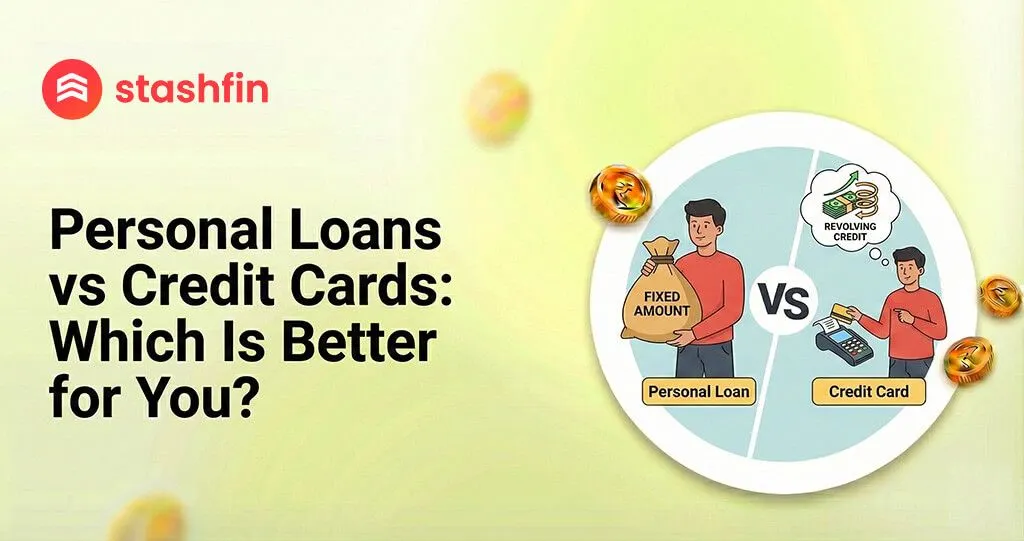
A personal loan is an all-purpose loan that can be drawn on to meet your financial needs. No collateral is needed, and hence, the approval is quicker and usage is flexible. You will receive a sum of money upfront, with a predetermined time period to repay it fully through EMIs.
Key features of a personal loan:
• Fixed loan amount credited directly to your bank account
• Fixed loan tenure, usually between 3 and 36 months
• Fixed EMIs covering both principal and interest
• No restriction on end use of funds
Personal loans are commonly used for:
• Medical emergencies
• Debt consolidation
• Travel or weddings
• Home renovation
Personal loans usually come with lower interest, provided you have a sufficiently high credit score. This makes them suitable for planned or large expenses.
What is a Credit Card?
A credit card provides you with a revolving line of credit. If you apply for a credit card, on the other hand, you will have constant access to your funds as long as your account remains in good standing. You do not receive the entire amount upfront. Instead, you can spend within a fixed credit limit.
Key features of a credit card:
• Revolving credit limit
• Interest charged only on the amount used
• Minimum due payment option
• Easy access for day-to-day spending
You will also pay interest based only on the amount that you use. Also, you will be occasionally eligible to extend your credit limits. Credit cards are best for short-term expenses that can be repaid quickly.
Key Differences Between Personal Loans and Credit Cards
Understanding the difference between a credit card loan and a personal loan app helps you avoid unnecessary interest costs.
| Feature | Personal Loan | Credit Card |
|---|---|---|
| Access to funds | One-time lump sum | Revolving credit |
| Interest structure | Fixed | Variable |
| Repayment | Fixed EMIs | Minimum due or full payment |
| Best for | Large expenses | Small, frequent spends |
| Risk of overspending | Low | High |
Continuing Debt: The good and bad thing about credit cards is that they come with extreme ease of purchasing simply by swiping. This makes it easy to fall into a cycle of debt. With personal loans, however, you know exactly when your loan will end.
How Credit Score Affects Personal Loans and Credit Cards
Your credit score plays a major role in both options.
For personal loans:
• Higher credit score = lower interest rate
• Better chances of a higher loan amount
• Faster approval
For credit cards:
• Determines credit limit
• Affects interest rate and card eligibility
• Impacts reward benefits
Missing payments on either option can reduce your score, making future borrowing expensive.
Differences in Personal Loans vs Credit Cards Interest Rate
Interest is one of the biggest deciding factors in a personal loan versus a credit card.
Interest Rates: Interest rate for Personal Loans will depend on your credit score – a higher credit score equals a lower interest rate. Personal loans, in general, come with lower interest rates than credit cards.
| Aspect | Personal Loan | Credit Card |
|---|---|---|
| Interest type | Fixed | High and variable |
| Typical range | 9.75% – 22% p.a. | 30% – 45% p.a. |
| Monthly payment | Same every month | Changes based on usage |
Furthermore, once your interest rate has been decided, it will not change over the course of your tenure. With credit cards, interest depends on outstanding balance, making repayments unpredictable.
This clearly explains why many borrowers ask, "Is a personal loan cheaper than a credit card?" In most cases, yes—especially for large expenses.
What to Consider Before Choosing a Personal Loan or Credit Card
You must consider the following factors before choosing a personal loan or a credit card.
1. Size of Expense
Personal Loans are ideal for situations where you require a lump sum amount of money to pay for several items. Credit Cards are better if you have small expenses that can be cleared quickly.
2. Repayment Ability
• Choose a personal loan if you want structured EMIs.
• Choose a credit card if you can repay in full every month.
3. Spending Discipline
Credit cards encourage impulse spending. Personal loans are more controlled.
4. Cost of Borrowing
Compare credit card interest vs personal loan interest carefully before deciding.
Conclusion
When comparing a personal loan vs a credit card, there is no one-size-fits-all answer. Personal loans work best for large, planned expenses with predictable repayment. Credit cards are suitable for short-term needs and convenience-based spending.
Therefore, it can be concluded that personal loans are the better option should you need to borrow money for larger expenses. They give stability, lower interest rates, and less risk of falling into a debt trap. Credit cards, while flexible, require strict discipline to avoid high interest costs.
With Stashfin’s personal loans, you can borrow responsibly with transparent terms, quick approvals, and flexible repayment options. These loans make it easier to manage your finances without unnecessary stress.


