


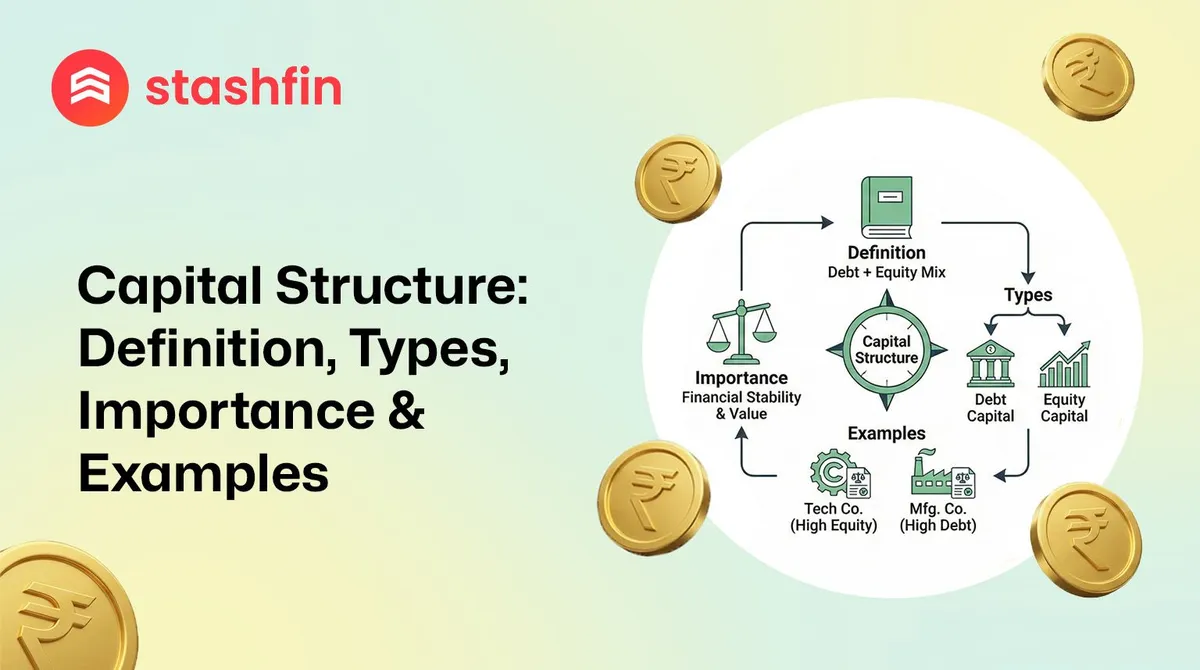
Understanding Capital Structure: Balancing Debt & Equity
What is Capital Structure?
Capital structure is the specific mix of debt and equity used by a company to finance its overall operations and growth. While Financial Structure includes all liabilities, Capital Structure specifically focuses on long-term sources of funds.

In simpler terms, it is how a firm decides to pay for its assets. For example, if a company has a capital structure of 60% Equity and 40% Debt, it means for every ₹100 of assets, ₹60 came from shareholders and ₹40 was borrowed from lenders.
Types of Capital Structure
Most companies fall into one of these four categories based on their funding choices:
Equity-Heavy Structure
- Relies primarily on issuing shares or using retained earnings.
- Advantage: Low financial risk; no fixed interest obligations.
- Disadvantage: Dilutes ownership and is usually more expensive than debt.
Debt-Heavy Structure (Leveraged)
- Relies heavily on bank loans, debentures, or Corporate Bonds.
- Advantage: Interest is tax-deductible; doesn't dilute control.
- Disadvantage: High risk of insolvency if cash flows fail to cover interest payments.
Hybrid Capital Structure
- Uses instruments like Convertible Bonds or Preference Shares that blend features of both debt and equity.
Optimal Capital Structure
- The "Holy Grail" of finance, a perfect balance that minimises the Weighted Average Cost of Capital (WACC) while maximising the market value of the company.
Importance of Capital Structure
Why should an investor care about a company's capital mix?
- Determines Risk Profile: A high debt-to-equity ratio signals a "highly leveraged" firm. While this can amplify returns during growth, it increases the risk of default during downturns.
- Cost of Capital: Debt is generally cheaper than equity. A well-structured capital mix reduces the cost of funds, directly improving the bottom line.
- Tax Efficiency: Since interest on debt is a tax-deductible expense, it acts as a "tax shield" for the company.
- Financial Flexibility: A sound structure ensures the company can raise more funds easily when an expansion opportunity arises.
- Investor Confidence: A stable mix of debt and equity attracts both conservative bondholders and growth-seeking shareholders.
Real-World Capital Structure Examples
How do different industries structure their capital?
| Industry Type | Typical Structure | Why? |
|---|---|---|
| Tech Startups | High Equity | High uncertainty; lack of collateral for loans. |
| Utilities | High Debt | Stable, predictable cash flows to service interest. |
| Finance (NBFCs) | Balanced/Debt-Led | Companies issue bonds to raise capital for lending. |
| Manufacturing | Mixed | Rely on a blend of term loans and equity for growth. |
Factors Affecting Capital Structure Decisions
- Cash Flow Position: Only firms with steady cash flows should opt for high-interest debt.
- Interest Coverage Ratio: Can the company easily pay its interest from its operating profits?
- Control Considerations: If founders want to keep 100% control, they will prefer Debt (Bonds) over Equity.
- Market Conditions: When interest rates are low, debt becomes highly attractive.


