


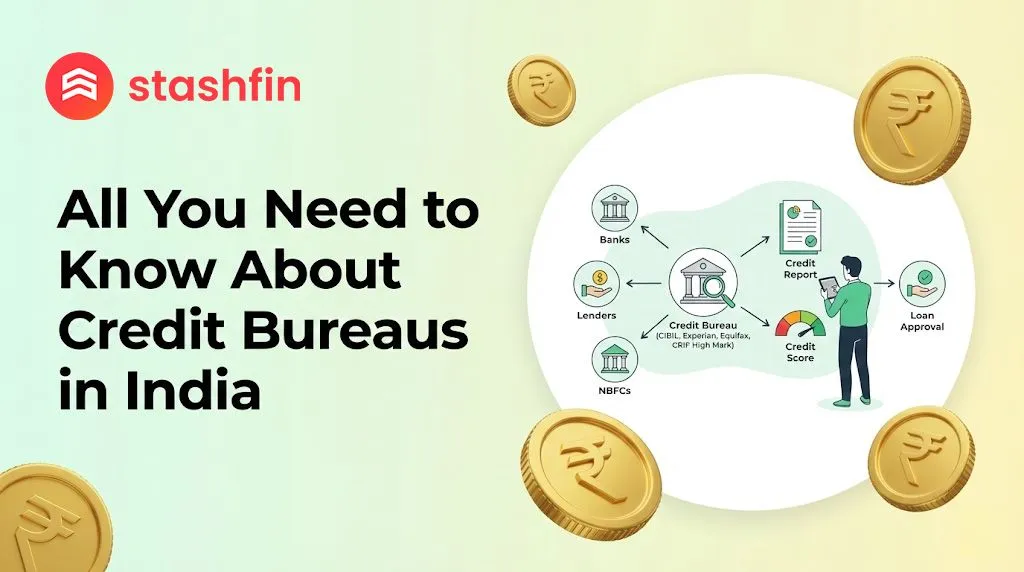
How Do Credit Bureaus Work in India?
In the modern financial landscape of 2026, your "financial reputation" is no longer built on a handshake with a local bank manager. It is encoded in data, analysed by algorithms, and stored in the databases of institutions known as Credit Bureaus.

If you have ever applied for a credit card, a home loan, or even a "Buy Now, Pay Later" (BNPL) scheme, your eligibility was likely determined within seconds by a Credit Bureau. But what exactly are these entities, and how do they hold so much power over your financial future?
This comprehensive guide explores the pivotal role of credit bureaus in India and the mechanics behind how they track, score, and report your credit behavior.
Defining the Credit Bureau: India’s Financial Watchdogs
A Credit Bureau (also known as a Credit Information Company or CIC) is an independent organization that collects, aggregates, and analyzes credit-related data of individuals and businesses.
In India, these bureaus are licensed and regulated by the Reserve Bank of India (RBI) under the Credit Information Companies (Regulation) Act, 2005. Their primary goal is to provide lenders with a factual "history" of a borrower's past behavior to help them predict future repayment patterns.
The Four Major Credit Bureaus in India
While there are many global players, only four main bureaus are authorized by the RBI to operate in the Indian market:
- CIBIL (TransUnion CIBIL): The oldest and most widely recognized bureau in India.
- Experian: Known for its advanced analytics and global presence.
- Equifax: Frequently used for both individual and microfinance credit data.
- CRIF High Mark: A major player in the micro-lending and insurance sectors.
The Primary Role of Credit Bureaus in India
Credit bureaus act as the "middlemen" of information between you and the lenders. Their role can be broken down into three core functions:
Risk Mitigation for Lenders
Before credit bureaus existed, banks had no way of knowing if a new customer had defaulted on a loan at a different bank. Bureaus solve this "information asymmetry." By providing a comprehensive report, they help banks avoid high-risk borrowers, thereby maintaining the stability of the entire banking system.Standardizing Credit Evaluation
Bureaus provide a Credit Score, a three-digit numerical summary of your credit history (typically ranging from 300 to 900). This allows lenders to process millions of applications instantly using automated systems, rather than manual reviews.Promoting Financial Discipline
Because consumers know their actions are being recorded, bureaus act as an invisible hand that encourages timely repayments. A high score grants you "bargaining power," allowing you to demand lower interest rates and better loan terms.
How Do Credit Bureaus Work? The Data Lifecycle
The process of how a bureau works is a continuous loop of data collection, processing, and reporting.
Step 1: Data Collection
Every month, banks, NBFCs (Non-Banking Financial Companies), and digital lenders send a data dump to the four credit bureaus. This data includes:
- Identity Details: Name, PAN, Aadhaar, DOB, and addresses.
- Account Information: Types of loans (Home, Personal, Credit Card), dates opened, and current balances.
- Payment History: Whether you paid on time, delayed by 30/60/90 days, or defaulted.
- Credit Inquiries: How many times you have applied for new credit recently.
Step 2: Data Aggregation and Matching
The bureau's sophisticated algorithms match this incoming data to your unique profile. Even if you use a different phone number at two different banks, the bureau uses your PAN or Aadhaar to ensure all data points land in the correct folder.
Step 3: Calculation of the Credit Score
Using proprietary mathematical models, the bureau calculates your score. While each bureau has its own "secret sauce," the weightage generally follows this structure:
- Payment History (35%): Your track record of on-time payments.
- Credit Utilisation (30%): How much of your available limit you are using.
- Credit Mix (15%): The balance between secured (Home) and unsecured (Credit Card) loans.
- Credit History Length (15%): How long you’ve been using credit.
- New Credit (5%): Recent inquiries and newly opened accounts.
Step 4: Generating the Credit Information Report (CIR)
When you apply for a loan, the lender requests your Credit Information Report (CIR). The bureau sells this report to the lender, who then uses it to decide whether to approve or reject your application.
Why Your Credit Score Varies Across Different Bureaus
It is common to see a score of 780 on CIBIL but 745 on Experian. This happens for three main reasons:
- Reporting Cycles: Bank A might report data to CIBIL on the 1st of the month, but to Experian on the 15th.
- Scoring Models: Each bureau weighs factors slightly differently. Equifax might penalize a late payment more harshly than CRIF.
- Data Completeness: Some smaller cooperative banks or NBFCs might only report to one or two bureaus rather than all four.
The Rights of a Consumer Regarding Credit Bureaus
In 2026, the RBI has empowered consumers with specific rights to ensure transparency:
- One Free Full Report: You are entitled to one free full credit report from each of the four bureaus every calendar year.
- Right to Dispute: If there is an error on your report (e.g., a loan you never took), the bureau is legally mandated to resolve the dispute within 30 days.
- Data Privacy: Bureaus cannot sell your specific credit data to third-party marketers without your explicit consent.
Best Practices to Manage Your Relationship with Bureaus
Since you cannot "opt-out" of being tracked by a bureau, the best strategy is to manage the data they receive:
- Monitor Regularly: Check your score at least once a quarter to spot identity theft or reporting errors early.
- Avoid "Credit Hunger": Don't apply for multiple credit cards simultaneously. Each application triggers a "Hard Inquiry," which can temporarily dip your score.
- The 30% Rule: Keep your credit card utilization below 30%. High utilization signals to the bureau that you are over-leveraged.
- Keep Old Accounts Open: The length of your credit history matters. Even if you don't use your oldest credit card, keep it active to maintain a longer "vintage" on your report.
The Bottom Line
Credit bureaus are the backbone of the Indian financial system. By transforming your financial habits into a standardized score, they enable the fast, digital lending we see in 2026. Understanding their role is the first step toward taking control of your financial identity.
A high credit score isn't just a number, it's an asset that saves you money through lower interest rates and opens doors to premium financial products.


