


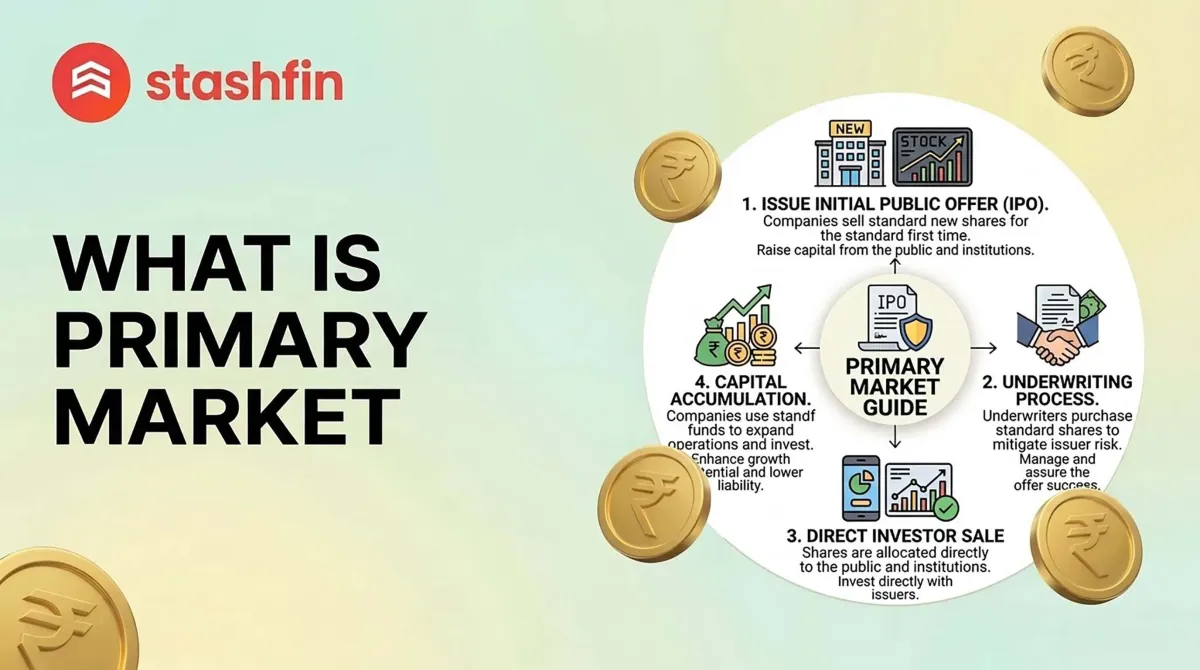
What Is the Primary Market? A Comprehensive 2026 Guide
In the dynamic financial landscape of 2026, the Indian stock market has reached unprecedented heights, driven by a surge in retail participation and a robust startup ecosystem. If you have ever applied for an IPO (Initial Public Offering) or heard of a company "going public," you have already interacted with the Primary Market.

Often referred to as the "New Issue Market," the primary market is the birthplace of securities. It is the platform where companies, governments, and other institutions raise capital for the first time by issuing new shares or bonds directly to investors.
What is the Primary Market?
The primary market is a segment of the capital market where newly created securities are issued and sold to the public for the first time. In this marketplace, the transaction happens directly between the issuer (the company or government) and the investor.
Unlike the secondary market (where investors trade among themselves), the money raised in the primary market goes directly to the issuer to fund business expansions, research and development, or debt repayment.
Key Functions of the Primary Market
The primary market serves as the foundation of the financial system, performing several critical roles:
- Capital Formation: It helps companies and the government mobilize savings from individuals and institutions into productive investments like factories, infrastructure, and technology.
- Underwriting Services: Investment banks and financial institutions act as underwriters, guaranteeing that the issue will be successful. If the public doesn't buy all the shares, the underwriter steps in to purchase the remainder.
- Price Discovery: Through processes like "Book Building," the primary market helps determine the fair market value of a company based on investor demand.
- Economic Growth: By providing funds to innovative startups and established firms, the primary market fuels job creation and national development.
Types of Primary Market Issuance
In 2026, several routes allow entities to raise capital in India’s primary market:
A. Initial Public Offering (IPO)
The most popular method where a private company offers its shares to the general public for the first time. This transition makes the company "publicly traded" on exchanges like the NSE or BSE.
B. Follow-on Public Offer (FPO)
When an already listed company decides to raise additional equity from the public, it issues an FPO. This is often used to fund massive expansion projects or to dilute the promoter’s stake.
C. Rights Issue
In a rights issue, a company offers additional shares only to its existing shareholders at a discounted price. This allows loyal investors to maintain their ownership percentage.
D. Private Placement
The company offers securities to a select group of institutional investors (like mutual funds or insurance companies) rather than the general public. It is a faster, less regulated way to raise capital.
E. Qualified Institutional Placement (QIP)
A streamlined process for listed companies to issue shares or convertible debentures to Qualified Institutional Buyers (QIBs). In 2026, QIPs have become a preferred route for Indian tech firms to raise quick capital.
The Players: Who is Involved?
The primary market is a highly regulated ecosystem involving multiple stakeholders:
- The Issuer: The company or government body seeking funds.
- The Investors: Retail individuals, High Net-worth Individuals (HNIs), and Institutional Investors (Mutual Funds, FPIs).
- Merchant Bankers: They act as lead managers, handling legalities, pricing, and marketing.
- Underwriters: They take the risk of ensuring the total subscription of the issue.
- SEBI (Securities and Exchange Board of India): The regulator that ensures transparency and protects the interests of retail investors.
Primary Market vs. Secondary Market
The most common confusion for new investors is the difference between these two markets.
| Feature | Primary Market | Secondary Market |
|---|---|---|
| Common Name | New Issue Market | After-Market (Stock Exchange) |
| Type of Security | Fresh / New Securities | Existing / Previously Issued |
| Direct Involvement | Issuer is directly involved | Issuer is not involved (Investor to Investor) |
| Price Determination | Fixed by management/Underwriters | Determined by demand and supply |
| Where to Buy? | Through the Company (IPO App) | On Stock Exchanges (NSE/BSE) |
Benefits of Investing in the Primary Market
Why should you, as a retail investor, look at the primary market in 2026?
- Lower Cost: There are no brokerage fees involved when you apply for an IPO. You pay the exact issue price.
- Potential for Listing Gains: High-demand IPOs often list at a price significantly higher than the issue price, providing instant profit.
- Transparency: Companies going public must release a Prospectus, a detailed document outlining their financials, risks, and growth plans.
- Portfolio Diversification: It allows you to enter new sectors and upcoming industries at the ground floor level.
Conclusion
The primary market is where ambition meets capital. It is the launchpad for the corporate giants of tomorrow and a vital avenue for investors to participate in the India growth story. By understanding how new issues work, you can make more informed decisions about where to park your hard-earned money.
In the fast-paced world of 2026, financial agility is about more than just credit—it’s about having a holistic view of the market. At Stashfin, we empower you with the credit you need to stay flexible, while we continue to share insights to help you grow your wealth.


