


What Is Portfolio Management?
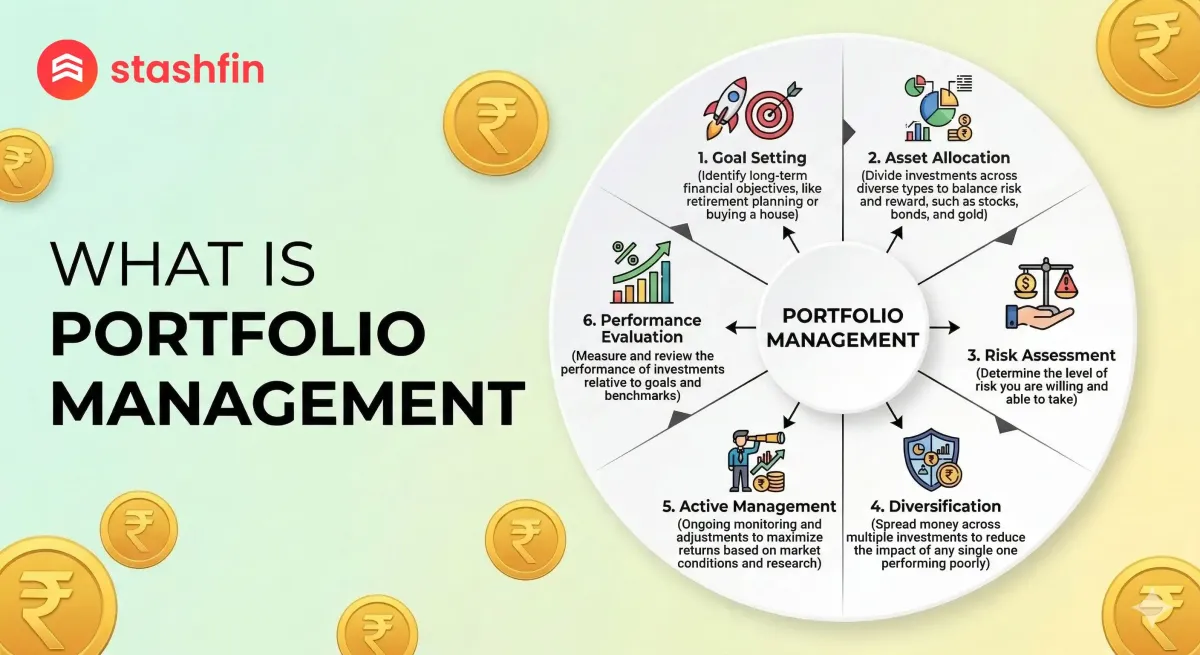
Portfolio management is the professional and strategic process of selecting, prioritizing, and overseeing a group of investments—such as stocks, bonds, gold, and real estate—to achieve specific long-term financial goals. It involves balancing risk versus reward to ensure that your money works as hard as you do.

In 2026, portfolio management has shifted from being "product-centric" to "goal-centric." It is no longer about which mutual fund is trending; it is about whether your asset mix will fund your child’s education or your early retirement.
The Core Pillars of Portfolio Management
To manage a portfolio effectively, you must master three fundamental concepts:
A. Asset Allocation
This is the most important decision you will make. Asset allocation is the process of dividing your investments among different asset categories.
- Equity: For high growth and wealth creation.
- Debt: For stability and regular income.
- Gold/Commodities: For inflation protection and hedging.
- Cash/Liquid Funds: For emergency needs and flexibility.
B. Diversification
Diversification is the only "free lunch" in finance. It involves spreading your investments within an asset class. For example, instead of putting all your equity money into one "hot" tech stock, you spread it across sectors like Banking, Pharma, and Renewable Energy.
C. Rebalancing
Over time, market movements can change your original plan. If your stocks perform exceptionally well, your "60% Equity" allocation might grow to 75%. Rebalancing is the act of selling a portion of the outperforming asset to buy more of the underperforming one, bringing your risk back to its original level.
Types of Portfolio Management Strategies
In 2026, investors typically choose between four main management styles based on their time and expertise:
| Type | Strategy | Best For... |
|---|---|---|
| Active Management | Buying and selling frequently to "beat the market" index. | Aggressive investors seeking high returns. |
| Passive Management | Tracking a market index (like Nifty 50) with low-cost ETFs. | Long-term investors who prefer low fees. |
| Discretionary | The manager has full authority to make trades on your behalf. | Busy professionals and HNIs. |
| Non-Discretionary | The manager advises, but the investor makes the final call. | Investors who want guidance but retain control. |
The 5-Step Process of Managing a Portfolio
Modern portfolio management follows a disciplined, 5-step cycle:
- Goal Setting: Clearly define your objectives (e.g., "₹2 Crores in 15 years").
- Risk Assessment: Determine your "sleep-well-at-night" factor. How much volatility can you handle?
- Security Selection: Choosing the right stocks, bonds, or funds based on research.
- Implementation: Executing the trades and setting up automated SIPs.
- Monitoring & Evaluation: Reviewing performance annually and adjusting for life changes.
Why Portfolio Management is Crucial in 2026
- Hyper-Personalization: With AI tools, portfolios are now tailored to your specific tax bracket and life events.
- Tax Efficiency: In the 2025–26 fiscal year, managing your exits to minimize Capital Gains Tax (CGT) has become a core part of the strategy.
- Emotional Discipline: A structured portfolio prevents "panic selling" during market crashes by focusing on long-term goals rather than short-term noise.
Conclusion
Portfolio management is the bridge between your current savings and your future dreams. It transforms a random collection of investments into a cohesive, goal-driven machine. In 2026, the complexity of global markets means you cannot afford to "invest and forget." Whether you do it yourself using digital tools or hire a professional, staying disciplined with your asset allocation is the only guaranteed way to build lasting wealth.
At Stashfin, we provide the credit you need to stay flexible in the short term, so your long-term investments can stay untouched and continue to compound.


