


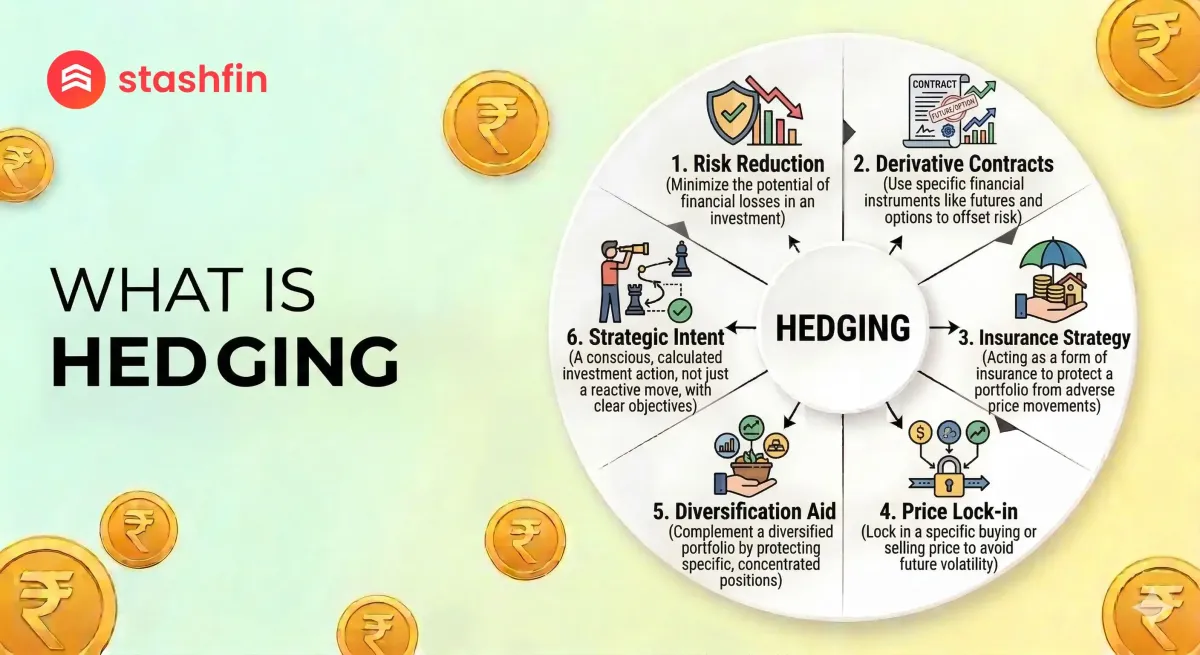
What Is Hedging? Your Ultimate Guide to Financial Protection
Hedging is a risk management strategy used to offset potential losses in an investment by taking an opposite position in a related asset. In simpler terms, it is like buying an insurance policy for your finances. While you don’t hope for a disaster, you have a "hedge" in place to ensure that if one part of your portfolio goes down, another part protects you.

Hedging isn't about making a profit; it’s about reducing uncertainty. By using hedging techniques, you trade off a bit of potential gain in exchange for a significant reduction in potential loss.
How Hedging Works: The Balancing Act
The core principle of hedging is correlation. To hedge effectively, you must find an asset that typically moves in the opposite direction of your primary investment.
A Practical Example:
Imagine you own shares in an airline company. In 2026, you are worried that fuel prices might skyrocket, which would hurt the airline's profits and drop its stock price.
- The Hedge: You buy "Future Contracts" on crude oil.
- The Result: If fuel prices rise, your airline stocks might lose value, but your oil futures will gain value. The profit from the oil hedge "offsets" the loss from the stocks.
Common Hedging Strategies in 2026
Investors and businesses use various "tools" to create a hedge. Here are the most common ones:
A. Diversification
The simplest form of hedging. By spreading your money across different asset classes (Stocks, Gold, Bonds, Real Estate), you ensure that a crash in one market doesn't wipe out your entire wealth.
B. Derivatives (Options and Futures)
These are formal financial contracts:
- Put Options: Gives you the right to sell an asset at a specific price. If the market crashes, your "Put" acts as a floor, preventing your losses from going further.
- Futures: A commitment to buy or sell an asset at a future date for a fixed price, locking in your costs.
C. Safe-Haven Assets
In times of high inflation or geopolitical tension in 2026, investors often "hedge" their currency risk by buying Gold or Sovereign Gold Bonds (SGBs). Gold is historically negatively correlated with the stock market.
Hedging in Your Everyday Life
You might not realize it, but you likely practice hedging in your personal life already:
- Insurance: Buying car insurance is a hedge against the financial cost of an accident.
- Fixed Interest Rates: Opting for a fixed-rate personal loan instead of a floating-rate one is a hedge against the risk of the RBI increasing interest rates.
- Emergency Funds: Maintaining an emergency fund is a hedge against sudden job loss or medical emergencies.
The Pros and Cons of Hedging
| Benefits of Hedging | Drawbacks of Hedging |
|---|---|
| Limits Downside Risk: Protects you during market crashes. | Cost of Hedging: You have to pay "premiums" or fees for the hedge. |
| Reduces Volatility: Makes your portfolio returns smoother. | Capped Upside: If the market booms, your hedge might eat into your profits. |
| Peace of Mind: Allows you to stay invested for the long term. | Complexity: Requires a good understanding of financial tools. |
Is Hedging Right for You?
In 2026, hedging is no longer just for Wall Street traders. With the availability of mini-options and digital gold, even retail investors can hedge. However, you should consider hedging if:
- You have a concentrated portfolio (too much money in one stock).
- You are approaching a financial milestone (like retirement) and cannot afford a sudden 20% drop in your wealth.
- You are a business owner dealing with foreign exchange or fluctuating raw material costs.
Conclusion
Hedging is the financial equivalent of wearing a seatbelt. It doesn't prevent the car from crashing, but it significantly reduces the damage if it does. In the fast-paced world of 2026, where market cycles are shorter and more intense, a well-placed hedge can be the difference between financial ruin and staying the course.
Whether you are using a Credit Line to bridge a temporary gap or diversifying your assets to protect your future, understanding hedging ensures that you are always in control of your financial destiny.


