





















 Back
Back
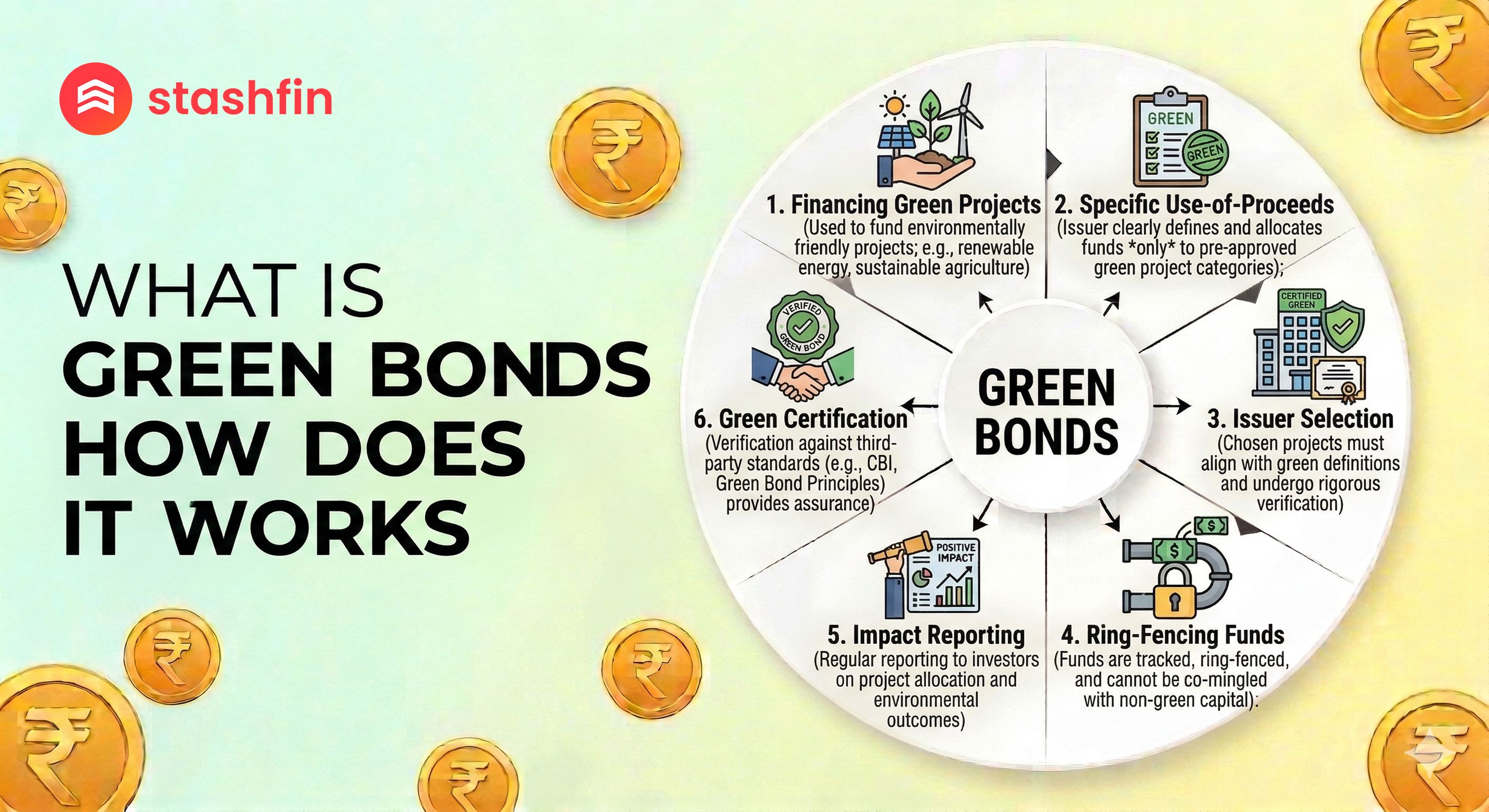

What are Green Bonds and How do They Work?
Green Bonds are fixed-income debt instruments specifically designed to raise capital for projects that have a positive environmental or climate impact. Like a traditional bond, an issuer (a government, corporation, or bank) borrows money from investors for a fixed period at a set interest rate.


The "Green" distinction lies in the dedicated use of proceeds, which are strictly earmarked for projects like renewable energy, clean transportation, and sustainable water management.
This comprehensive 2026 guide explains the mechanics of Green Bonds in the Indian market. Learn about Sovereign Green Bonds, corporate ESG debt, and how these instruments help investors achieve stable returns while supporting a sustainable future for the planet.
How Green Bonds Work: The Lifecycle of a Sustainable Investment
The journey of a Green Bond in 2026 involves a transparent, four-step cycle that ensures every rupee is used for its intended environmental purpose.
A. Issuance and Framework
Before a bond is launched, the issuer defines a Green Bond Framework. This document outlines the categories of projects that will be funded. In 2026, these frameworks must align with international standards like the ICMA Green Bond Principles and SEBI's updated ESG guidelines.
B. Project Selection
The issuer identifies specific projects, such as the construction of a solar farm in Rajasthan or an electric bus network in Bengaluru. These projects are often verified by independent third-party reviewers to prevent "greenwashing" (falsely claiming environmental benefits).
C. Management of Proceeds
Unlike general corporate bonds where funds can go into a general pool, Green Bond proceeds are ring-fenced. This means they are tracked separately to ensure they are only spent on the approved green projects.
D. Reporting and Impact
Issuers are required to provide regular reports to investors. In 2026, these reports don't just show financial performance; they show environmental impact, such as the number of tonnes of $CO_2$ avoided or the megawatts of renewable energy generated.
Types of Green Bonds in India (2026 Update)
The Indian bond market has matured significantly, offering three primary avenues for investors:
| Type | Issuer | Use Case in 2026 |
|---|---|---|
| Sovereign Green Bonds (SGrB) | Govt. of India | Financing national infrastructure like high-speed rail and large-scale wind farms. |
| Corporate Green Bonds | Private Firms | Decarbonizing industrial manufacturing and building green hydrogen plants. |
| Green Municipal Bonds | Local Urban Bodies | Funding sewage treatment plants and urban solar lighting for cities like Indore or Ghaziabad. |
Why Invest in Green Bonds? The Investor’s Advantage
In 2026, Green Bonds are no longer just about "doing good"; they are about "investing smart."
- Stable Fixed Income: They offer predictable interest payments (coupons) and capital protection.
- Lower Risk Profile: Because green projects often have government backing, they are frequently rated AA or AAA.
- Diversification: They provide a unique way to diversify a portfolio beyond equity and real estate.
- The "Greenium" Effect: In 2026, high demand from institutional ESG funds means some green bonds trade at a slight premium, providing capital appreciation potential.
[Image comparing a traditional bond's general use of funds vs a green bond's specific use of funds]
The Challenges: What to Watch Out For
While the market is booming, savvy investors should keep two factors in mind:
- Greenwashing: Always ensure the bond is certified by a reputable agency (like the Climate Bonds Initiative).
- Liquidity: While Sovereign Green Bonds are highly liquid, some smaller corporate or municipal green bonds may be harder to sell instantly on the secondary market.
Conclusion
Green Bonds represent the future of the Indian economy. They bridge the gap between the massive capital required for climate action and the investor's need for stable, predictable returns. In 2026, as the NSE and BSE introduce more "Green Indices," these bonds have become an accessible tool for everyday investors to help build a cleaner India.
By understanding Green Bonds, you are not just managing your wealth, you are investing in a world that is sustainable for generations to come.

