


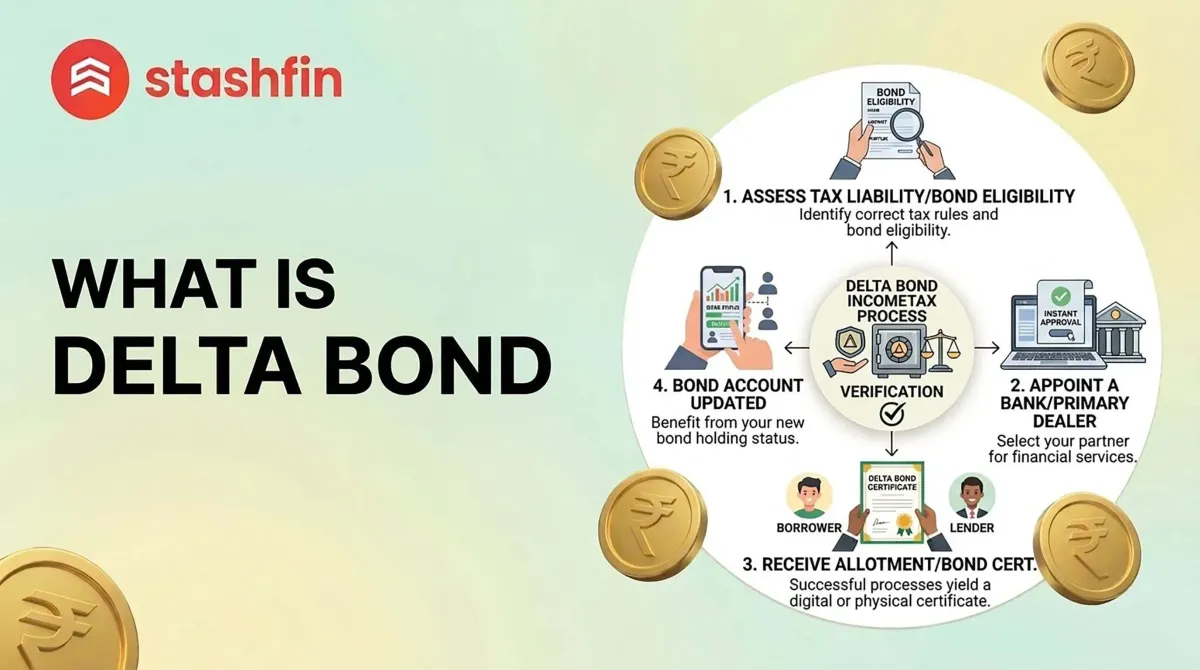
What Is Delta Bond? Understanding Sensitivity in 2026
In the world of finance, Delta refers to the sensitivity of an instrument's price to changes in its underlying factor. When we talk about a "Delta Bond," we are essentially discussing the sensitivity of a bond's price to changes in interest rates or the price of an underlying asset (in the case of bond-linked derivatives).

This comprehensive 2026 guide explains the concept of Bond Delta, a critical measure of how sensitive your bond portfolio is to interest rate shifts. Learn how to calculate delta, its role in hedging, and why it is the "secret weapon" for risk-averse investors in today’s volatile market.
The Core Concept: What Does Delta Mean?
In 2026, where interest rates fluctuate due to global supply chain shifts and RBI policy pivots, Bond Delta helps you answer one question: "If interest rates move by 0.01% (one basis point), how much will my bond's value change?"
- Delta as a Ratio: It is the ratio of the change in the bond price to the change in the underlying factor.
- The Relationship: For most traditional bonds, delta is negative. This is because bond prices and interest rates have an inverse relationship. When rates rise, the bond price (delta) falls.
- The Sensitivity Scale: A bond with a "high delta" is highly sensitive to market moves, while a "low delta" bond remains relatively stable.
Why Bond Delta Matters for Your Portfolio
Managing a portfolio isn't just about chasing yields; it's about managing "The Greeks." Here is why tracking your bond's delta is crucial:
A. Predicting Price Movements
By knowing the delta of your corporate or government bonds, you can estimate the potential profit or loss on your principal before the market even moves. For example, a 10-year zero-coupon bond has a high delta, meaning it will swing wildly with even tiny interest rate changes.
B. Delta Hedging
In 2026, professional traders use a strategy called Delta Hedging. If you have a bond portfolio with a negative delta, you can "hedge" this by taking a position in interest rate swaps or futures that have a positive delta. This creates a Delta-Neutral position, protecting your capital regardless of RBI moves.
C. Comparing Risk vs. Reward
Not all 8% yield bonds are the same. One might have a much higher delta than the other. Understanding delta allows you to choose a bond that fits your "stomach for volatility."
How to Calculate Bond Delta
While AI-driven platforms like Stashfin do the heavy lifting, the basic duration method is the most common way to estimate delta:
$$Bond\ Delta \approx -Modified\ Duration \times Bond\ Price$$
- Modified Duration: A measure of the bond's price sensitivity to interest rate changes.
- Negative Sign: Represents the inverse relationship between price and rate.
Example: If you own a bond worth ₹1,000 with a modified duration of 5, your Bond Delta is roughly -50. This means for every 1% increase in the interest rate, your bond price will drop by approximately ₹50.
Factors That Influence Delta in 2026
- Time to Maturity: Generally, the longer the tenure, the higher the delta. Short-term Treasury Bills (91 days) have a very low delta compared to 30-year G-Secs.
- Coupon Rate: Bonds with higher coupons usually have a lower delta. Because you receive more money sooner, the bond is less sensitive to future rate changes.
- Embedded Options: If a bond is "callable," the delta behaves differently. As rates drop, the price might stop rising because investors expect the company to "call" or end the bond early.
Comparison: High Delta vs. Low Delta Bonds
| Feature | High Delta Bond | Low Delta Bond |
|---|---|---|
| Price Volatility | High (Swings with rates) | Low (Stable) |
| Typical Tenure | Long-term (10–30 years) | Short-term (1–3 years) |
| Interest Rate Risk | High | Minimal |
| Ideal For | Aggressive Traders | Retirees / Preservation |
| Coupon Type | Zero-Coupon or Low Coupon | High Coupon (10%+) |
Summary: Delta in the 2026 Market
In 2026, the inclusion of Indian bonds in global indices has brought more foreign capital and higher sensitivity to global interest rates. Whether you are investing in a 14.5% high-yield corporate bond or a safe government G-Sec, the delta tells you the true "riskiness" of your principal.
Conclusion
Understanding "What is a Delta Bond?" transforms a bond from a simple "IOU" into a precise financial instrument. By monitoring delta, you can protect your portfolio from sudden shocks and ensure steady growth in a shifting rate environment.
At Stashfin, we provide the liquidity and insights to help you stay ahead. Use our Credit Line to keep your cash flow flexible while you build a sophisticated, delta-managed bond portfolio for your future.


