


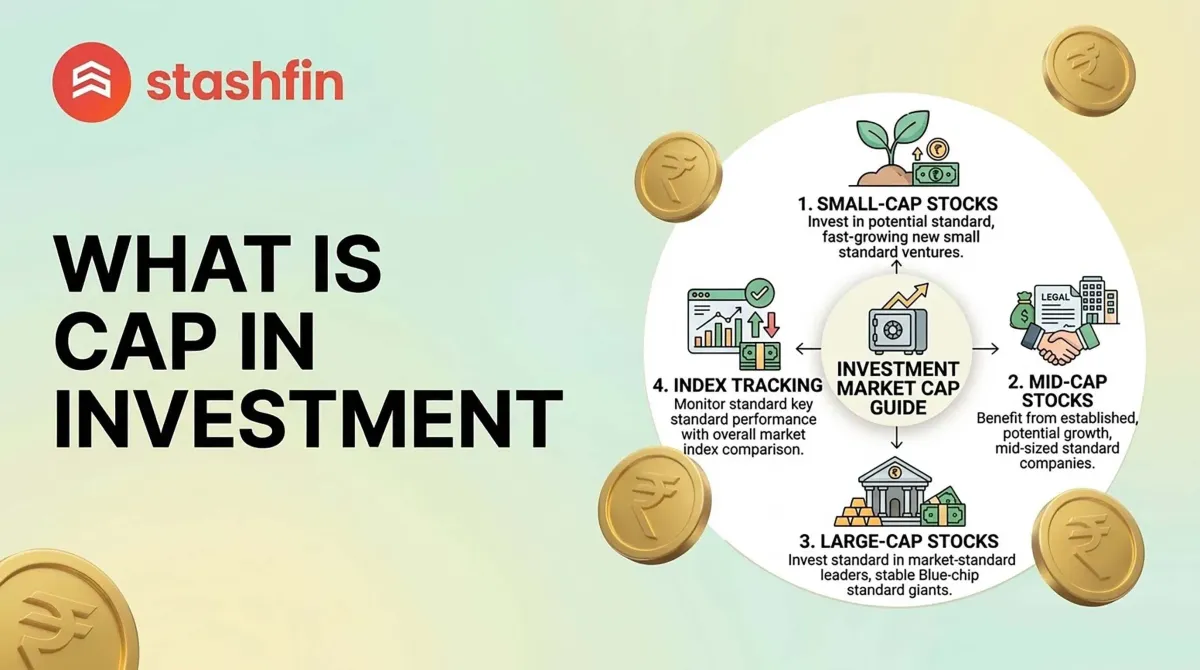
What Is "Cap" in Investment?
In the world of investing, "Cap" is short for Market Capitalisation. It is the most common way to measure the size and value of a publicly-traded company. Instead of just looking at the price of a single share, Market Cap tells you the total value of all the shares of that company combined.

It is the "price tag" the stock market puts on a business. Knowing a company’s "Cap" helps you understand its risk level, its growth potential, and where it fits in your overall financial plan.
This 2026 guide explores the concept of Market Capitalisation (Cap) in investing. Learn how to calculate Market Cap, the differences between Small, Mid, and Large-cap stocks, and how to use "Cap" categories to build a diversified, risk-managed portfolio that aligns with your financial goals.
The Three Main Tiers of "Cap"
In the Indian stock market (NSE and BSE) in 2026, companies are generally divided into three major categories based on their size. Each tier offers a different "vibe" for your portfolio.
A. Large-Cap Stocks (The Blue Chips)
These are the giants of the industry, the top 100 companies by size.
- Characteristics: Stable, well-established, and leaders in their sectors.
- Risk: Low to Moderate. They don't usually crash easily, but they also don't double in value overnight.
- Best For: Long-term stability and regular dividends.
B. Mid-Cap Stocks (The Future Giants)
These are companies ranked from 101 to 250 in terms of size. They are established but still have room to expand.
- Characteristics: Higher growth potential than large-caps but more volatile.
- Risk: Moderate.
- Best For: Investors looking for a balance between "safe" returns and high growth.
C. Small-Cap Stocks (The High-Risk/High-Reward)
These are companies ranked 251 and below. Many of these are startups or niche players.
- Characteristics: Capable of massive growth (multi-baggers) but can also face significant losses during market downturns.
- Risk: High.
- Best For: Aggressive investors with a high "stomach for risk" and a long time horizon.
Why "Cap" Matters for Your Investment Strategy
In 2026, a "one-size-fits-all" approach to investing doesn't work. Here is how Cap influences your strategy:
- Risk Management: If your entire portfolio is in Small-Cap stocks, a single bad news cycle can wipe out 20-30% of your wealth in a week. Diversifying across different "Caps" ensures that the stability of your Large-Caps protects you when the Small-Caps are volatile.
- Liquidity: Large-cap stocks are highly liquid. This means you can sell ₹10 Lakhs worth of shares in a second without affecting the price. Small-caps can be "illiquid"—if you try to sell a large amount, you might not find enough buyers, forcing the price down.
- Growth vs. Income: Large-caps often pay Dividends (regular cash payouts). Small-caps rarely pay dividends because they reinvest every rupee back into the business to grow.
Other "Caps" You Should Know
Beyond the big three, the 2026 market also talks about:
- Mega-Cap: The absolute titans (like Reliance or HDFC Bank) with valuations exceeding ₹10 Lakh Crores.
- Micro-Cap: Even smaller than small-caps. These are often high-risk "penny stocks" that require extreme caution.
- Free-Float Market Cap: This only counts the shares available for the public to trade, excluding shares held by promoters or the government. This is the version most indices (like Nifty 50) use.
Conclusion
"Cap" is more than just a number; it is a label that tells you the story of a company’s maturity. In 2026, the smartest investors are those who don't just chase the "hot" small-cap stock but build a solid foundation with large-caps while using mid and small-caps as the "turbo-boosters" for their wealth.
At Stashfin, we believe in helping you manage your liquidity today so you can invest for tomorrow. Whether you are using our Credit Line to handle a short-term gap or diversifying your savings into different market caps, staying informed is the only way to win.


