


Listed vs. Unlisted Bonds: The 2026 Investor's Guide to Debt Markets
What are Listed and Unlisted Bonds?
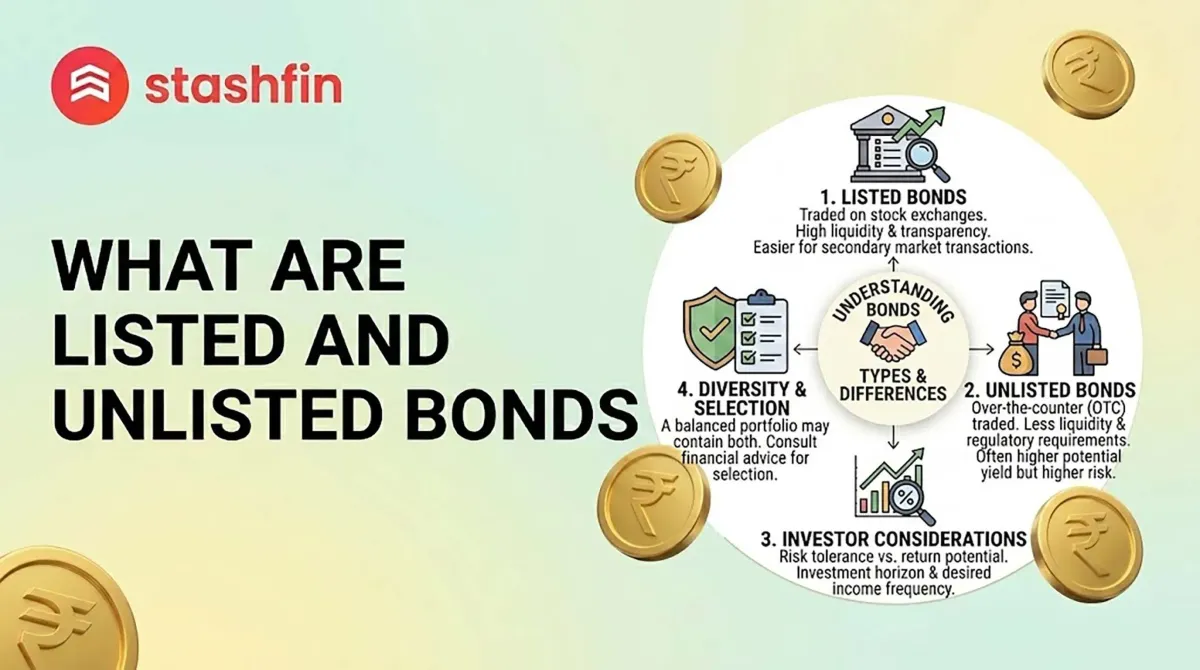
The primary difference between listed and unlisted bonds lies in where they are traded and how they are regulated.

- Listed Bonds: These are debt securities that are listed on a recognized stock exchange like the NSE or BSE. They trade much like stocks, with real-time price movements and high transparency.
- Unlisted Bonds: These are bonds that are not listed on any stock exchange. They are typically issued through private placements to specific investors or institutions and are traded "over-the-counter" (OTC).
This 2026 guide demystifies the world of Listed and Unlisted bonds in India. Discover the trade-offs between liquidity and yield, learn about the updated Section 50AA taxation rules for unlisted debt, and find out how to balance safety and returns in your fixed-income portfolio using modern digital bond platforms.
Listed Bonds: The Transparent Route
In 2026, listed bonds have become the "Gold Standard" for retail investors. Because they are traded on public exchanges, they offer a level of security and ease that unlisted bonds often cannot match.
Key Features:
- High Transparency: Issuers must comply with strict SEBI disclosure norms, publishing quarterly financial results and material updates.
- Real-Time Liquidity: You can sell your listed bonds on the exchange during market hours, providing quick access to cash.
- Lower Entry Barriers: Thanks to "Debt Democratization," you can now start investing in many listed bonds with as little as ₹100 to ₹1,000.
- Price Discovery: You can see the exact market price and yield (YTM) of your bond at any given moment.
Unlisted Bonds: The High-Yield Frontier
Unlisted bonds are often the choice of high-net-worth individuals (HNIs) and institutional investors who are willing to sacrifice liquidity for a higher "Yield Alpha."
Key Features:
- Higher Potential Returns: Because unlisted bonds are less liquid and often issued by smaller or newer companies, they offer a higher interest rate to compensate for the extra risk.
- Customised Structures: Since these are private deals, they often have unique terms, such as higher security cover or specific repayment schedules.
- Lower Compliance Costs: Companies save on listing fees and intensive disclosure requirements, passing some of those savings to you as higher interest.
Comparison: Listed vs. Unlisted Bonds (2026)
| Feature | Listed Bonds | Unlisted Bonds |
|---|---|---|
| Trading Platform | NSE / BSE Stock Exchanges | Over-The-Counter (OTC) / Private |
| Liquidity | High (Easy to buy/sell) | Low (Hard to exit early) |
| Transparency | High (Public disclosures) | Limited (Private data) |
| Regulation | Strict SEBI & Exchange Oversight | Governed by Companies Act / SEBI Norms |
| Min. Investment | Low (₹100 – ₹10,000) | Typically High (₹1 Lakh+), now lowering |
| Yield/Returns | Moderate & Stable | Higher (Risk Premium) |
Taxation: The 2026 Reality Check
Taxation is a critical factor when choosing between these two. Following recent legislative updates, the rules for 2026 are:
Listed Bonds:
- Interest: Taxed at your applicable income tax slab.
- Capital Gains: If held for >12 months, Long-Term Capital Gains (LTCG) are taxed at 12.5% (without indexation). Short-term gains are taxed at your slab rate.
Unlisted Bonds:
- Interest: Taxed at your income tax slab.
- Capital Gains: Under the updated Section 50AA, most gains from unlisted debt are now treated as Short-Term Capital Gains, regardless of the holding period, and taxed at your income tax slab.
Which One Should You Choose?
- Choose Listed Bonds if: You are a conservative investor, a beginner, or someone who might need to withdraw money before the bond matures. They are the "set-it-and-forget-it" safety nets.
- Choose Unlisted Bonds if: You are an experienced investor with a high risk appetite and a long time horizon. You should only invest money that you are certain you won't need until the bond's maturity date.
Conclusion
Listed and unlisted bonds are the two sides of the same coin. While listed bonds provide the transparency and liquidity needed for a stress-free life, unlisted bonds offer the "turbo-boost" your portfolio might need to beat inflation aggressively. In 2026, the best strategy is often a 70/30 split, keeping the majority of your debt in the safety of listed bonds while exploring niche opportunities in the unlisted space.
At Stashfin, we believe in building a stable financial foundation. While you park your long-term savings in secure bonds, our Instant Credit Line is here to handle your immediate needs, ensuring you never have to break your long-term investments prematurely.


