


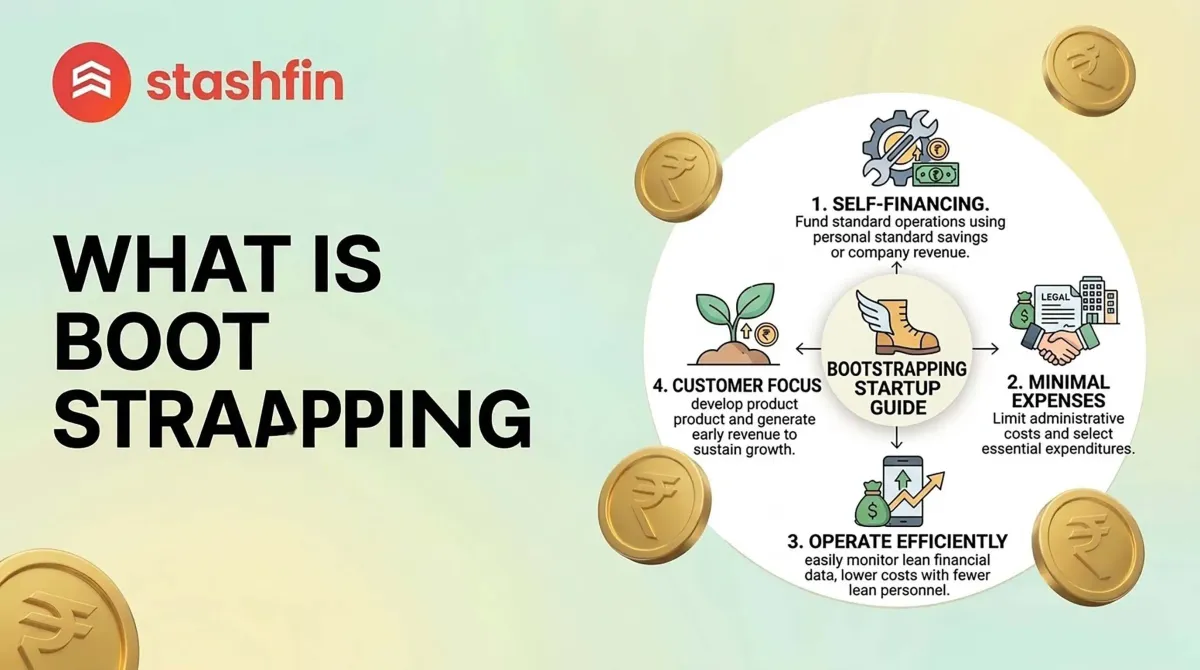
What is Bootstrapping? The Art of Self-Funded Success
Bootstrapping is the process of starting and growing a company using only personal savings and the revenue generated from the business, rather than relying on external funding like venture capital (VC) or angel investment. The term originates from the 19th-century phrase "to pull oneself up by one's bootstraps"—an impossible physical feat that has evolved into a symbol of incredible self-reliance in the business world.

This 2026 guide demystifies the bootstrapping model for modern entrepreneurs. Learn the differences between self-funding and venture capital, the strategic stages of growing a lean business, and why retaining 100% equity might be the smartest financial move you ever make.
The Three Stages of Bootstrapping
Bootstrapping isn’t just about being frugal; it’s a disciplined lifecycle that moves from personal risk to market validation.
Stage 1: The Seed Stage (Personal Resources)
This is where it all begins. You use your own savings, maybe borrow a small amount from friends and family, or utilize your existing equipment (like a personal laptop or garage space). At this stage, you are the CEO, the developer, and the marketing team all rolled into one.
Stage 2: The Customer-Funded Stage
This is the "tipping point." The business starts generating enough revenue from early sales to cover its own operating expenses. Instead of taking a salary, you reinvest every single rupee back into the business to buy inventory, hire your first freelancer, or run your first ad campaign.
Stage 3: The Scaling Stage
The business is now profitable and self-sustaining. Growth is organic and driven by the company’s own cash flow. In 2026, many bootstrapped companies at this stage might use a Stashfin Credit Line or a small business loan to accelerate growth without giving away a single percent of ownership.
Bootstrapping vs. Venture Capital: The 2026 Trade-off
In the current economic climate, the "growth at all costs" mentality of VC-backed firms is shifting toward a "profitable growth" model. Here is how they compare:
| Feature | Bootstrapping | Venture Capital (VC) |
|---|---|---|
| Ownership | 100% Equity Retained | 50%–80% (Dilution over rounds) |
| Control | Full Autonomy | Board oversight & Investor pressure |
| Growth Speed | Organic & Steady | Aggressive & Rapid |
| Risk | Personal Financial Risk | Shared Risk |
| Focus | Immediate Profitability | Market Share & User Acquisition |
| Decision Making | Fast & Agile | Often requires board approval |
The "Bootstrap Mindset": Why It Works
Why do legendary companies like Zoho, Mailchimp, and Atlassian choose to stay bootstrapped for so long?
- Total Freedom: You don't have to answer to a board of directors. You can pivot your business model in 24 hours based on customer feedback without asking for permission.
- Customer-Centricity: When your survival depends on sales rather than investor cheques, you listen to your customers more intently. This often leads to a much better Product-Market Fit.
- Operational Efficiency: Bootstrapping forces you to be lean. You learn to do more with less, which builds a culture of discipline that serves the company well even when it becomes a multi-crore enterprise.
- No "Exit" Pressure: VCs usually have a 7–10 year timeline to sell the company. Bootstrappers can build for the next 50 years, creating generational wealth.
Challenges of the Self-Funded Path
While rewarding, bootstrapping is not for the faint of heart:
- Slower Growth: Without a massive influx of cash, you might not be able to hire 50 people at once or dominate the market in six months.
- Personal Financial Stress: Since it’s your money on the line, the pressure of a "bad month" can feel much more personal.
- Limited Resources: You may have to pass on big opportunities simply because you don't have the cash ready for upfront costs.
Strategic Tips for Bootstrapping in 2026
- Focus on MVP (Minimum Viable Product): Don't wait for perfection. Launch the simplest version of your product and start charging for it immediately.
- Leverage AI Tools: In 2026, AI can act as your virtual assistant, copywriter, and data analyst, allowing a one-person team to do the work of five.
- Prioritize Cash Flow: Profit is a vanity metric; Cash Flow is reality. Focus on getting paid upfront or shortening your collection cycles.
- Network Like a Pro: When you don't have money to hire experts, your network becomes your "board of advisors."
Conclusion
Bootstrapping is more than just a funding choice; it’s a philosophy of independence. It’s about building a business on the solid ground of actual revenue rather than the shifting sands of investor sentiment. In 2026, the resilience built through bootstrapping is the most valuable asset a founder can own.
At Stashfin, we champion the spirit of self-reliance. While you're busy building your empire, we are here to provide the Credit Line you need to bridge a temporary cash gap or seize a sudden growth opportunity, all while you keep 100% control of your vision.


