





















 Back
Back
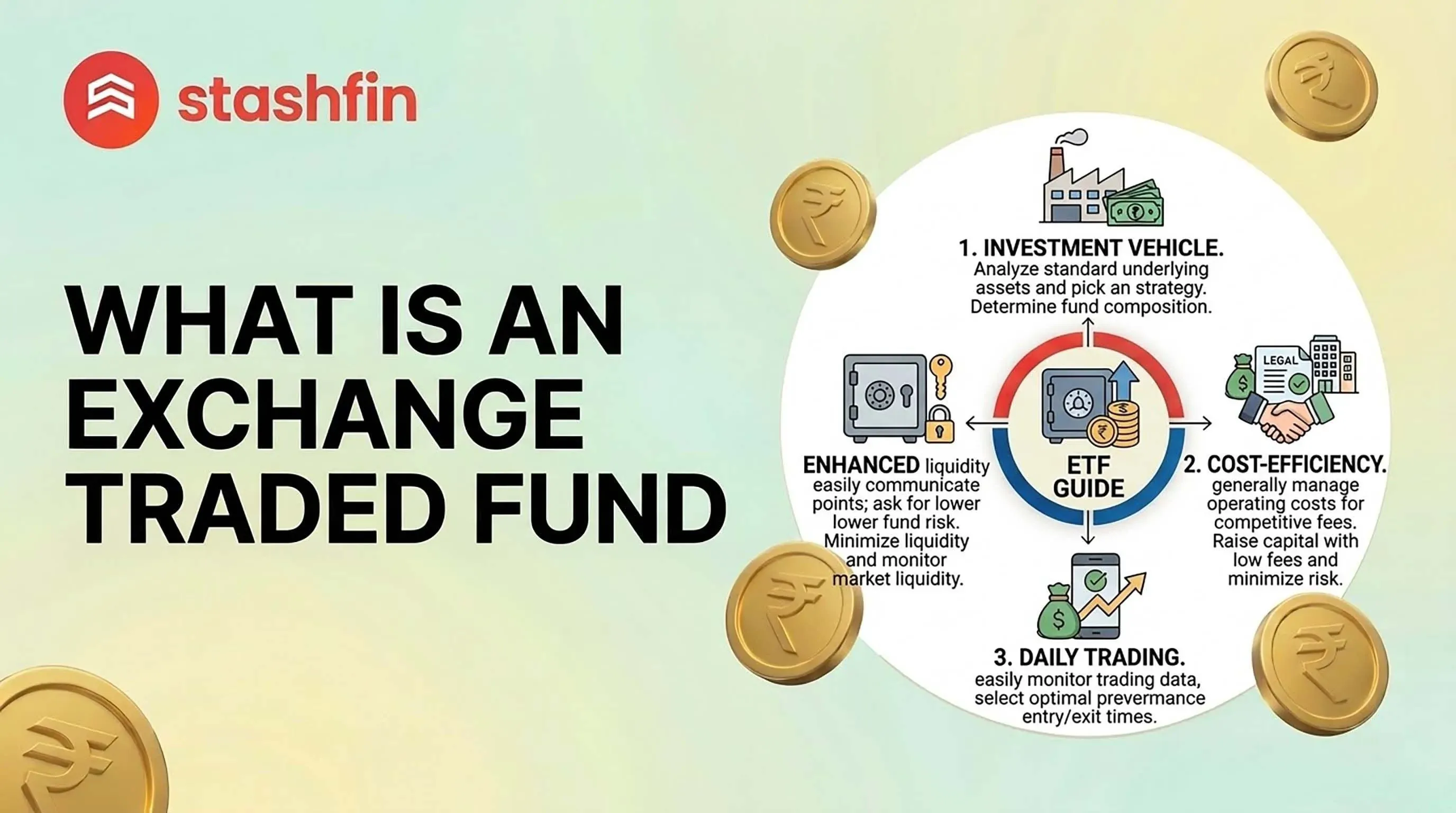

What is an Exchange Traded Fund (ETF)?
An Exchange Traded Fund (ETF) is a type of investment fund that is traded on stock exchanges, much like individual stocks. An ETF holds a basket of assets, such as stocks, bonds, commodities, or currencies, and generally operates with an arbitrage mechanism designed to keep it trading close to its net asset value, though deviations can occasionally occur.


In simpler terms, if a Mutual Fund and a Stock had a child, it would be an ETF. It gives you the diversification of a mutual fund combined with the real-time trading flexibility of a stock.
This comprehensive 2026 guide demystifies Exchange Traded Funds (ETFs) for Indian investors. Learn how ETFs track indices like the Nifty 50, discover the differences between ETFs and Mutual Funds, and understand the tax implications and cost-saving benefits of adding ETFs to your diversified investment portfolio.
How an ETF Operates: The "Basket" Concept
When you buy one unit of an ETF, you aren't just buying one company; you are buying a tiny slice of many companies.
Imagine you want to invest in the top 50 companies in India. Buying individual shares of all 50 would be expensive and time-consuming. Instead, you buy one unit of a Nifty 50 ETF. This fund owns shares in all 50 companies in the exact same proportion as the Nifty 50 index. As the index moves up or down, the price of your ETF unit moves with it.
The Creation-Redemption Mechanism
Unlike mutual funds where the fund house issues units, ETFs use a unique "Creation-Redemption" process involving Authorized Participants (APs).
These large institutional players manage the supply of ETF shares to ensure the price stays aligned with the value of the underlying assets (NAV).
Common Types of ETFs in 2026
The ETF market has evolved far beyond simple stock tracking. In today's market, you can find an ETF for almost any strategy:
- Equity ETFs: These track specific indices like the Nifty 50, Sensex, or Nifty Bank.
- Gold ETFs: A popular "Paper Gold" instrument where each unit represents physical 24K gold stored in secure vaults.
- Debt ETFs: These track government securities (G-Secs) or corporate bonds, providing a safe haven for steady income.
- Sectoral ETFs: Focus on specific industries like IT, Pharma, or Renewable Energy.
- International ETFs: Allow Indian investors to own a piece of global giants like Apple, Google, or Tesla from their local Demat account.
ETF vs. Mutual Fund: Which is Better?
While both offer diversification, the "user experience" is quite different:
| Feature | Exchange Traded Fund (ETF) | Mutual Fund (Standard) |
|---|---|---|
| Trading Type | Real-time on the Stock Exchange | Once a day (End-of-day NAV) |
| Costs | Very Low (Lower Expense Ratio) | Higher (Includes management fees) |
| Management | Mostly Passive (Tracks Index) | Mostly Active (Manager picks stocks) |
| Min. Investment | 1 Unit (Price of a share) | Often ₹500 via SIP |
| Liquidity | Depends on Market Volume | Redeemed by the Fund House |
Why ETFs are Perfect for the 2026 Investor
- Lower Expense Ratios: Because most ETFs are "passive," their fees are significantly lower. Over 20 years, a 1-2% difference in fees can save you lakhs of rupees.
- Intraday Flexibility: In a volatile market, you can buy an ETF at 11:00 AM and sell it at 2:00 PM if you need cash. Standard mutual funds only let you sell at the end-of-day price.
- Transparency: You know exactly what is inside your ETF at any moment. Mutual funds usually disclose their holdings only once a month.
- Tax Efficiency: ETFs generally have lower turnover, which can lead to fewer taxable events compared to actively managed funds.
Things to Watch Out For (The Risks)
No investment is without risk. When buying ETFs, keep these three factors in mind:
- Tracking Error: Sometimes, the ETF might not perfectly mimic the index due to transaction costs or cash holdings.
- Liquidity Risk: Some niche ETFs might have low trading volume, making it harder to sell large quantities instantly without affecting the price.
- Brokerage Costs: Since ETFs trade like stocks, you may pay a small brokerage fee for every buy/sell transaction, which can add up for frequent traders.
Conclusion
The Exchange Traded Fund is the ultimate bridge between simplicity and sophistication. In 2026, it has become the foundation of most successful retirement and wealth-building portfolios. By offering a low-cost, transparent, and flexible way to own the entire market, ETFs allow you to focus on your long-term goals rather than the daily noise of individual stock picking.
At Stashfin, we believe in building a holistic financial life. While you use our Credit Line to stay agile and handle life’s immediate expenses, investing in ETFs ensures that your wealth continues to compound in the background, securing your future one unit at a time.

