





















 Back
Back

What is Accrued Interest? The Hidden Clock Behind Your Finances
In the world of finance, money is never static. From the moment you deposit funds into a savings account or the second a loan is disbursed, a silent clock begins to tick. This "ticking" represents Accrued Interest.
Most people only notice interest when it is officially "posted" to their account at the end of the month or quarter. However, in reality, interest grows day by day, hour by hour. Understanding accrued interest is the difference between being a passive observer of your bank balance and being a strategic manager of your wealth.
In this 2026 guide, we will break down what accrued interest is, how it works for both borrowers and savers, and the exact formulas you need to calculate it with precision.


Defining the Concept: What is Accrued Interest?
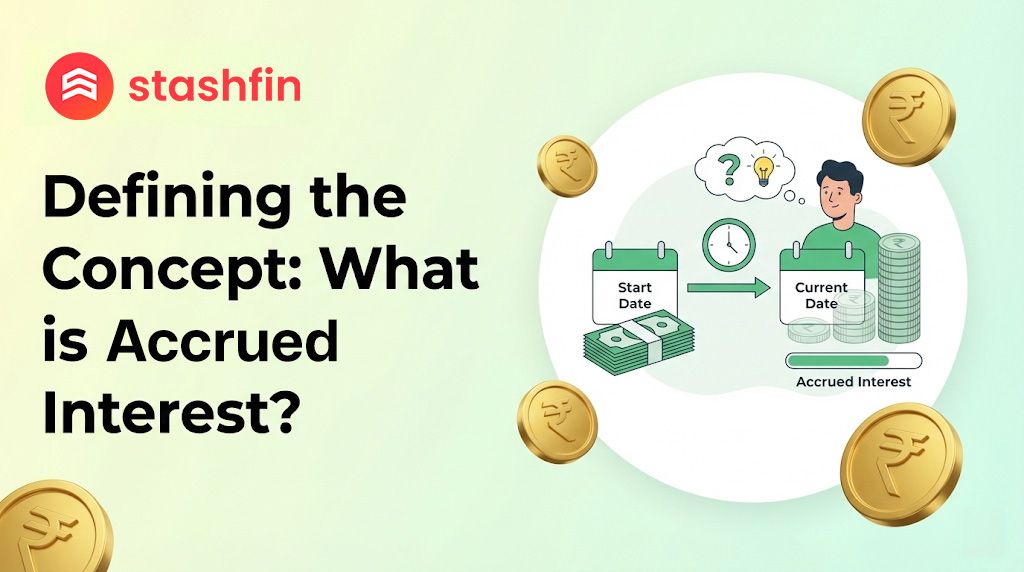
Accrued Interest refers to the amount of interest that has been earned or incurred but has not yet been paid or received. It is an accounting term used to recognise interest in the period it occurs, regardless of when the actual cash changes hands.
Think of it as "Interest in Transit." It exists on paper (or in digital ledgers), but the transaction hasn't been finalised in your bank statement yet.
The Two Sides of Accrued Interest:
- Accrued Interest Income (Asset): For an investor or a saver, this is money you have earned but haven't been paid yet. (e.g., Interest on a Fixed Deposit that hasn't matured).
- Accrued Interest Expense (Liability): For a borrower, this is the cost of the loan that is piling up daily before your next EMI date.
How Accrued Interest Works: The Daily Accumulation
Financial institutions typically use the Accrual Basis of Accounting. This means they record income and expenses when they are "earned," not just when the cash moves.
Imagine you have a personal loan with a monthly EMI due on the 5th of every month.
- On the 6th, you owe zero interest for the new cycle.
- By the 15th, ten days of interest have accrued.
- If you were to close the loan on the 15th, you wouldn't just pay the principal; you would have to pay the principal plus those 10 days of accrued interest.
Accrued Interest in Different Financial Products
- Bonds and Debentures
When you buy or sell a bond in the secondary market between interest payment dates, the buyer must pay the seller the "dirty price." The Dirty Price = Clean Price + Accrued Interest. This ensures the seller is compensated for the portion of the year they held the bond. - Digital Credit Lines
In a modern credit line, interest is often calculated on a Daily Diminishing Balance. This means the accrued interest is updated every 24 hours based on your current utilisation. If you pay back your dues mid-month, you save on the interest that would have accrued for the remainder of the month. - Fixed Deposits (FDs)
Even if your FD only pays out at maturity (e.g., after 1 year), the bank calculates accrued interest quarterly for tax purposes (TDS). This is why you might see tax deducted from your account even before the FD has matured.
Accrued Interest vs. Compound Interest
It is vital not to confuse these two terms.
- Accrued Interest is a matter of timing (when is the interest recognized?).
- Compound Interest is a matter of calculation (is the interest added to the principal to earn more interest?).
Accrued interest can be either simple or compound, depending on the terms of the financial product.
Why Accrued Interest Matters for Your Wallet
- Accuracy in Personal Budgeting
If you are planning to "pre-close" a loan, looking only at your outstanding principal will give you a false number. Always ask for the "Total Payoff Amount," which includes the accrued interest up to that specific day. - Tax Implications
In India, interest income is often taxable on an "accrual basis." This means the IT Department may consider the interest you've earned this year as taxable income, even if the bank hasn't physically paid it out to you yet. - Evaluating Investment Yields
When comparing two investments, knowing the accrual frequency helps. An investment that accrues interest daily is generally more valuable than one that accrues annually, as it allows for faster compounding.
Pulse of the Financial System
Accrued interest is the pulse of the financial system. It ensures that lenders are compensated for every day their capital is at risk and that savers are rewarded for every day their money is invested.
In 2026, with the rise of instant, digital-first lending, the ability to track accrued interest in real-time gives you a significant advantage. Whether you are using a credit line or building an investment portfolio, always
keep an eye on the "accrued" column, that's where your real-time net worth lives.

