





















 Back
Back

Understanding Municipal Bonds in India: The Complete 2026 Investor Guide
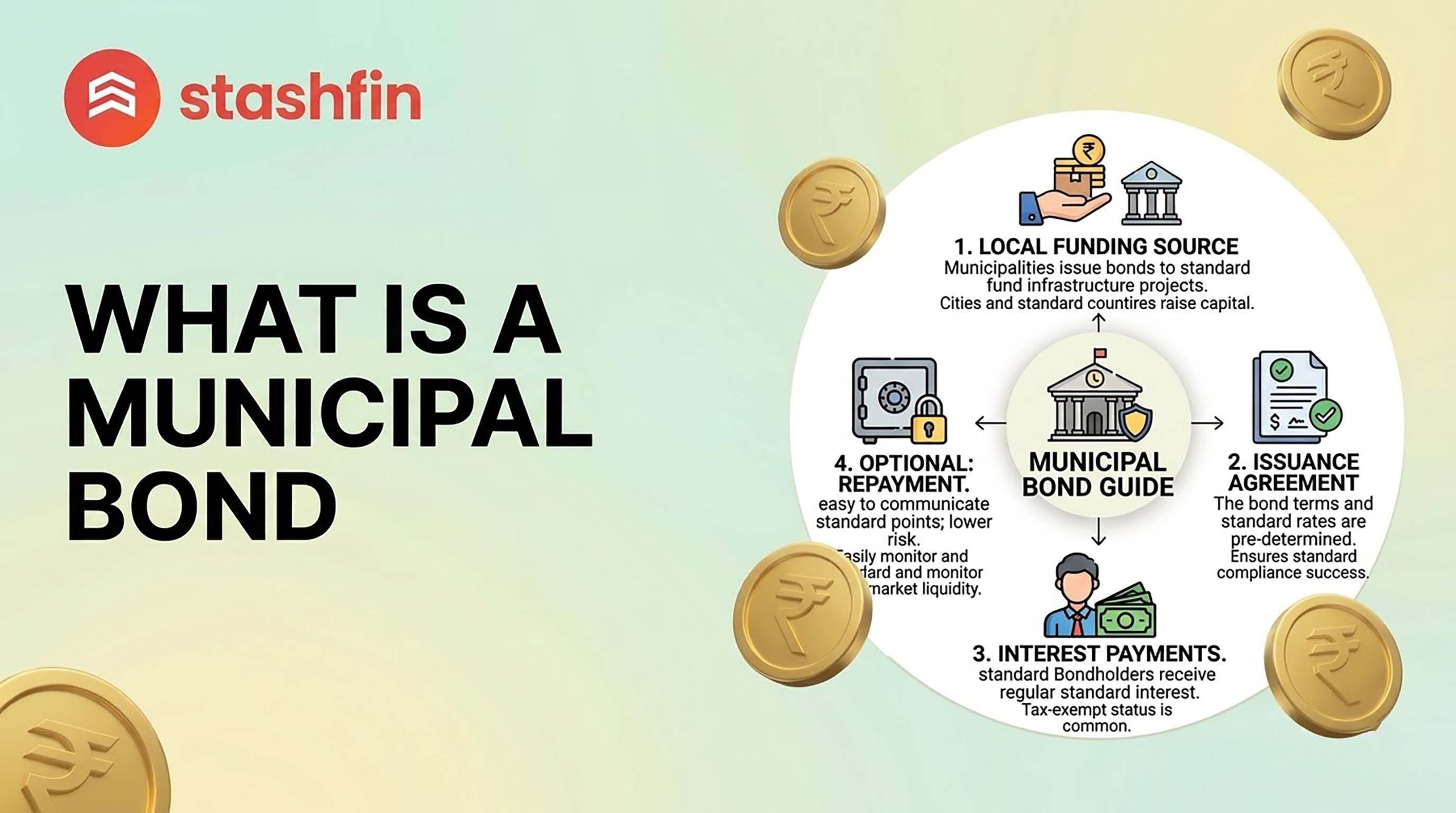
A Municipal Bond (often called a "Muni Bond") is a debt security issued by a city, town, or local government body, known in India as Urban Local Bodies (ULBs), to raise capital for public infrastructure projects. When you buy a municipal bond, you are essentially lending money to a city corporation to build roads, bridges, schools, or sewage treatment plants.


In return for your investment, the municipality promises to pay you a fixed interest rate (coupon) at regular intervals and return your original principal amount on a specified maturity date.
This comprehensive 2026 guide demystifies Municipal Bonds in India. Learn about the difference between General Obligation and Revenue bonds, discover the latest Budget 2026 incentives for retail investors, and understand the tax benefits, credit risks, and yields associated with investing in your city’s future.
Types of Municipal Bonds in India
In the 2026 market, bonds are broadly categorized based on the repayment structure:
A. General Obligation (GO) Bonds
These are backed by the "full faith and credit" of the municipality. The city uses its entire revenue stream, including:
- Property taxes
- Professional taxes
- State grants
These are generally considered the safest type of muni bond.
B. Revenue Bonds
These are issued for specific, income-generating projects. Repayment is sourced strictly from the earnings of that project (e.g., toll bridge fees or water charges).
Security Note: Revenue bonds often use an Escrow Account where project earnings are deposited directly to pay bondholders before the city can spend the money elsewhere.
C. Green Municipal Bonds
A trending category in 2026, these fund "green" infrastructure like:
- Electric bus fleets
- Solar parks
- Liquid waste management
Why 2026 is the "Year of the Muni Bond"
The Union Budget 2026-27 introduced a ₹100 Crore incentive for any single municipal bond issuance exceeding ₹1,000 Crore. For retail investors, this translates to:
- Higher Visibility: Issues from "A-tier" cities like Ahmedabad, Surat, and Bengaluru.
- Better Liquidity: Higher volumes make it easier to trade on the NSE and BSE.
- Professional Management: Cities must maintain audited accounts and higher credit ratings to qualify.
The Benefits: Why Should You Invest?
| Feature | Benefit for Investors |
|---|---|
| Attractive Yields | Rates typically range between 7.5% and 10% (higher than many FDs). |
| Low Risk | Regulated by SEBI; requires a minimum investment-grade rating (BBB or higher). |
| Tax Advantages | Many are Tax-Free Bonds, exempting interest from income tax. |
| Social Impact | Direct contribution to local infrastructure and "Viksit Bharat." |
Risks to Consider
Investors in 2026 should remain aware of:
- Liquidity Risk: The secondary market is growing but can still be slow for instant exits.
- Credit Risk: Poor property tax collection can affect a city's ability to pay. Always check the Credit Rating.
- Interest Rate Risk: If market rates rise, the market price of your existing bond may fall.
How to Buy Municipal Bonds in 2026
- Public Issues: Apply through your standard broker or demat account during new launches.
- Online Bond Platforms: Use regulated platforms (e.g., Wint Wealth) with minimums as low as ₹10,000.
- Secondary Market: Purchase existing bonds (like Indore or Vadodara issues) directly on the stock exchange.
Conclusion
Municipal Bonds bridge the gap between private wealth and public good. In 2026, they offer a sophisticated blend of tax efficiency and safety for the conservative Indian investor.
At Stashfin, we believe in building a stable financial foundation. While you invest in long-term growth through bonds, our Instant Credit Line ensures your short-term liquidity is always secured.

