





















 Back
Back

What Is a Good Credit Score and Why Does It Matter
Understanding this one magical number can be the starting point of your financial journey in India, a number that can either open the doors or close them: your credit score. This three-digit number, which holds a low of 300 and a high of 900, is your financial passport, and it will dictate whether lenders welcome you with open arms or turn you away at the door.


Knowing what a good credit score actually is is also about recognizing the financial opportunities that a responsible credit score equates to. In India of the new age financial world, your credit score has turned into the lead determinant to have access to anything, right from instant personal loans to premium credit cards carrying exclusive benefits.
When the process can be as easy as the one on our platform, Stashfin, which has succeeded in making credit score monitoring and improvement more accessible than ever, there is simply no reason for you to not know this vital part of your financial wellness. Whether you’re new to credit or trying to improve an already good score, good credit is the ticket to opening new financial opportunities.
In this guide, we’ll dig into how credit scores are calculated, what impacts your score, and how to strengthen (or hang onto) a good score so you can enjoy the many perks of having good credit.
What Is a Credit Score and How Is It Calculated?
Before we discuss what a good credit score is, it’s probably a good idea to take a beat and break down how credit scores are calculated.
Think of your credit score as your financial report card, a numerical representation of how well you've managed borrowed money over time. The calculation process involves examining five critical aspects of your financial conduct. Your track record of making payments on time forms the backbone of this assessment, representing more than one-third of your final score. The second major component examines how much of your available credit you actually use. Bureaus prefer conservative usage patterns that demonstrate self-control.
Your credit journey's duration and the variety in your credit portfolio also matter significantly. Managing different types of credit demonstrates your ability to handle diverse financial responsibilities, while your recent appetite for new credit gets scrutinized, as multiple applications can signal financial distress.
If you're wondering how to read a credit score, this distribution helps identify which areas you may need to work on to improve your credit health.
What Is Considered a Good Credit Score?
Not all scores are treated equally, and understanding the good credit score range can help you set realistic financial goals.
Here’s a quick breakdown:
- 300–549: Poor – High risk for lenders
- 550–649: Fair – May face higher interest rates or loan rejections
- 650–749: Average – Moderate chances of approval
- 750–799: Good – Eligible for most credit products at standard terms
- 800–900: Excellent – Eligible for premium offers, high limits, and best interest rates
So, what is a good credit score? In India, anything above 750 is generally considered good. An exceptional credit score (800+) offers added benefits, including faster approvals, zero documentation, and lower interest rates.
Why a Good Credit Score Is Important
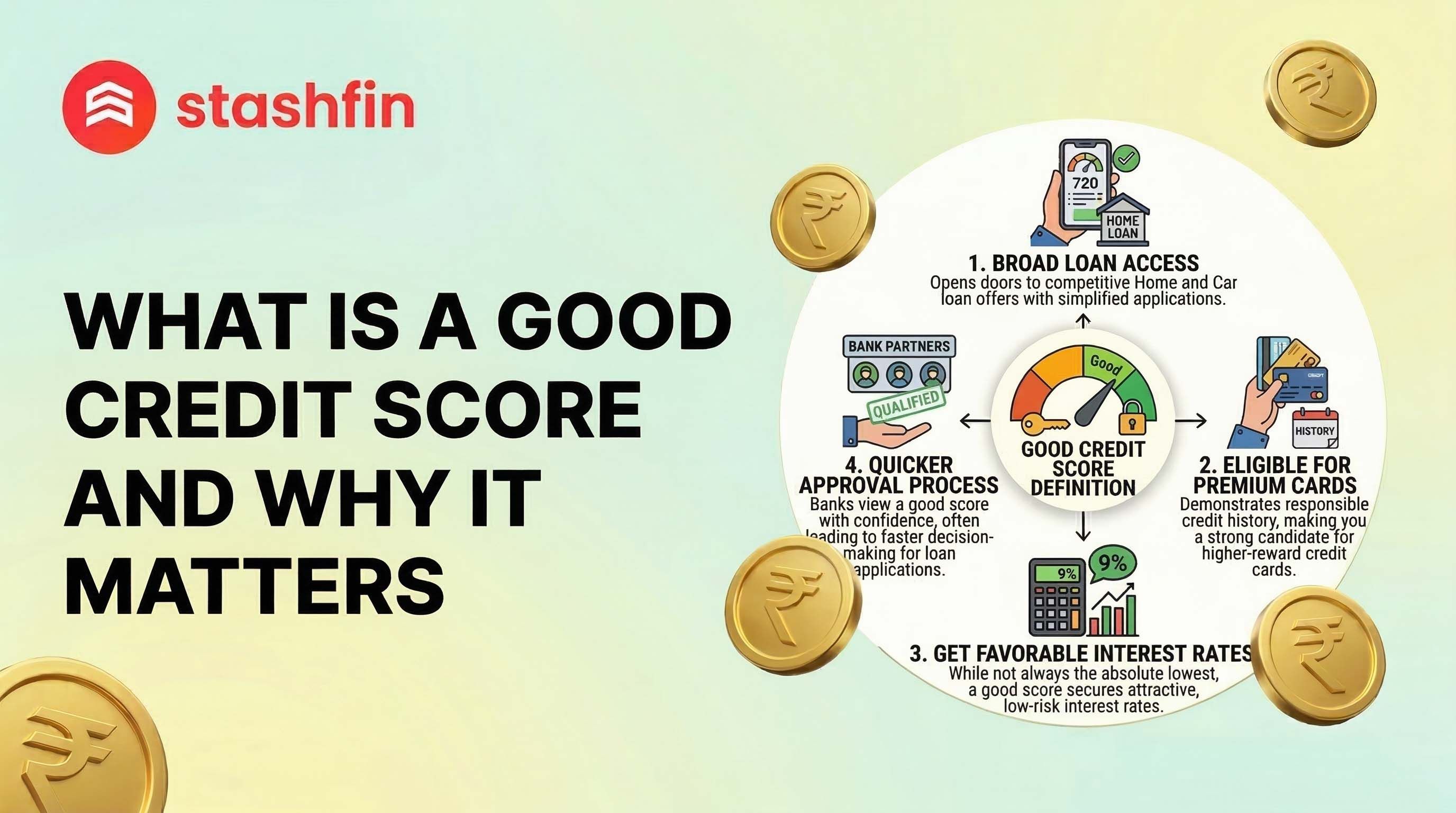
A good credit score goes beyond just securing loans. It reflects financial discipline and opens up multiple opportunities:
- Easy Loan Approval: Lenders are more willing to approve your application.
- Lower Interest Rates: A good score helps you negotiate better terms.
- Higher Credit Limits: Trusted borrowers can get higher credit limits.
- Quick Processing: Fewer documents and faster approvals.
- Better Insurance Premiums: In some cases, insurers offer better rates to people with good scores.
- Rental & Employment Opportunities: Some landlords and companies consider credit health.
A good credit score can also help you qualify for instant personal loans from trusted NBFCs like Stashfin, often with higher limits and better interest rates.
What Affects Your Credit Score the Most?
Understanding which financial behaviors have the greatest impact on your score helps you prioritize your credit management efforts effectively.
- Payment Track Record: This stands as the single most influential factor, accounting for the largest portion of your score calculation. Missing even one EMI payment can trigger a significant drop in your credit score, which may take months to recover from.
- Credit Utilization: Your utilization patterns form the second major influence on your score. Consistently maxing out your credit cards or using more than 30-40% of your available credit sends negative signals to bureaus, as they interpret high utilization as potential over-dependence on credit.
- Credit Inquiries: The frequency of your credit applications significantly impacts your score. When you apply for multiple loans or credit cards within short timeframes, it creates "credit hunger" - a pattern that suggests financial desperation.
- Credit History: Having a thin credit file with very few accounts or short credit history also works against you, as lenders prefer established patterns of responsible credit use.
How to Build a Healthy Credit Score
Constructing an excellent credit score requires a strategic, long-term approach that combines smart financial habits with consistent execution.
- Automate Payments: The foundation begins with creating reliable payment systems that eliminate the possibility of missed due dates, as payment history dominates your score calculation. Successful credit builders often automate their EMI and credit card payments.
- Manage Utilization: Strategically monitor your credit usage throughout the billing cycle, not just at month-end. Smart borrowers keep utilization consistently low to demonstrate financial discipline.
- Space Out Applications: Timing your credit applications strategically prevents unnecessary score damage. Instead of applying for multiple credit products when you need funds urgently, plan ahead and space out applications.
- Diversify Portfolio: Building a diverse credit portfolio gradually, starting with a secured credit card, then adding unsecured credit, followed by small personal loans, demonstrates your ability to handle different financial obligations effectively.
How to Check and Protect Your Credit Score
Checking your credit score regularly is crucial. Contrary to popular belief, checking your credit score does not lower it; only hard inquiries by lenders do.
Ways to Check Your Credit Score:
- Via credit bureaus: CIBIL, Experian, Equifax, and CRIF allow one free report per year.
- Bank Portals and Fintech Apps: Many banks and NBFCs, including Stashfin, provide instant credit score checks via their apps or websites.
- Government Portals: Some government schemes offer access to your credit information through trusted platforms.
Tips to Protect Your Credit Score:
- Monitor your report for errors or fraudulent activity.
- Avoid unnecessary loans or credit cards.
- Keep your credit mix balanced.
Knowing how to read a credit score and track it helps you act before a problem escalates.
Conclusion
So, what is a good credit score? In India, a score above 750 is your gateway to financial flexibility. It shows you’ve used credit responsibly and signals lenders that you’re a low-risk borrower. By maintaining low credit utilization, making timely payments, and monitoring your score regularly, you can ensure your score stays in the good credit score range or even reaches an exceptional level.
A good credit score not only helps with loan approval but also saves you money in the long term through lower interest rates and premium financial services. It’s one of the most valuable assets in your financial toolkit, so guard it wisely.

