





















 Back
Back
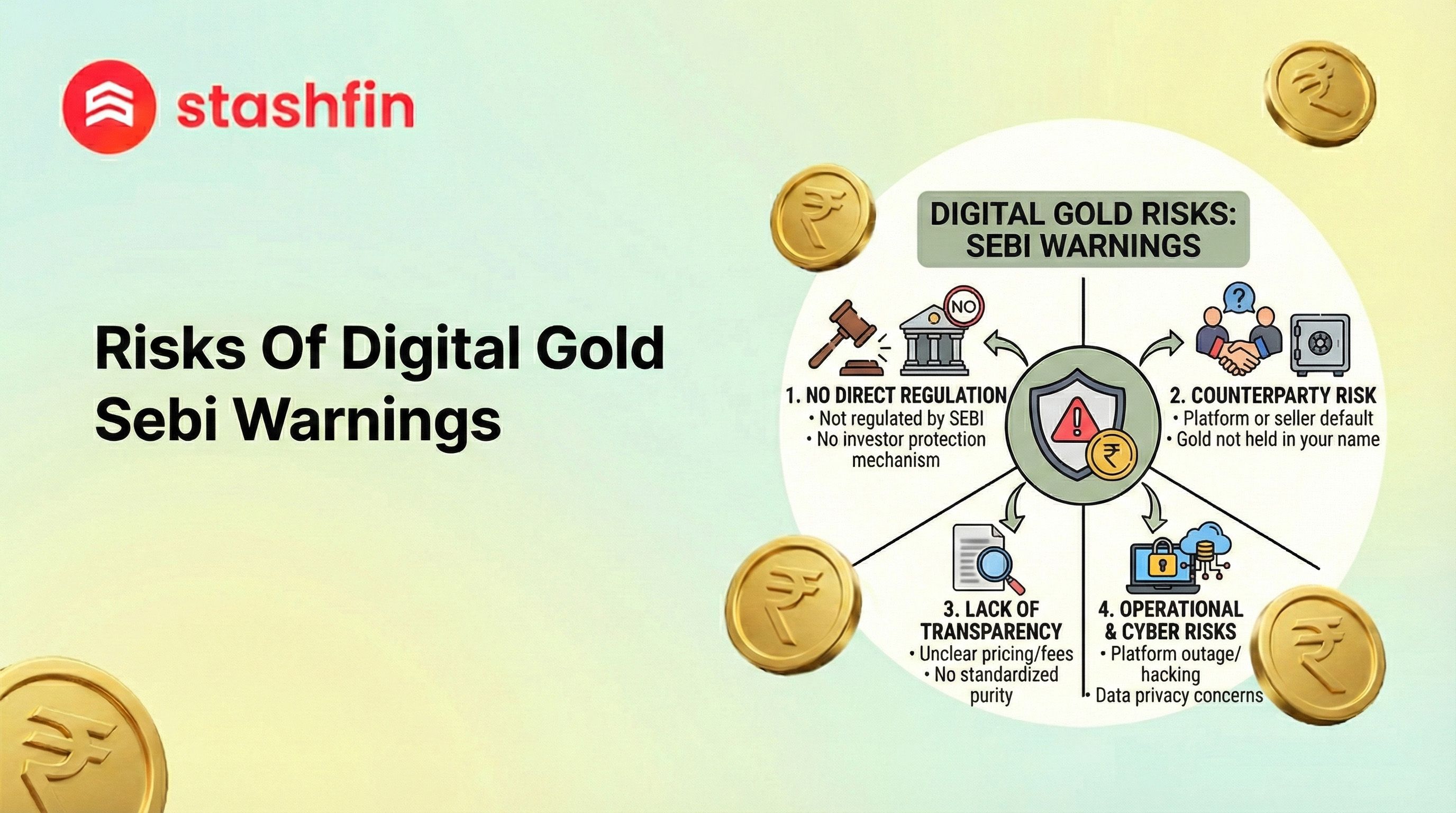

Digital Gold Risks & SEBI Warnings: What Every Indian Investor Must Know in 2026
Is your digital gold truly safe? Explore the critical risks of digital gold and the latest SEBI warnings as of 2026. From regulatory gaps to counterparty defaults, we break down why convenience might be a double-edged sword for your gold portfolio.


The Regulatory Backdrop: Why SEBI is Concerned
In late 2025 and throughout early 2026, the Securities and Exchange Board of India (SEBI) amplified its caution against "Digital Gold" or "E-Gold" products. On November 8, 2025, SEBI issued a formal advisory (PR No. 70/2025) that still serves as the primary warning for investors today.
The core of the problem lies in a regulatory vacuum. Unlike Mutual Funds, Stocks, or Gold ETFs, Digital Gold is not classified as a "security" under the Securities Contracts (Regulation) Act, 1956.
Key SEBI Stance: "Digital gold products are neither notified as securities nor regulated as commodity derivatives. Investors in digital gold are not protected by SEBI’s investor protection mechanisms."
The 5 Major Risks of Digital Gold Investment
1. The Lack of a Central Regulator
If you have a dispute with a stockbroker, you use SEBI’s SCORES portal. But if a Digital Gold platform refuses your redemption, there is no specialized financial regulator to intervene. You are essentially dealing with a private commercial contract, leaving you with the long and tedious route of consumer courts.
2. Counterparty & Platform Risk
When you buy digital gold, you are buying it from a custodian (like MMTC-PAMP, SafeGold, or Augmont). If the platform or the custodian faces insolvency or fraud, your claim on the gold could be caught in legal limbo. Since these entities aren't regulated like banks, your gold might be treated as a general asset of the company during liquidation.
3. Pricing Opacity & "Hidden" Spreads
Unlike an exchange where prices are determined by market forces, Digital Gold prices are set by the provider.
- The Spread Risk: Most platforms maintain a 3% to 5% spread between the "Buy" and "Sell" price.
- The GST Impact: You pay a non-recoverable 3% GST on every purchase.
- Total Hurdle: You need the market price of gold to rise by roughly 8% just to break even.
4. Storage and Audit Uncertainty
While providers claim gold is "stored in 100% insured vaults," there is no mandated, standardized, third-party audit required by Indian law. While reputable partners conduct voluntary audits, there is no regulatory guarantee that the physical gold backing your app balance actually exists.
5. Forced Holding Periods (The Expiry Problem)
Most Digital Gold providers have a maximum storage limit, typically 5 to 7 years. After this period, you are forced to:
- Sell the gold at the prevailing platform sell price.
- Request physical delivery (incurring high minting and delivery charges).
This "forced exit" prevents Digital Gold from being a truly multi-generational asset like physical gold or SGBs.
Digital Gold vs. Regulated Alternatives
To protect your wealth, SEBI recommends moving toward regulated gold products.
| Feature | Digital Gold | Gold ETFs | Sovereign Gold Bonds (SGB) |
|---|---|---|---|
| Regulator | None (Unregulated) | SEBI | RBI |
| Sovereign Risk | High (Private Entity) | Low (Mutual Fund) | Zero (Govt. Backed) |
| Audit Requirement | Voluntary | Mandatory (SEBI) | Not Applicable |
| GST | 3% on every buy | No GST | No GST |
| Grievance Redressal | Consumer Court | SEBI SCORES | RBI Ombudsman |
The "Hidden" Cost of Redemption
Many investors buy Digital Gold thinking they will one day convert it into jewelry. However, the Redemption Risk is significant:
- Minting Charges: To convert your digital balance to a coin, you must pay making charges ranging from ₹400 to ₹1,000+ per coin.
- Delivery Risks: Physical delivery involves logistics risks and insurance costs often passed to you.
- Minimum Limits: You usually need to accumulate at least 0.5g or 1g before you can request delivery.
How to Stay Safe in 2026
If you choose to use Digital Gold for its convenience, follow these "Safety First" rules:
- Verify the Custodian: Ensure the "Powered by" partner is a reputed name like MMTC-PAMP or SafeGold.
- Limit Your Exposure: Financial experts suggest keeping less than 5% of your total portfolio in Digital Gold. For larger amounts, prefer SGBs or ETFs.
- Check Audit Logs: Look for the "Trustee" or "Audit Report" section in the app. If a platform doesn't show its vault audit certificate, walk away.
- Read the "Spread": Always compare the app’s price with the MCX (Multi Commodity Exchange) live rate.
Final Verdict: Convenience vs. Safety
Digital Gold is an excellent tool for micro-savings, but the 2026 SEBI warnings are a clear signal that the era of unregulated growth is under heavy scrutiny. While it is legal and convenient, it lacks the safety net of your stocks and mutual funds.
Meta Title: Digital Gold Risks & SEBI Warnings 2026: Is It Safe?
Meta Description: Discover the latest 2026 SEBI warnings on Digital Gold. Learn about regulatory gaps, counterparty risks, hidden costs, and safer regulated gold alternatives.
Meta Keywords: digital gold risks India, SEBI warning digital gold 2026, is digital gold safe, digital gold vs gold ETF, counterparty risk gold, gold investment regulation.
Suggest H1: Digital Gold Risks & SEBI Warnings: A 2026 Investor Alert
Suggest H1 Description: A deep dive into why SEBI has cautioned against unregulated digital gold products and how you can protect your wealth using regulated gold instruments.
Note: The information regarding SEBI's advisory (PR No. 70/2025) remains the operative regulatory stance throughout early 2026.
Would you like me to create a checklist to help you verify if your current digital gold provider is following best practices?

