


 Back
Back
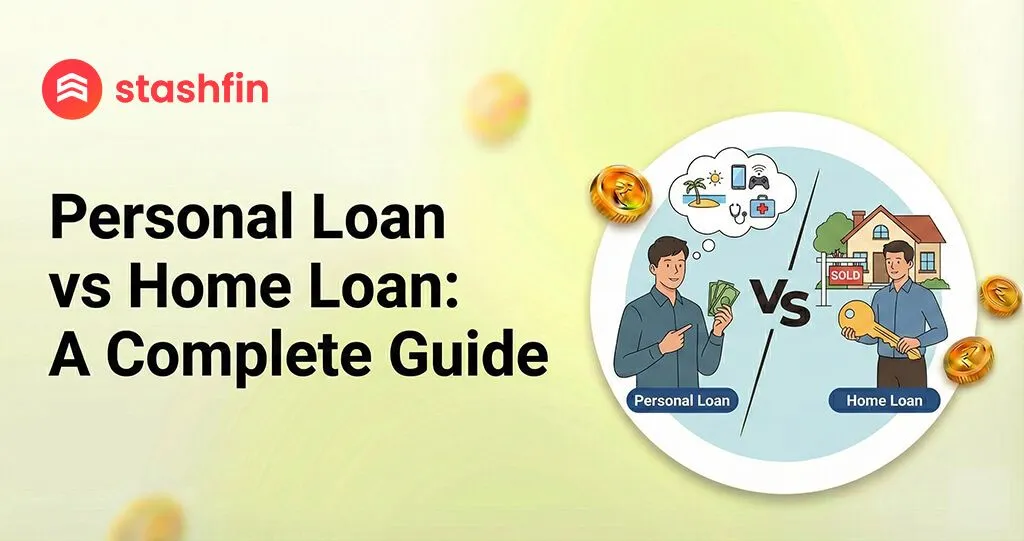

Personal Loan vs Home Loan: Which Option Works Best for You?
If you are weighing a personal loan vs home loan, you are really deciding between two very different borrowing “jobs.” One is designed for speed and flexibility, the other is built for long-term, high-value asset funding. And that is why people keep asking is personal loan is better than a home loan, because the “better” choice depends less on the product name and more on your purpose, timelines, and cash-flow comfort.pe
In this guide, you’ll learn the difference between a home loan and a personal loan, when each option makes sense, how rates and tenures typically differ, and what risks to watch before you sign.


What is a Personal Loan?
Think of a personal loan as the "all-rounder" of the credit world. It’s usually unsecured, meaning you don't have to put up your house or car as collateral. Lenders base their decision on your paycheck, your credit score, and how well you’ve handled debt in the past.
People grab these when they need money fast for things like a medical emergency, a wedding, or a sudden home repair. The best part? There are almost no rules on how you spend it. You get the cash, solve the problem, and aim to pay it back over a few years.
The practical advantage is speed and flexibility: fewer end-use restrictions and often faster processing than with property-backed loans.
What is a Home Loan?
A home loan is typically a secured loan used to purchase, construct, extend, or sometimes renovate a residential property. The property is mortgaged to the lender as security for the loan until it is repaid. Because home loans are collateralised, they generally offer longer tenures and lower pricing than unsecured credit (subject to profile and market conditions).
Home loans are also structured around property valuation, legal checks, and lender policies such as loan-to-value (LTV). Many lenders finance only a portion of the property value, and the buyer arranges the balance as a down payment.
Key Differences Between Personal Loans VS Home Loans
Here is a clear, side-by-side view of the personal loan and home loan difference:
| Factor | Personal Loan | Home Loan |
|---|---|---|
| Security | Usually unsecured | Secured by the property |
| Use-case | Broad, multi-purpose | Property purchase/construction (and related purposes) |
| Typical tenure | Shorter | Longer (often up to decades) |
| Processing | Faster, fewer checks | More documentation + valuation/legal checks |
| Rates | Often higher due to unsecured risk | Often lower due to collateral |
| Amount | Moderate, linked to income profile | Larger, linked to property value & LTV |
When Should You Opt for a Personal Loan?
Go with a personal loan if your need is urgent or if the amount isn't massive. It’s perfect for situations where waiting for a "secured" loan would cause too much stress or where you don't want to tie up your assets.
Common reasons to pick this route:
- Medical emergencies that require funds within 24–48 hours.
- Consolidating high-interest debt into one manageable monthly payment.
- Home renovations that are too small to justify the paperwork of a home loan top-up.
- Wedding or travel expenses that you plan to pay off within 3 years.
A good rule of thumb: If you can pay it back quickly and the money isn't for an appreciating asset like a house, the personal loan is usually the smoother choice.
When Should You Choose a Home Loan?
A home loan is the right instrument when you are financing a high-value property goal and need a long tenure to keep EMIs manageable.
Choose a home loan when:
- You are buying a home/flat/plot, or building a house
- You prefer lower-cost, long-tenure borrowing backed by the property
- You can fund the down payment (since lenders often finance only part of the property value)
- You are comparing not just the rate, but also LTV, processing fees, and other selection factors
If your question is personal loan or home loan, which is better, and the purpose is clearly “owning a home,” a home loan is usually the first-principles answer because it’s purpose-built for that asset and tenure.
Comparing Interest Rates and Loan Amounts
Interest rates (why home loans are often lower): Since home loans are secured by property, lenders typically price them lower than unsecured personal loans, which carry higher default risk.
Loan amounts (why home loans are often larger): Home loans can be significantly larger because they’re linked to the property value and LTV norms, whereas personal loans usually cap out based on income, credit profile, and internal lender policies.
Loan Tenure impact: Longer tenure in home loans spreads repayment, often lowering EMI but increasing total interest paid over time. A shorter personal loan tenure can mean higher EMI but faster closure.
Also note the decision trap: people compare only the rate. But the correct comparison is total cost + timeline + risk. A “lower rate” doesn’t automatically mean “lower burden” if the loan is too large or the tenure is misaligned with your income stability.
Risks and Challenges of Both Loan Types
Every loan solves a problem and creates a responsibility. Here are the key risks to evaluate:
Personal loan risks
- Higher pricing sensitivity: Because personal loans are typically priced higher, small changes in rate or tenure can materially change EMI and total outgo.
- Over-borrowing risk: The flexibility can tempt you to fund wants rather than needs.
- Prepayment/foreclosure conditions: Some lenders may apply charges or conditions, always read the schedule of charges.
Home loan risks
- Long commitment risk: A long tenure increases exposure to income shocks (e.g., job changes, medical needs, business downturns).
- Property-linked complexity: Valuation, legal checks, builder documentation, and disbursal schedules can add friction.
- Down payment planning: Since lenders often finance only a portion (typically 80–85%), you must plan for the remaining amount, as well as registration, stamp duty, and moving costs.
Tips for Choosing Between a Personal Loan and a Home Loan
Use these filters to decide fast, without guesswork:
Define the purpose in one line.
If it’s property acquisition/construction, a home loan fits the purpose.Match the tenure to the asset life and your income stability.
Short-life needs (repairs, emergencies, consolidation) suit shorter repayment horizons; long-life assets (home ownership) suit longer horizons.Stress-test your EMI.
Assume a month where income is disrupted, can you still pay EMIs without missing essentials?Compare beyond the interest rate.
For home loans, factors like processing fees and LTV matter, not only rates.Plan the “hidden” costs.
Home purchase often requires a down payment and other ownership costs.Don’t ignore tax/regime constraints (if relevant).
Home loan tax benefits depend on conditions and may differ under the old vs new regimes. (For example, interest deductions under Section 24 for self-occupied property are commonly discussed in the context of the old regime.)
Bottom Line
The real answer to home loan vs personal loan, which is better, is: the loan that matches the job.
- Choose a personal loan vs home loan in favour of a personal loan when you need fast funds for a non-property purpose, and you can close it in a shorter horizon without straining your cash flow.
- Choose a home loan when your goal is property purchase/construction, and you need a long-term structure designed for a high-value asset.
Think of Stashfin as your financial "bridge." If you need money right now for a specific goal, and you don’t want to get bogged down in weeks of paperwork, a flexible personal loan is often the most practical move.
By using the Stashfin platform for near-term needs, you get the speed and digital access you need to address life’s immediate gaps without disrupting your bigger picture. This keeps your long-term plans, like saving for a house or managing a major home loan, on their own dedicated track while you handle today's expenses responsibly.


