





















 Back
Back
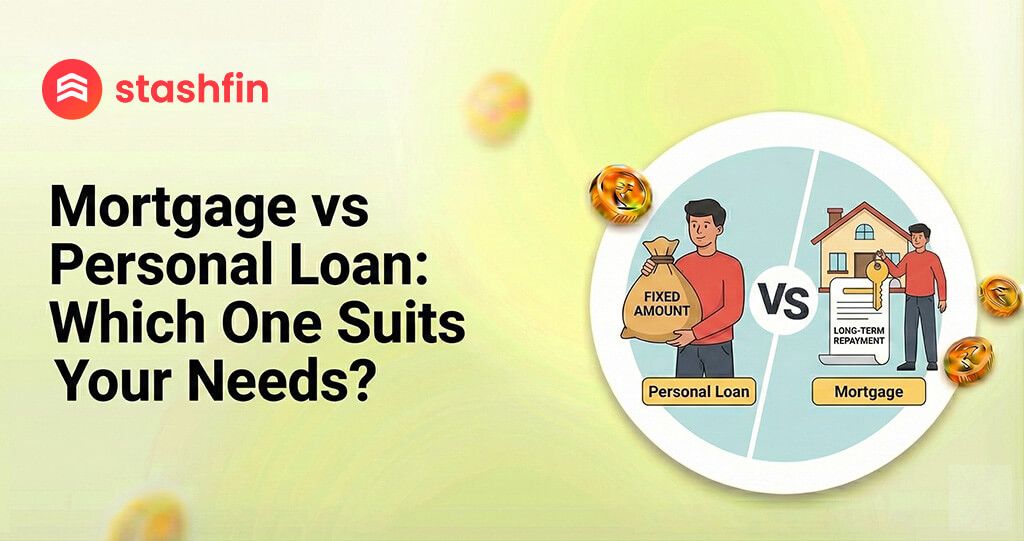

Mortgage vs Personal Loan: Which One Suits Your Needs
If you are looking for some financial help, choosing the right loan matters more than most people think. The two options many borrowers compare first are personal loans and mortgage loans. They may both fall under “loans,” but they work very differently—right from the purpose they serve to the interest rate you pay, the time you get to repay, and the documents the lender will ask for.
So, how do you decide what fits your situation? Start by getting clear on one thing: the real difference between a personal loan and a mortgage loan. Once that is sorted, the choice becomes far less confusing.
In this guide, we break down mortgage loan vs personal loan, show you how to compare them in a practical way, and explain when it makes sense to choose one over the other. Whether you are planning for a home-related goal or trying to manage an urgent expense, you will have a clearer path to the right decision by the end.


What is a Mortgage Loan?
A mortgage is a type of secured loan issued solely for purchasing real estate, such as a house or commercial property. The property you have bought is pledged for the mortgage, thus granting the owner the right to take possession if you are not capable of repaying it.
A mortgage loan is for many years. Most repayment durations take 15 years to 30 years. Key features of mortgage loans are;
One key difference in interest rates between home loans and personal loans is that the former are relatively lower. This is because collateral is attached to the loan, reducing the lender’s risk. This makes them the go-to financial planners for long-term financial planning, especially if real estate is involved.
When is a Personal Loan?
A personal loan is any general-purpose loan obtained by a person for various purposes, including medical emergencies, debt repayment, home improvement, or travel sponsorship. Personal loans are sometimes secured, so they do not usually require collateral.
Now, let’s discuss personal loans vs. mortgage loans in India. Evidently, personal loans offer flexibility, but they are better for short-term money requirements, as their interest rates are higher, and the repayment period is shorter.
Key Differences Between Mortgage and Personal Loans
| Parameter | Mortgage Loan | Personal Loan |
|---|---|---|
| Primary purpose | Usually taken to purchase real estate (property). | Can be used for multiple needs such as medical expenses, education, travel, and other personal requirements. |
| Collateral | Requires collateral—typically a property—since it is a secured loan. | Generally, it does not require collateral because it is typically an unsecured loan. |
| Repayment tenure | Typically repaid over a longer duration, often up to around 30 years (varies by lender/product). | Usually repaid over a shorter duration, commonly 1 to 5 years (varies by lender/product). |
| Interest rate | Often lower because the loan is secured. | Often higher because the loan is unsecured. |
| Approval process | More detailed process with more documentation and steps, such as property valuation/appraisal and legal checks. | Typically simpler process with fewer steps; often faster disbursal. |
| Disbursal timeline | Usually slower due to appraisal and verification stages. | Usually faster because there is no collateral valuation step. |
| Best suited for | Large-ticket, long-term funding needs where lower rates and longer tenure matter. | Smaller-to-mid ticket, shorter-term funding needs where speed and no-collateral borrowing matter. |
When Should You Choose a Mortgage Loan?
If you have an asset—typically a residential or commercial property—and you need a larger amount at a lower cost over a longer horizon, a mortgage-style loan (often called a loan against property) is usually the better fit. The biggest practical reason is the mortgage loan vs personal loan interest rate gap: because a mortgage is secured, lenders tend to price it lower than an unsecured personal loan.
Choose this route when the goal is “big-ticket and long-term,” such as expanding a business, funding a child’s higher education, or consolidating expensive debt into a longer, steadier repayment plan. Many lenders structure mortgage loans with longer tenures, which can keep EMIs manageable when compared with shorter-tenure borrowing.
If you keep asking yourself, a personal loan or mortgage loan which is better for a high-value requirement, the answer often comes down to cost and tenure: mortgage loan vs personal loan interest rate is typically lower on the secured side, and the longer repayment window can protect monthly cashflow—so long as you are comfortable pledging collateral.
A good quick check: if you can tolerate a slightly longer approval process (because valuation and legal checks are part of the file), and you can keep repayment steady even during a slow business quarter, a mortgage loan is worth prioritising.
When Should You Choose a Personal Loan?
Choose a mortgage loan (often called a loan against property) when you own a residential or commercial property and need a larger amount for a longer tenure. Because the loan is secured, the mortgage loan vs personal loan interest rate gap is usually real. Lenders often price it lower than an unsecured personal loan.
This route fits “big-ticket and long-term” needs, such as:
- expanding a business
- funding a child’s higher education
- consolidating costly debt into a longer repayment plan
Mortgage loans often come with longer tenures. That can bring down the EMI and make monthly outgo easier to manage. So, if you keep asking yourself, a personal loan or mortgage loan which is better for a high-value requirement, start with cost and tenure. In most cases, mortgage loan vs personal loan interest rate is lower on the secured side.
A quick check before you apply: are you comfortable pledging collateral, and can you keep repayments steady even during a slow business quarter? If yes, a mortgage loan is worth prioritising. Just be ready for a longer approval process, since valuation and legal checks are part of the file.
Comparing Loan Repayment Flexibility
Repayment flexibility is not just about tenure length; it is also about how your cashflow behaves month to month. In a typical personal loan app, you pay a fixed EMI on a fixed schedule. Many lenders allow you to pick a tenure that fits your budget at the time of booking, and some even provide options to choose EMI amount/tenure or adjust it within the policy.
Mortgage loans usually give you flexibility through longer tenures and (in some cases) product variants such as overdraft-style facilities against property. Longer tenure can lower the monthly burden, but it also means you must watch total interest outgo over the full period.
If your income is stable and you want to close the loan quickly, a shorter-tenure personal loan may feel more “in control.” If your income is seasonal, and you need the EMI to stay comfortable across slow months, a longer-tenure mortgage can be easier to live with—provided you are disciplined about part-prepayments when surplus cash comes in.
This is where the mortgage loan vs personal loan interest rate point matters again. A slightly longer tenure at a materially lower mortgage loan vs personal loan interest rate can sometimes beat a shorter tenure at a higher rate, even if the EMI looks similar on paper.
Risks and Challenges of Both Loan Types
| Loan Type | Risk / Challenge |
|---|---|
| Mortgage Loan | A mortgage loan’s main risk is straightforward: the loan is backed by an asset so that prolonged default can put that asset at risk. In practice, that means you should not mortgage a property if your cashflow is uncertain, your income is informal without buffers, or the property is your only “must-protect” family asset. |
| Personal Loan | Personal loans come with a different risk profile. Because they are unsecured, the interest rate is typically higher, so affordability can deteriorate fast if you borrow more than needed or choose a very short tenure that pushes the EMI beyond a safe monthly limit. A missed EMI also damages your credit profile and can make future borrowing costlier. |
So, is a personal loan better than a mortgage? It can be—when you need speed, the loan amount is modest, and you can repay it comfortably without stretching your monthly cashflow. Is it better when you are funding a large, long-term goal and you already own a usable collateral asset? Often, no. And in a personal loan vs mortgage choice, “better” is usually just “better aligned to your risk tolerance.”
A practical way to answer personal loan or mortgage loan which is better is to run four checks:
What is the real purpose and timeline—weeks, months, or years?
Can you service the EMI even in a “bad month” scenario?
Does pledging property create stress you do not want to carry?
After fees, which option costs less over the full tenure, factoring in the mortgage loan vs personal loan interest rate difference?
Bottom Line
Consider the difference between personal loan and mortgage loan when making a financial choice and trying to decide on a suitable funding alternative. If you are purchasing real estate and have time to make repayments, you may opt for a mortgage. On the other hand, if your needs are pressing and you require flexibility in use, you might opt for a personal loan.
Here at Stashfin, we are aware that each borrower has unique needs. Whether you are seeking personal loans or something else from alternative financial avenues, our tailor-made solutions, competitive home loan vs personal loan interest rates, and easy application process will cater to your demands.

