


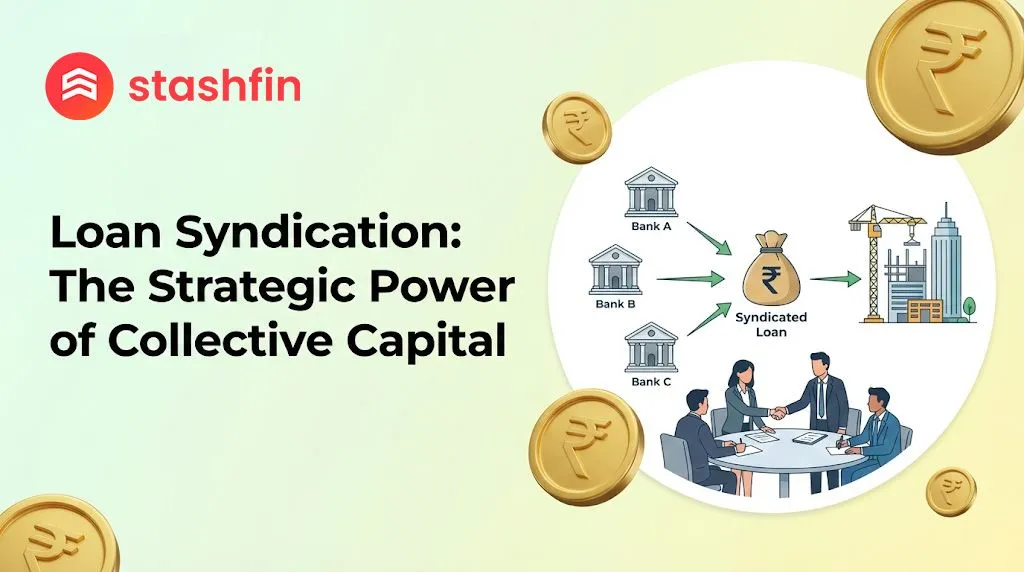
Loan Syndication: The Strategic Power of Collective Capital
When a corporation requires financing for a multi-billion-rupee project, such as a new green hydrogen plant, a cross-country highway, or a global merger, a single bank is rarely willing or able to shoulder the entire risk. Taking on a ₹5,000 crore exposure on a single balance sheet could violate regulatory limits and create excessive concentration risk.
This is where Loan Syndication becomes essential. It is the sophisticated financial mechanism that allows multiple lenders to pool their resources to fund a single borrower under a unified set of terms.
In 2026, loan syndication has evolved beyond traditional banking groups to include a diverse mix of NBFCs, insurance companies, and private credit funds, making it the bedrock of India’s infrastructure and industrial growth.

Defining the Concept: What is Loan Syndication?
Loan Syndication is a process where a group of lenders (the "syndicate") collectively provides a loan to a single borrower. Instead of multiple separate loans, the borrower signs one master agreement.
The primary objective is Risk Diversification. By spreading the loan across five or ten different institutions, no single lender is crippled if the borrower faces financial distress.
Key Roles in a Loan Syndicate
- The Borrower: Usually a large corporation, government entity, or SPV (Special Purpose Vehicle).
- Mandated Lead Arranger (MLA): The lead bank appointed by the borrower to structure the deal, negotiate terms, and "sell" parts of the loan to other lenders.
- Agent Bank: The administrative "middleman" who handles the day-to-day tasks—collecting interest, distributing repayments, and managing communication between the borrower and the syndicate.
- Participant Lenders: Banks or financial institutions that provide a portion of the funds but do not play a lead role in structuring.
The Three Primary Types of Syndication
Not all syndicated deals are structured the same. The choice depends on the borrower’s urgency and the market’s appetite for risk.
- Underwritten Deal: The Lead Arranger guarantees the entire loan amount. If they cannot find enough participants to join the syndicate, the lead bank must fund the "shortfall" themselves. This is the most expensive but most secure option for the borrower.
- Best-Efforts Syndication: The Lead Arranger does not guarantee the full amount. They commit to their "best effort" to find lenders. If the loan is not fully subscribed, the borrower might only receive a portion of the requested funds.
- Club Deal: A smaller group of lenders (usually 2 to 5) come together from the start. This is faster and simpler, often used for mid-sized corporate requirements rather than massive infrastructure projects.
Loan Syndication vs. Bilateral Loans vs. Consortiums
For a financial manager, choosing the right structure is a strategic decision.
| Feature | Cash Purchase | Credit Purchase |
|---|---|---|
| Immediate Outlay | 100% of the price | ₹0 (or a small down payment) |
| Total Cost | Sticker price only | Sticker price + potential interest/fees |
| Liquidity | Reduces your available cash | Preserves your cash for other needs |
| Credit Score Impact | None | High (Builds or hurts your score) |
| Consumer Protection | Limited | High (Fraud protection & chargebacks) |
| Rewards/Points | Rare | Common (Cashback, miles, points) |
The Loan Syndication Process: From Mandate to Disbursement
The lifecycle of a syndicated loan is highly structured and typically takes 45 to 90 days.
- The Mandate
The borrower identifies their funding need and selects a Lead Arranger based on their expertise and fee structure. They sign a "Mandate Letter" which outlines the proposed terms. - The Information Memorandum (IM)
The Lead Arranger prepares a detailed Information Memorandum. This document contains the borrower’s financials, project projections, and risk assessments. It is essentially the "sales pitch" used to invite other lenders. - Marketing and Allocation
The Lead Arranger approaches potential participants. Lenders perform their own due diligence and submit "commitments" for the amount they are willing to lend. - Documentation and Closing
Legal teams draft the Syndication Agreement, Inter-creditor Agreements, and Security Documents. Once all parties sign, the loan is officially "closed." - Disbursement and Agency
The funds are disbursed (often in tranches based on project milestones). From this point, the Agent Bank takes over the administration of the loan until it is fully repaid.
Strategic Advantages of Loan Syndication
- Access to Massive Capital: It allows borrowers to raise sums that would be impossible through a single bank.
- Market Reputation: A successfully oversubscribed syndication sends a strong positive signal to the market about the borrower’s creditworthiness.
- Operational Efficiency: The borrower only has to negotiate with one Lead Arranger and deal with one Agent Bank, rather than managing 10 different banking relationships.
- Flexible Structuring: Syndicated loans can combine different "tranches"—for example, one portion in INR with a fixed rate and another in USD with a floating rate (SOFR).
Practical Use Cases in 2026
In the current Indian market, loan syndication is predominantly used for:
- Infrastructure Development: Power plants, airports, and smart city projects.
- Mergers & Acquisitions (M&A): Providing the "war chest" for Indian firms to acquire global competitors.
- Working Capital Optimization: Consolidating multiple small bank lines into one large, efficient syndicated credit line.
The Ultimate Tool for Corporate Leverage
Loan syndication is the ultimate tool for corporate leverage. It bridges the gap between massive capital requirements and individual lender risk limits. In 2026, as project scales increase and the need for multi-currency funding grows, mastering the syndication process is vital for any growth-oriented enterprise.


