


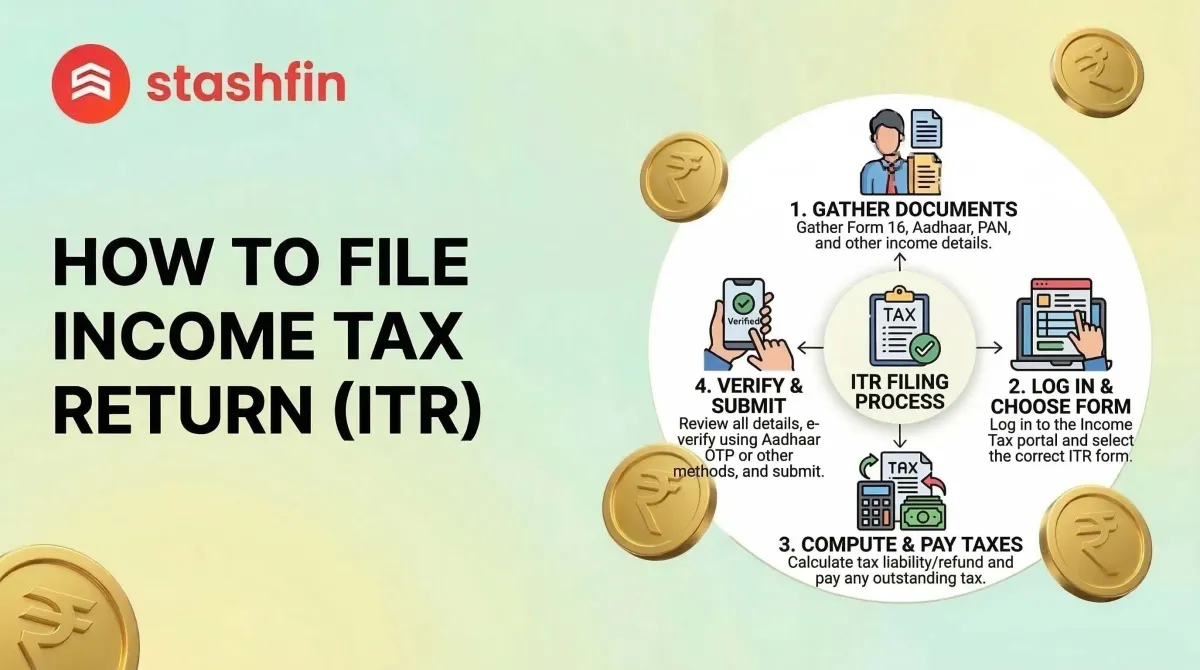
How to File Income Tax Return (ITR): A Human Guide to Staying Compliant
Every year, the "tax season" anxiety hits. You see the headlines about new slabs and default regimes, and suddenly, that browser tab with the Income Tax portal feels very intimidating.

But here’s the secret: if you have your documents in a neat pile (or a messy folder), the actual filing takes less time than watching a movie. Let’s break down the 2026 process into manageable bites.
Step 1: Gather Your "Paper" Trail
Before you even log in, you need your ammunition. Filing without these is like trying to bake a cake without checking if you have flour.
- Form 16: Your employer's summary of what they paid you and the tax deducted (TDS).
- AIS/TIS (Annual Information Statement): Think of this as the government’s "secret folder" on you. It lists every dividend, stock sale, and savings interest you earned. Don't ignore this; the tax department definitely won't.
- Bank Statements: For that interest income that feels small but must be reported.
- Investment Proofs: Only necessary if you’re opting for the Old Regime (80C, 80D receipts).
Step 2: Picking Your Battlefield (ITR-1 vs. ITR-4)
Choosing the wrong form is a classic rookie mistake. It’s like showing up to a black-tie event in flip-flops—you’ll be asked to leave (or in this case, re-file).
| Form | Who is it for? |
|---|---|
| ITR-1 (Sahaj) | For salaried folks earning up to ₹50 Lakh with one house property. |
| ITR-2 | If you sold stocks/property (Capital Gains) or have multiple houses. |
| ITR-3 | For business owners and partners in a firm. |
| ITR-4 (Sugam) | For small business owners or freelancers using "Presumptive Taxation." |
Step 3: The Big Decision—New vs. Old Regime
In 2026, the New Tax Regime is the default. This means if you do nothing, the system assumes you want the simpler path with lower rates but zero deductions.
The Rule of Thumb:
- Old Regime: Better if you have a massive home loan, high HRA, and maximum insurance premiums.
- New Regime: Better if you prefer "no-strings-attached" income with a higher tax-free limit (up to ₹12 Lakh under 2026 guidelines).
Pro-Tip: The portal has a comparison tool—use it. Let the machine do the math before you commit.
Step 4: The 5-Click Filing Process
- Login: Go to the e-Filing Portal using your PAN/Aadhaar.
- Start Filing: Click ‘e-File’ > ‘Income Tax Returns’ > ‘File Income Tax Return.’
- Select AY 2026-27: Make sure you’re filing for the correct year (Assessment Year is one year ahead of the Financial Year).
- Validate Data: The portal will pre-fill ~70% of the info from your AIS. Check it against your salary slips. If there’s a mismatch, trust your salary slip but be ready to explain why.
- Pay & Submit: If you owe tax, pay it via e-pay Tax. If you’re owed a refund, double-check your bank account's "Pre-validation" status.
Step 5: Don't Forget the "Handshake" (Verification)
Filing is not finishing. Your ITR is a ghost until you verify it. Use the Aadhaar OTP method—it takes 10 seconds and gives you immediate peace of mind. You have 30 days to do this, but why wait?
Why You Should File Even if You Owe Zero Tax
You might think, "I earn below the taxable limit, why bother?" Think again. A filed ITR is your most powerful financial document:
- Visa Processing: Want to travel to Europe or the US? They’ll ask for 3 years of ITRs.
- Loan Approval: Banks want to see your ITR to gauge your "repayment character."
- Loss Carry-Forward: If you lost money in the stock market this year, you can only offset it against future profits if you file an ITR.
Final Thoughts
Filing your taxes is a sign of financial maturity. Don't let the jargon scare you; the portal is more user-friendly than it looks!


