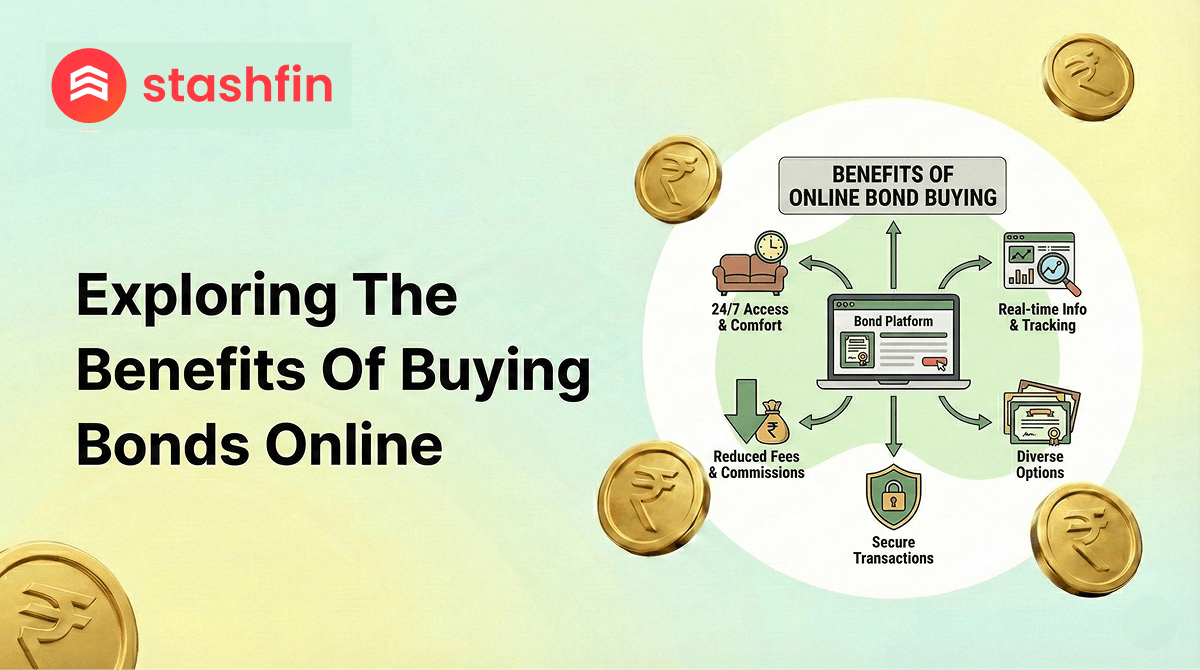
Benefits of Investing in Bonds in India: Introduction
Lock in superior returns and stabilize your portfolio with India's most resilient debt instruments.
- High-Yield Opportunities: Earn aggressive returns up to 14.5% on curated corporate bonds.
- Inflation-Beating Growth: Secure yields that significantly outperform traditional savings and FDs.
- 100% Digital Execution: Seamless Video KYC and instant allotment through regulated platforms.
- Sovereign & Corporate Safety: Choose from government-backed G-Secs or AAA-rated corporate debt.
Why Bonds are the Preferred Choice in 2026
As we move through 2026, the Indian debt market has entered a "Goldilocks" phase. Following the RBI’s strategic rate recalibrations and India’s inclusion in global bond indices, retail investors are now pivoting toward bonds to capture equity-like returns with much lower volatility.
- The 14.5% Edge: While traditional bank FDs hover around 7–8%, high-yield corporate bonds in 2026 are offering up to 14.5%, providing a massive spread for yield-hungry investors.
- Market Stability: Amidst the global shifts of 2026, bonds offer a "safe harbor," protecting your principal while providing a contractual obligation for interest payments.
- Retail Empowerment: With the minimum ticket size reduced to ₹10,000, the benefits of buying bonds are no longer reserved for institutional giants.
Features and Benefits of Investing in Bonds
When exploring the investing in bonds benefits, 2026 offers a technologically advanced and highly transparent landscape. Here is why you should consider bonds for your next investment:
- Predictable Cash Flow: Know exactly when your next interest payout will hit your account, monthly, quarterly, or annually.
- Capital Preservation: Unlike equity, where your principal can swing wildly, bonds are designed to return your full face value at maturity.
- Superior Diversification: Bonds often move inversely to stocks. Adding a high-yield 14.5% bond to your portfolio can offset equity downturns.
- Priority in Repayment: In the unlikely event of a corporate liquidation, bondholders (as creditors) are legally prioritized over shareholders.
- Secondary Market Liquidity: Most 2026 bond issues are listed on the NSE/BSE, allowing you to sell your holdings if you need instant liquidity.
- Zero Hidden Charges: Digital platforms now provide full transparency on YTM (Yield to Maturity), credit ratings, and historical default rates.
Bonds vs FDs: A 2026 Yield Comparison
The benefits of buying bonds become most apparent when compared to traditional fixed-income avenues.
| Feature | High-Yield Corporate Bonds | Traditional Bank FDs |
|---|---|---|
| Annual Returns | Up to 14.5% | 6.5% – 7.8% |
| Safety | High (for AAA/AA rated) | Insured up to ₹5 Lakh |
| Liquidity | Tradable on Stock Exchange | Premature penalty applicable |
| Minimum Tenure | 3 Months to 10 Years | 7 Days to 10 Years |
| Tax Treatment | 12.5% LTCG after 1 year | Taxed at Slab Rate |
Eligibility and Documentation for 2026 Investors
Investing in high-yield bonds is simpler than ever in 2026.
Qualification
- Investor Type: Resident Individuals, NRIs, HUFs, and Corporate entities.
- Age: 18 years and above (Minors can invest via guardians).
- KYC Status: Must have a valid PAN and Aadhaar linked to a mobile number.
Documentation
The entire process is 100% paperless:
- Identity Proof: Aadhaar and PAN.
- Bank Details: Linked Savings or NRO account for interest credits.
- Demat Account: Mandatory for holding bonds in electronic format (Standard for 2026).
How to Buy Bonds Online
Experience the benefits of buying bonds with our streamlined digital process:
- Discover: Filter bonds by yield (up to 14.5%), credit rating, and maturity.
- Verify: Complete a 2-minute Video KYC using your smartphone.
- Allocate: Use UPI or Net Banking for instant payment.
- Monitor: View your bonds in your Demat account and track daily interest accruals.
Returns and Charges (2026 Market Standard)
| Type of Bond | Expected Yield (p.a.) | Standard Platform Fee |
|---|---|---|
| High-Yield Corporate | 11% – 14.5% | 0.5% - 1.0% |
| AAA Rated Corporate | 8.5% – 10.5% | NIL |
| Government G-Secs | 6.5% – 7.5% | NIL |
| Tax-Free Bonds | 5.5% – 6.5% (Pre-tax equivalent higher) | Minimal |