


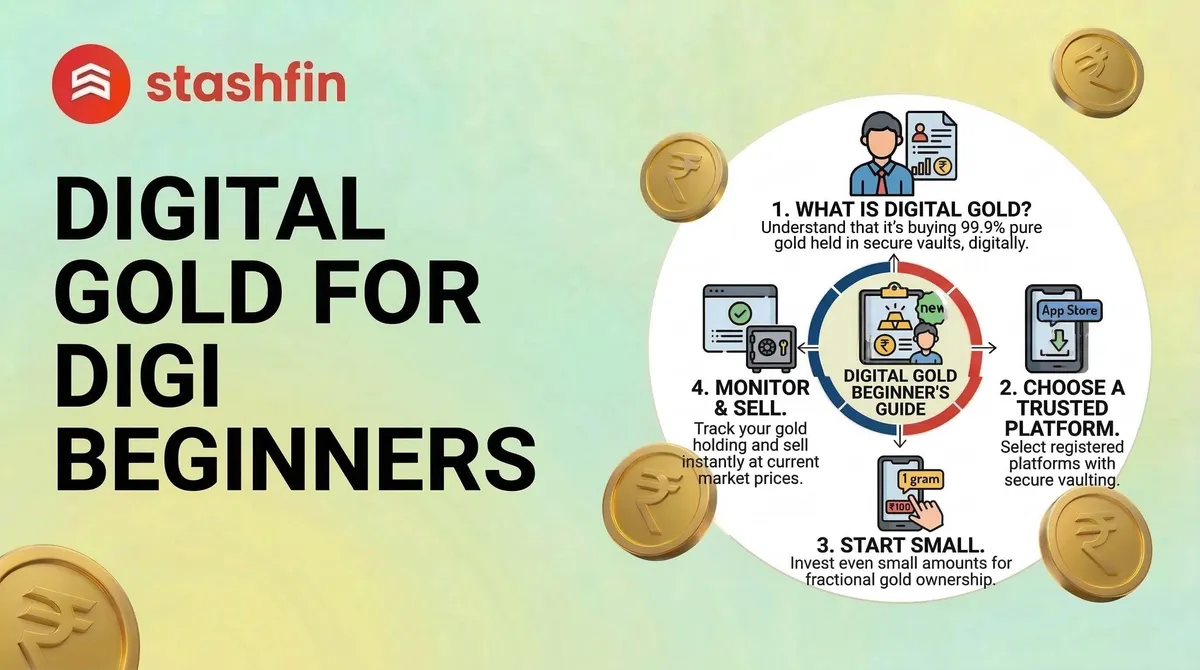
Digital Gold for Beginners: The Smart Way to Build Wealth in 2026
What is Digital Gold?
Digital gold is a modern way of purchasing 24-carat, 99.9% pure gold without having to physically hold the metal. When you buy gold worth even ₹10 on a platform like Stashfin, the provider buys an equivalent amount of physical gold and stores it in high-security, insured vaults under your name.

Think of it like a digital wallet for your wealth. You own the gold, you see the balance in grams on your app, but the headache of storage and security belongs to the professionals.
The Three Musketeers of Digital Gold
In India, while many apps sell gold, the actual gold is managed by three main custodians:
- SafeGold
- MMTC-PAMP (A joint venture between Switzerland’s PAMP and the Govt. of India)
- Augmont Gold
Why Beginners are Choosing Digital Gold in 2026
For a first-time investor, digital gold offers several "superpowers" that physical gold simply can't match:
1. The ₹1 Entry Point
The biggest barrier to buying physical gold is the price. With 24K gold prices cooling to around ₹15,435 per gram (as of February 18, 2026), buying even a 1-gram coin requires a significant chunk of change. Digital gold shatters this barrier, allowing you to start with just ₹1 or ₹10.
2. 24/7 Liquidity
Need cash for an emergency? With physical gold, you’d have to find a jeweler and negotiate a price. With digital gold, you can sell your holdings at live market rates 24/7. The money hits your bank account almost instantly.
3. Zero Storage Worries
Bank lockers are expensive and have long waiting lists. Digital gold is stored in insured, world-class vaults at no extra cost to you for a specified period (usually 5–7 years).
4. Guaranteed Purity
You are always getting 24K, 99.9% pure gold. You receive a digital invoice for every gram, ensuring you get exactly what you paid for without the "purity drama" of unorganized local shops.
The Fine Print: Risks and Things to Watch Out For
- The Regulatory Gap: Digital gold currently operates in a regulatory gray area. While the custodians are reputable, it lacks the specialized "watchdog" oversight of SEBI or the RBI.
- The Spread: There is always a difference between the "Buy" and "Sell" price (usually 2% to 5%). This covers insurance and storage.
- 3% GST: Just like physical gold, every digital gold purchase attracts a mandatory 3% GST.
Digital Gold vs. Other "Paper" Gold
| Feature | Digital Gold | Gold ETFs | Sovereign Gold Bonds (SGB) |
|---|---|---|---|
| Minimum Buy | ₹1 | 1 Gram (~₹15,400+) | |
| Ease of Use | Very High (App) | Medium (Needs Demat) | Medium (Bank/Online) |
| Interest Income | None | None | 2.5% Per Year |
| Tax on Maturity | Taxable | Taxable | Tax-Free (at 8 yrs) |
| Physical Delivery | Yes | No | No |
Taxation Rules for 2026
Under the current 2026 rules (following the Union Budget 2026 updates):
- Short-Term (Held < 24 months): Profits are added to your income and taxed according to your Income Tax Slab.
- Long-Term (Held > 24 months): Profits are taxed at a flat 12.5% (without indexation).
A Beginner’s Strategy: The Gold SIP
The smartest way for a beginner to use digital gold is a Gold SIP (Systematic Investment Plan). By investing a small, fixed amount (e.g., ₹500 every week), you benefit from Rupee Cost Averaging. When prices are high, you buy fewer grams; when prices drop, you buy more. This protects you from market shocks.
Final Verdict
Digital gold is the perfect entry point for the modern Indian investor. It combines the age-old trust in gold with the speed of UPI. While it has costs like GST and spreads, the ability to start with ₹1 and have 24/7 liquidity makes it a powerful tool for building a "rainy day" fund.


