


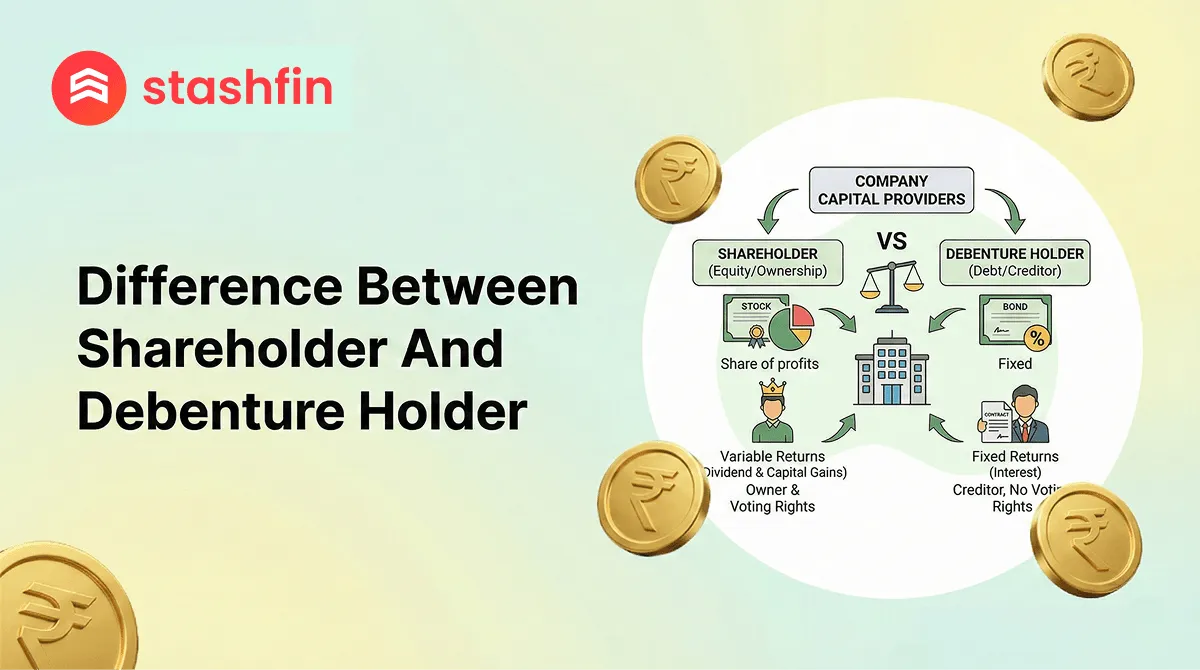
Difference Between Shareholder and Debenture Holder: Owners vs. Creditors
Strategic investing starts with knowing your role in a company's capital structure.

- Own a part of the growth or lend for guaranteed income
- Master the shareholder vs debenture holder risk hierarchy
- Understand voting rights and decision-making influence
- Protect your capital with liquidation priority insights
Need to Know the Difference Between Shareholder and Debenture Holder?
When you provide capital to a company, you are either an owner or a lender. The difference between shareholder and debenture holder determines your rights, your payday, and what happens if the company faces a crisis.
- Shareholders are the co-owners of the company. They profit when the company thrives through dividends and rising stock prices.
- Debenture Holders are creditors who have lent money to the company. They receive a fixed "thank you" in the form of interest, regardless of how much profit the company makes.
The balance between shareholder and debenture holder capital is what experts call a company's "Debt-to-Equity" ratio, a key health indicator for any business in 2026.
Features and Benefits of Being a Shareholder vs Debenture Holder
Choosing your side in the shareholder vs debenture holder debate depends on your long-term financial goals. Each role offers distinct advantages:
- Voting Rights: Shareholders have the power to elect the Board of Directors and influence major corporate mergers.
- Guaranteed Interest: Debenture holders enjoy fixed interest payments that must be paid even if the company is not currently profitable.
- Unlimited Growth: As an owner, there is no "cap" on how much your shares can increase in value.
- Safety First: Debenture holders are paid back their principal and interest before shareholders receive a single rupee during liquidation.
- Portfolio Diversification: Mixing both equity (shares) and debt (debentures) creates a "weather-proof" portfolio that balances growth and stability.
- Convertibility Perks: Some debenture holders can choose to "flip" their debt into shares, becoming shareholders when the company shows strong growth potential.
Whether you seek the high-octane growth of a shareholder or the steady reliability of a debenture holder, understanding these roles is vital for risk management.
Why Understanding Shareholder vs Debenture Holder Matters
The fundamental difference between shareholder and debenture holder is the relationship with the company: Ownership vs. Creditorship.
| Feature | Shareholder | Debenture Holder |
|---|---|---|
| Status | Owner / Member of the company. | Creditor / Lender to the company. |
| Form of Return | Dividends (Variable and non-guaranteed). | Fixed Interest (Guaranteed obligation). |
| Voting Rights | Full voting rights in general meetings. | No voting rights in management decisions. |
| Risk Level | High (Equity is the last to be paid). | Moderate to Low (Secured by assets). |
| Repayment Priority | Paid last during company liquidation. | Paid before shareholders (Preferential claim). |
| Security | No security or charge on company assets. | Often secured by a charge on fixed assets. |
Eligibility Criteria for Becoming an Investor
Investor Profile
To enter the market as either a shareholder or debenture holder in 2026, you generally need:
- Legal Capacity: Age 18+ (Minors can invest through guardians).
- KYC Compliance: Active PAN and Aadhaar for tax and regulatory purposes.
- Financial Account: A linked bank account and a Demat account to hold electronic securities.
- Risk Assessment: A clear understanding of the company's credit rating (for debentures) or P/E ratio (for shares).
Documentation
Setting up your investor profile is a quick digital process:
- Identity & Address Proof: Aadhaar card, PAN, or Passport.
- Bank Statements: Required by some brokers for F&O or high-value debt trading.
- Trust Deed Access: Debenture holders have a legal right to review the Trust Deed which protects their interests.
How to Invest: Shares vs Debentures
- Select Your Platform: Use a SEBI-registered broker or an online investment app.
- Analyse the Company: Review annual reports for shares or the "Offer Document" for new debenture issues (NCDs).
- Execute the Trade: Buy units on the secondary market (Stock Exchange) or apply during a Public Issue.
- Monitor Your Returns: Track dividend announcements as a shareholder or credit of interest as a debenture holder.
Interest and Dividend Charges: Financial Obligations
Understanding the costs and payouts is essential for calculating your "Net ROI."
| Financial Aspect | Shareholder Returns | Debenture Holder Returns |
|---|---|---|
| Source of Payment | Appropriation of Net Profit. | Charge against Profits (Fixed Expense). |
| Tax Treatment | Dividends taxed as per investor's slab. | Interest is fully taxable as income. |
| Brokerage/Transaction | Standard equity trading fees. | Often lower brokerage for debt instruments. |
| Default Risk | Loss of entire capital if company fails. | Legal claim on assets if interest is missed. |
Build a Resilient Portfolio in 2026
- Blue-Chip Equity: For stable dividends and long-term capital growth.
- Secured NCDs: For monthly income with lower default risk than unsecured debt.
- Convertible Debentures: A hybrid approach for risk-aware growth seekers.
- Small-Cap Shares: High-risk, high-reward ownership for younger investors.


