


 Back
Back
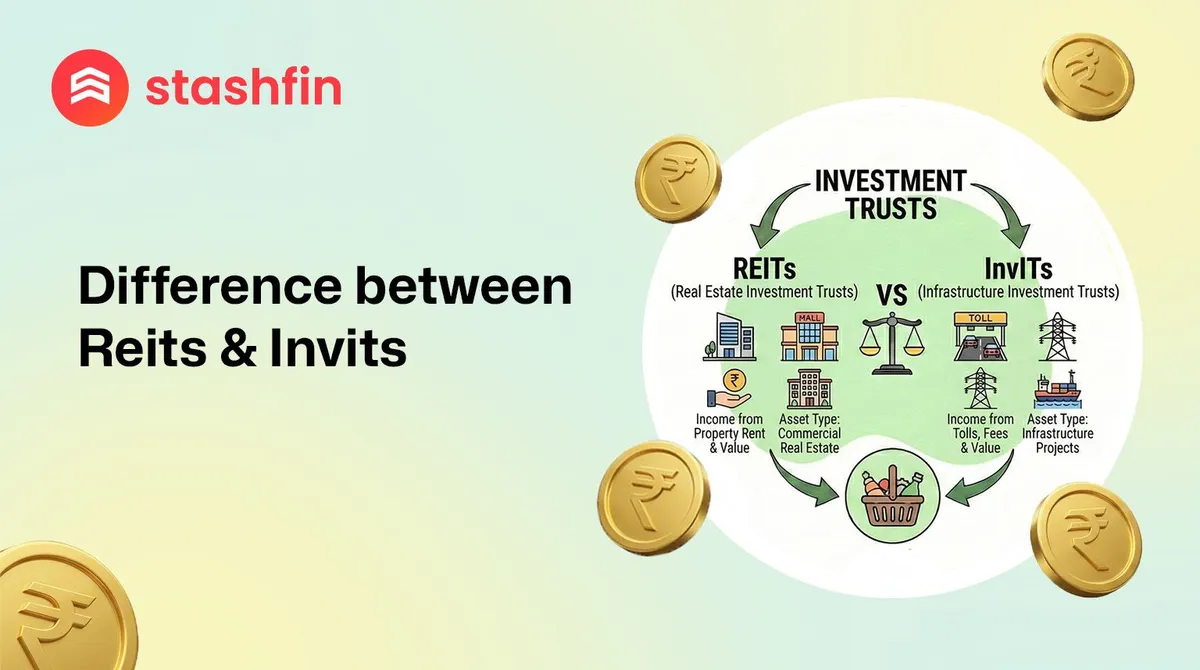

Difference Between REIT and InvIT: A Comprehensive Guide to Yield-Driven Assets
Unlock passive income by investing in large-scale Real Estate and Infrastructure projects.


- Diversify your portfolio with income-generating physical assets
- Understand the difference between REIT and InvIT structures
- Compare dividend yields and capital appreciation potential
- Learn about tax-efficient investing in the 2026 market
Need to Understand the Difference Between REIT and InvIT?
In the search for steady yield, Real Estate Investment Trusts (REITs) and Infrastructure Investment Trusts (InvITs) have emerged as powerful alternatives to traditional fixed deposits and bonds. While they share a similar structure, the underlying assets sets them apart.
- REITs focus on commercial real estate, allowing you to own a "piece" of high-end office spaces, malls, and hotels without actually buying property.
- InvITs act like a mutual fund for infrastructure, pooling money to invest in long-term projects like highways, power transmission lines, and telecom towers.
Both are regulated instruments designed to distribute at least 90% of their net cash flow to investors as dividends or interest.
Features and Benefits of REITs and InvITs
When you analyse the difference between REIT and InvIT, you’ll find that both offer a unique bridge between equity and debt. Here is why they are essential for modern portfolios:
- Professional Management: Assets are managed by experts to ensure high occupancy and efficient operations.
- Regular Income: Mandatory distribution of cash flows provides a predictable quarterly or bi-annual income stream.
- Liquidity: Unlike physical property or a road project, units of REITs and InvITs are traded on stock exchanges.
- Low Entry Barrier: You can start investing with a small amount, gaining exposure to multi-billion dollar assets.
- Inflation Hedge: As rents and toll rates rise with inflation, the payouts from these trusts typically increase as well.
- Transparency: High regulatory oversight ensures that investors receive detailed reports on asset performance and valuation.
Why Understanding the Difference Between REIT and InvIT Matters
The fundamental difference between REIT and InvIT lies in the nature of the assets and the length of the contracts associated with them.
| Feature | REIT (Real Estate Investment Trust) | InvIT (Infrastructure Investment Trust) |
|---|---|---|
| Underlying Assets | Commercial offices, malls, hotels, warehouses. | Roads, bridges, power grids, pipelines, towers. |
| Primary Revenue | Rental income from tenants. | Toll collection, usage fees, or availability payments. |
| Risk Profile | Market-driven (Occupancy and rental rates). | Project-specific (Traffic volume, regulatory changes). |
| Investment Horizon | Long-term capital appreciation + Dividends. | Primarily high-yield income over a fixed period. |
| Cash Flow Stability | Moderate (Depends on lease renewals). | High (Often backed by long-term govt contracts). |
| Minimum Asset Rule | 80% must be in completed, rent-generating assets. | 80% must be in completed, revenue-generating projects. |
Understanding the Structure: How They Work
The Trust Model
Both REITs and InvITs operate through a three-tier structure:
- Sponsor: The entity that sets up the trust and transfers the initial assets.
- Investment Manager: The team responsible for choosing assets and managing the portfolio.
- Trustee: An independent body that ensures the trust is managed in the best interest of the unit holders.
Documentation & Compliance
Investing in these trusts in 2026 is simple and requires the same documentation as buying a stock:
- Demat Account: Mandatory to hold units in electronic form.
- Trading Account: To buy and sell units on the NSE or BSE.
- KYC Status: Must be "KYC Compliant" with your linked bank account.
How to Invest in REITs and InvITs
Follow these steps to add these yield-generating assets to your portfolio:
- Research the Portfolio: Check the quality of tenants (for REITs) or the concession period of projects (for InvITs).
- Analyse the Yield: Look at the "Distribution Yield," which is the annual payout divided by the current unit price.
- Check Credit Ratings: High-quality trusts often carry an 'AAA' or 'AA' rating for their debt components.
- Place Your Trade: Buy units through your mobile trading app just like any regular stock.
Dividend Yields & Charges for REITs and InvITs
| Types of Costs/Returns | REIT Expectations | InvIT Expectations |
|---|---|---|
| Average Annual Yield | 6% - 8% | 8% - 11% |
| Capital Appreciation | Potential for high growth as property values rise. | Typically lower; value depreciates as project life ends. |
| Brokerage Fees | Standard equity brokerage rates apply. | Standard equity brokerage rates apply. |
| Taxation on Dividends | Depends on the tax status of the SPV (Special Purpose Vehicle). | Usually taxable in the hands of the investor. |
Note: In 2026, Long Term Capital Gains (LTCG) on listed units held for over 12 months are typically taxed at 12.5% above the exemption limit.
Diversify with the Right Asset Class
- Commercial Office REITs: Exposure to Fortune 500 tenants and prime business districts.
- Retail REITs: Benefit from the growth of luxury malls and consumer spending.
- Power Transmission InvITs: The most stable cash flows with minimal operational risk.
- Highway/Toll InvITs: Direct play on increasing national traffic and logistics.
- Data Center REITs: A high-growth play on the digital economy and AI expansion.


