


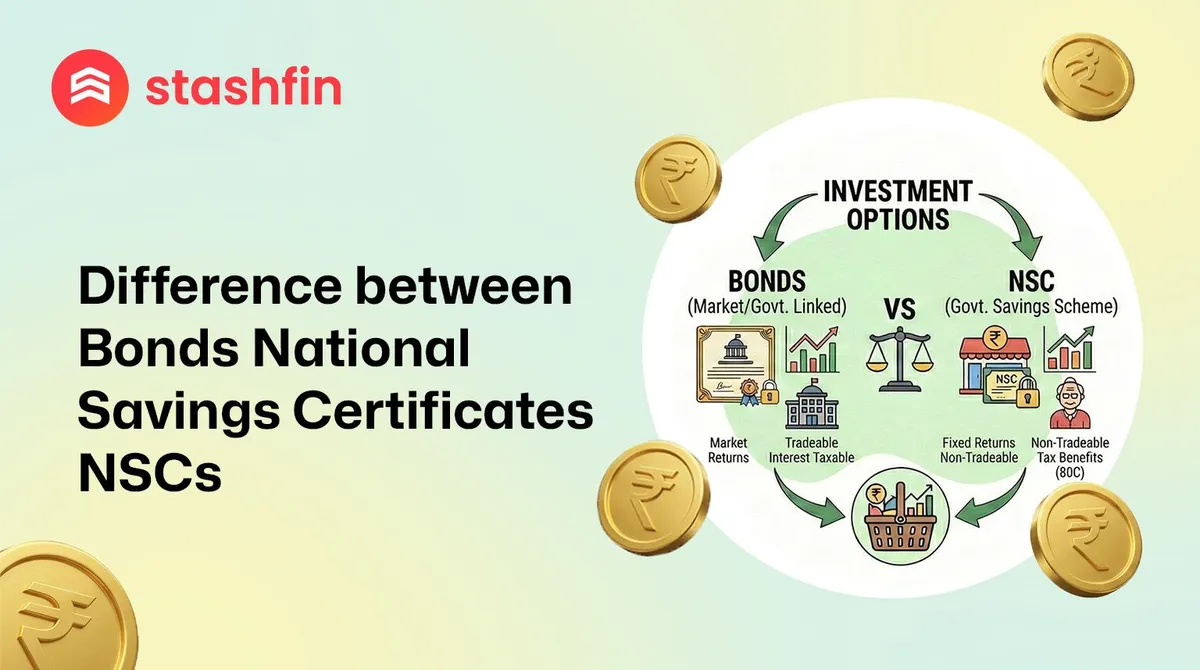
NSC vs Bonds: Secure Your Future in 2026
Navigate the choice between sovereign safety and high-yield growth

- Sovereign Reliability: NSCs are 100% government-backed through the India Post.
- Current Yields: Lock in the 7.7% p.a. NSC rate or explore 14.5% p.a. in corporate bonds.
- Tax Advantages: Utilise Section 80C for NSCs or focus on monthly income with bonds.
- 2026 Market Pulse: With the RBI Repo Rate at 5.25%, debt instruments are the go-to for stability.
What are NSCs and Bonds?
To understand the difference between bond and security or certificate-based savings, we first define the products:
- National Savings Certificate (NSC): A fixed-income savings scheme offered by the Government of India via post offices. It is designed to encourage small-to-mid-scale savings while providing tax deductions.
- Bonds: Debt securities issued by corporations (like Akara Capital) or the government. When you buy a bond, you are lending money to the issuer for a fixed period in exchange for regular interest (coupon) and the return of principal.
Key Differences: NSC vs. Corporate Bonds
In 2026, the primary factor for most investors is the trade-off between the lock-in period and the annual yield.
| Feature | National Savings Certificate (NSC) | Corporate Bonds (Akara Capital) |
|---|---|---|
| Issuer | Government of India (Post Office) | Corporate (NBFC) |
| Current Interest (2026) | 7.7% p.a. (Jan–Mar) | 14.5% p.a. |
| Tenure / Lock-in | 5 Years (Fixed) | 12 Months |
| Payout Frequency | At Maturity (Compounded Annually) | Fixed Monthly Returns |
| Tax Benefit | Yes (Section 80C up to ₹1.5L) | No direct 80C benefit |
| Transferability | Limited (Post office to post office) | Tradable in Secondary Market |
| Minimum Investment | ₹1,000 | ₹10,000 |
Features and Benefits of NSC (2026)
The NSC bonds post office scheme remains a favorite for conservative taxpayers because:
- Guaranteed Safety: Being a post office scheme, it carries zero default risk.
- Tax Efficient Reinvestment: The interest earned for the first four years is automatically reinvested and qualifies for a fresh Section 80C deduction (within the ₹1.5 Lakh limit).
- Collateral Value: All major banks and NBFCs accept NSCs as security for housing or business loans.
- Fixed Rate: Once you buy an NSC, the interest rate (currently 7.7%) is locked for the full 5-year term, regardless of future market changes.
Why Investors are Moving Toward High-Yield Bonds
While NSCs offer safety, the 5-year lock-in and 7.7% return can be restrictive. In the 2026 landscape, where inflation and life goals move faster, Akara Capital Bonds (14.5%) offer:
- Inflation Beating Returns: A 14.5% yield provides a significant "Real Return" above the 5.25% Repo Rate.
- Short Tenure: Your capital is only committed for 12 months, not 5 years.
- Monthly Liquidity: Instead of waiting 5 years for a lump sum, you get credited with interest every single month.
Comparison Example: A ₹10 Lakh investment in NSC earns approx. ₹44,903 in the first year (reinvested). The same ₹10 Lakh in Akara Capital Bonds pays out approx. ₹1,20,833 in interest over just 10 months.


