


Bond vs Security: Clearing the Confusion for 2026 Investors
Understand the relationship between broad financial categories and specific investment tools

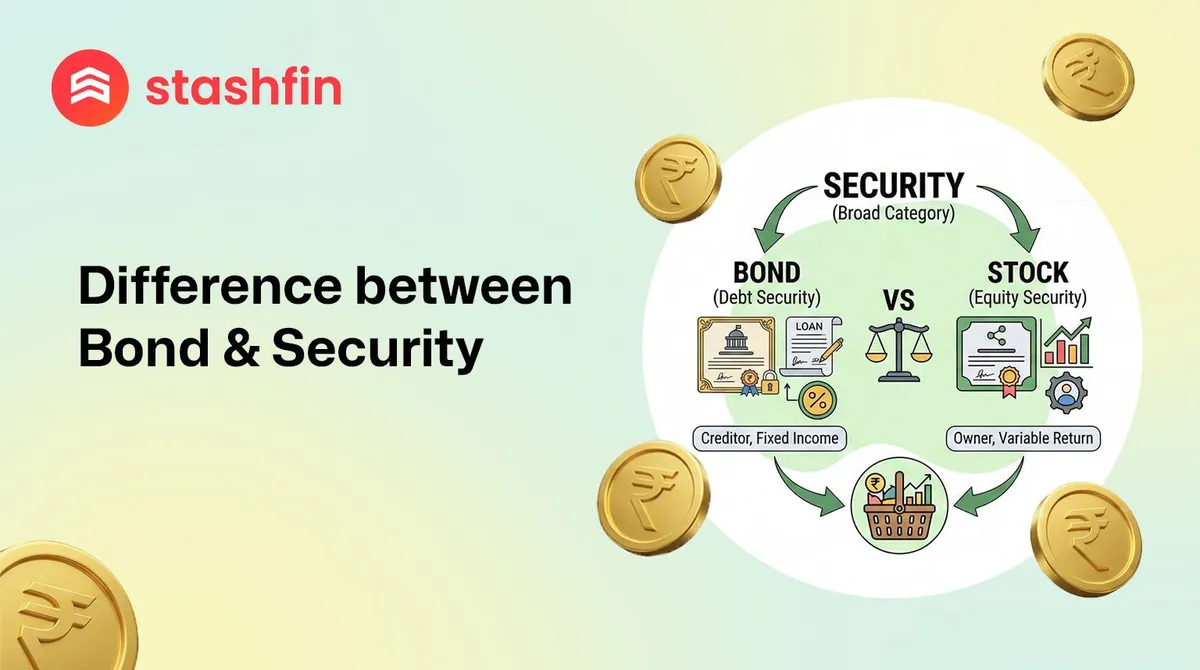
- The Hierarchy: A "Security" is the umbrella term; a "Bond" is a specific type of debt instrument within that category.
- Asset Class Clarity: Distinguish between owning a company (Equity) and lending to one (Debt).
- 2026 Opportunity: Learn how to leverage the 5.25% Repo Rate environment to secure high-yield bonds.
- Predictable Growth: Discover why bonds offer a more stable alternative to volatile stock securities.
What is the Difference Between Bond and Security?
The difference between bond and security is essentially one of category vs. product. In finance, a Security is a broad term for any tradable financial asset. If it can be bought and sold on a market, it is likely a security.
A Bond is a specific type of security, specifically a debt security. When you buy a bond, you are lending money to an issuer (like a government or a corporation) in exchange for periodic interest payments and the return of your principal.
Comparison: Bonds vs. Other Market Securities
To truly understand where bonds fit, it is helpful to compare them against the most common type of security: Stocks (Equity).
| Feature | Bonds (Debt Security) | Stocks (Equity Security) |
|---|---|---|
| Relationship | You are a Lender/Creditor | You are an Owner/Shareholder |
| Primary Goal | Fixed Regular Income | Capital Appreciation |
| Safety Level | Higher (Secured by assets/law) | Lower (High market volatility) |
| Returns | Fixed | Variable (Dividends/Price shifts) |
| Tenure | Fixed | Indefinite (Until you sell) |
| Priority | Paid first during bankruptcy | Paid last (Residual claim) |
Key Types of Securities in the 2026 Market
In 2026, the Indian market offers three main pillars of securities for retail investors:
1. Debt Securities (Bonds & Debentures)
These represent a loan. Examples include Government Securities (G-Secs) and corporate offerings like Akara Capital Bonds. They are ideal for investors seeking "Capital Preservation" and a "Secondary Salary" through monthly interest.
2. Equity Securities (Stocks)
These represent ownership. While they offer the potential for massive growth, they are "unsecured securities," meaning there is no guarantee you will get your principal back if the company fails.
3. Hybrid Securities
These blend features of both. For example, Convertible Bonds allow you to start as a lender and later convert your debt into equity shares if the company’s stock price rises.
Why Bonds are the Preferred "Secure Security" in 2026
With the RBI Repo Rate at 5.25%, investors are shifting from the volatile equity market into high-yield debt securities. Bonds like Akara Capital (14.5% p.a.) have become a benchmark for smart wealth generation because:
- Contractual Certainty: Unlike stocks, which have no "maturity," bonds have a legal end-date where your money must be returned.
- Yield Alpha: While typical bank FDs offer 7%, corporate bond securities in 2026 are providing nearly double the return.
- Monthly Cash Flow: High-yield bond series allow you to receive fixed monthly interest, providing liquidity that equity securities cannot guarantee.


