


Who’s Grading the Debt? The Real Story Behind Credit Rating Agencies in India
Imagine you’re lending ₹10 lakh to a complete stranger. You wouldn’t just hand over the cash on a handshake, right? You’d want to check their bank statements, their job security, and their history of paying back previous loans.

Credit Rating Agencies (CRAs) do exactly that, but on a massive scale. Instead of individuals, they investigate multi-billion-dollar corporations, banks, and even state governments. When a company issues a bond to build a new steel plant or a six-lane highway, these agencies grade how likely that company is to default on its promises.
What Actually Happens Inside a Credit Rating Agency?
Think of a CRA as a financial private investigator. They don’t just casually glance at public balance sheets and call it a day. They:
- Interrogate Management: Sit down with leadership to discuss future revenue models.
- Stress-Test Cash Flows: Simulate how the company handles economic disasters.
- Analyze External Factors: For a solar company, this includes government subsidies and the cost of imported panels.
It’s a brutal, highly quantitative process. But it’s absolutely necessary to keep the bond markets from turning into a blind casino.
Meet the Heavyweights: India’s Top Rating Agencies
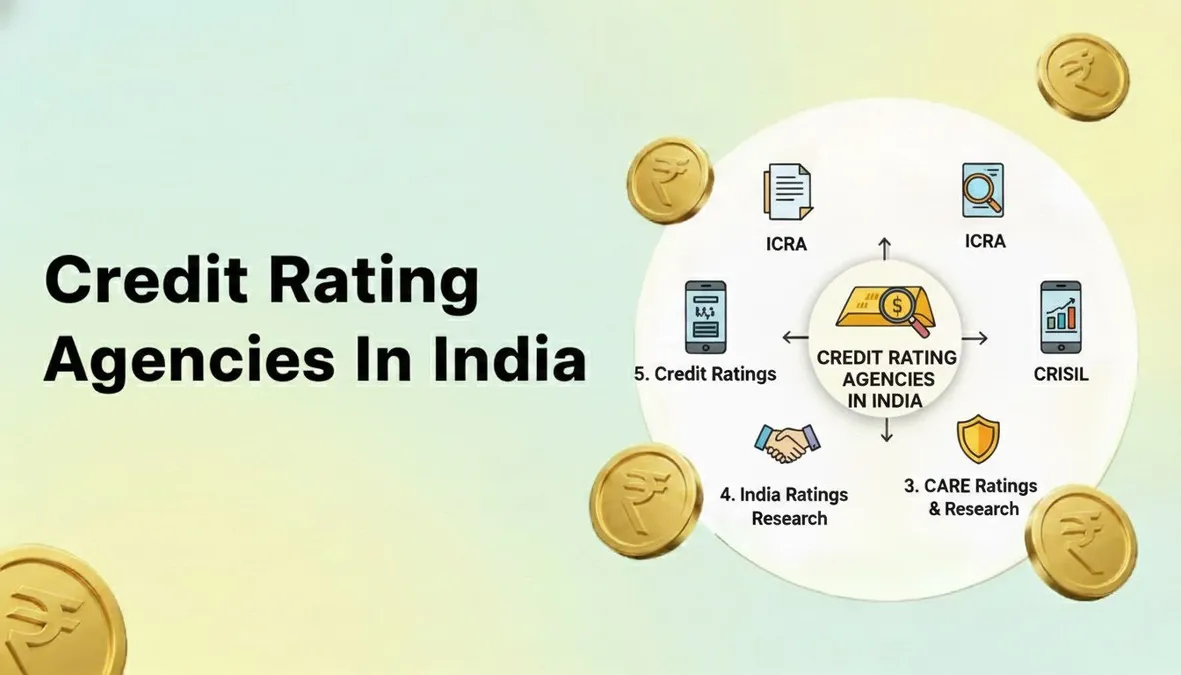
India’s debt market runs on the calculated opinions of a few highly regulated institutions. Currently, seven major players hold the keys to the kingdom.
1. CRISIL: The Market Pioneer
Established in 1987 and backed by S&P Global, CRISIL is the grandfather of Indian ratings.
- Market Share: Commands over 60%.
- Focus: Massive infrastructure projects and blue-chip corporate bonds.
2. ICRA: The Moody’s-Backed Giant
Born in 1991, ICRA brings international analytical standards to local debt through its majority stakeholder, Moody’s.
- Specialty: Mutual funds, corporate governance, and complex financial instruments.
3. CARE Edge: The Debt Evaluator
Starting in 1993, CARE Edge focuses fiercely on corporate debt and bank loans.
- Core Clients: Mid-to-large-scale manufacturing, utilities, and state government bonds.
The Challengers
- Ind-Ra: Backed by Fitch; handles structured finance.
- Acuité Ratings: Originally focused on SMEs, now expanding into large corporate debt.
- Brickwork & Infomerics: Provide alternative perspectives for bank loans and fixed deposits.
Cracking the Alphabet Soup: How to Read a Credit Rating
| Rating Category | Symbol | Meaning |
|---|---|---|
| Highest Safety | AAA | The Gold Standard. Minimal default risk; massive market dominance. |
| Investment Grade | AA to BBB | Solid, reliable companies. Legal for retirement fund investments. |
| Speculative (Junk) | BB and Below | High vulnerability to economic shocks. High interest, high risk. |
| Default | D | The company has already missed a payment. The ship is sinking. |
Who Watches the Watchmen? SEBI’s Iron Grip
The Securities and Exchange Board of India (SEBI) regulates every move these agencies make to prevent "rating shopping" or conflicts of interest.
- Firewalls: Strict separation between analysts and commercial (sales) teams.
- Penalties: Heavy fines for hiding conflicts of interest.
- Surveillance: Mandated monitoring of a company’s health for the entire lifespan of the loan.
Are These Ratings Bulletproof? (Spoiler: No)
Rating agencies aren't fortune tellers. Ratings can lag behind reality, as seen in the IL&FS crisis, where high-rated debt turned toxic overnight.
Critical Note: Treat a credit rating as a baseline filter, not an ironclad guarantee. Always do your own homework before investing.


