


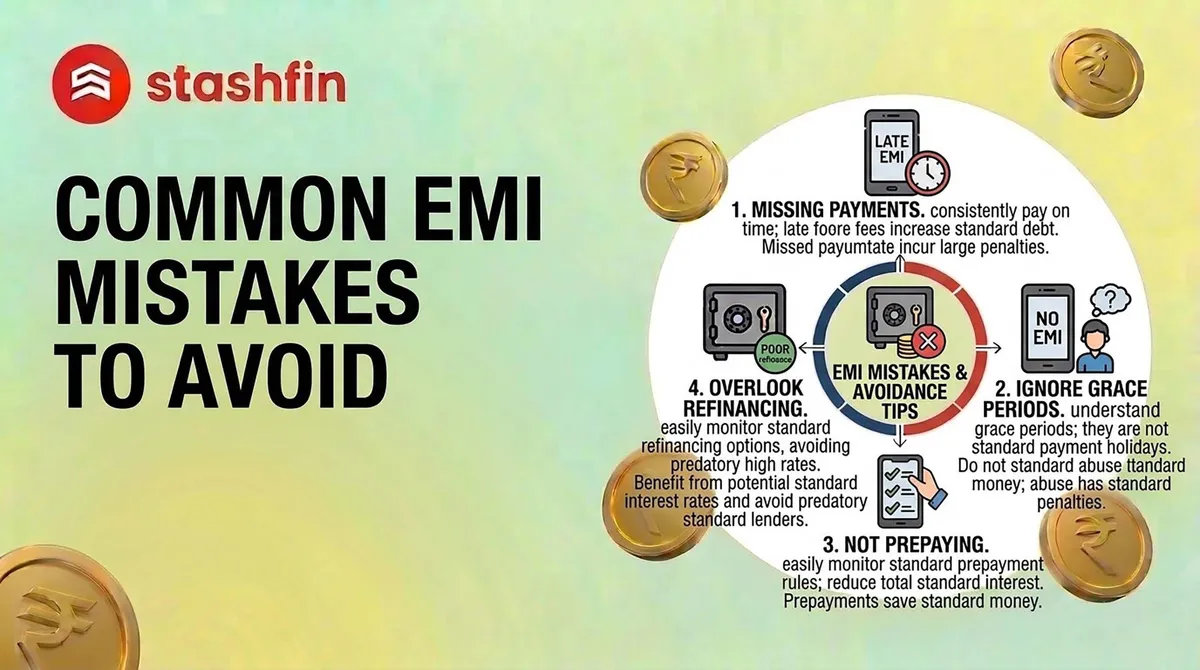
Common EMI Mistakes To Avoid: Protecting Your Financial Health in 2026
Effective EMI management is the difference between building a stellar credit reputation and falling into a debt trap. In the fast-paced financial ecosystem of 2026, avoiding these common pitfalls is essential to staying on top of your finances.

1. Choosing the "Low EMI" Trap (Ignoring Total Interest)
One of the most frequent mistakes is opting for the longest possible tenure simply because it results in a lower monthly payment. While a ₹5,000 EMI feels easier than a ₹10,000 EMI, a longer duration could cost you significantly more in interest over time.
- The Mistake: Focusing only on monthly affordability rather than the Total Cost of Ownership (TCO).
- The Fix: Always calculate the total interest you will pay over the life of the loan. Choose the shortest tenure you can comfortably afford to minimize interest "leakage."
2. Missing the "Buffer Balance" in Your Account
Many borrowers assume that as long as they have money in their account on the due date, they are safe. However, bank processing times or unexpected small debits (like a subscription or a minimum balance fee) can lead to an EMI bounce.
- The Mistake: Maintaining only the exact EMI amount in the account.
- The Fix: Always keep a buffer of at least ₹1,000–₹2,000 extra in your repayment account. This ensures that the auto-debit doesn’t fail due to minor balance fluctuations.
3. Ignoring the Power of E-Mandates (NACH/eNACH)
In 2026, manual EMI payments are a gamble you shouldn’t take. Depending on your memory to pay on time every month is risky and can lead to accidental defaults.
- The Mistake: Relying on manual UPI or net-banking transfers for monthly repayments.
- The Fix: Set up an e-mandate (eNACH) during your loan application. This automates the process, ensuring funds are debited on the due date without human error and demonstrating discipline to lenders.
4. Borrowing More Than Your "Safe EMI" Limit
Lenders might offer you a high credit limit, but utilizing all of it often pushes your Debt-to-Income (DTI) ratio above healthy levels.
- The Mistake: Stretching your total EMIs beyond 40% of your net monthly income.
- The Fix: Financial experts recommend keeping your total EMIs (including car, home, and personal loans) under 30–40% of your salary. Leave enough room for savings, insurance, and emergencies.
5. Overlooking Prepayment Opportunities
Many borrowers treat their EMI as a fixed obligation they cannot change. In reality, most modern lenders, including Stashfin, allow you to pay off your debt faster.
- The Mistake: Never making part-payments or prepayments, even when you have extra funds like a bonus or tax refund.
- The Fix: Check your loan agreement for zero-foreclosure charges. If allowed, make small prepayments to the principal amount to reduce future interest and shorten your loan tenure.
The Real Cost of a Missed EMI in 2026
| Consequence | Impact Level | Description |
|---|---|---|
| Credit Score Drop | Critical | A single missed EMI can drop your score by 50–70 points instantly. |
| Late Fees | High | Lenders charge flat fees (₹500+) plus penal interest (2–4% extra). |
| Weekly Reporting | New for 2026 | Under RBI rules, defaults are reported weekly; other lenders see missteps within 7 days. |
| Legal/Recovery | Escalating | Persistent defaults lead to an NPA marking, triggering recovery actions. |
Conclusion
Managing your EMIs is less about math and more about behavior. In 2026, where credit opportunities are unlocked in seconds for those with a clean record, your EMI discipline is your most valuable asset. By automating your payments, keeping a buffer, and choosing tenures wisely, you ensure that your loan remains a stepping stone to your goals, not a stumbling block.
At Stashfin, we provide the tools, like our EMI Calculator and instant credit line, to help you plan perfectly. Remember: a loan is a promise to your future self. Keep it well.


