


 Back
Back

Bonds vs. Stocks: Choosing the Right Asset for Your 2026 Goals
What is the Difference Between Bonds and Shares?
To navigate the 2026 financial landscape, you must understand the fundamental difference between bonds and shares.


What are Stocks (Shares)?
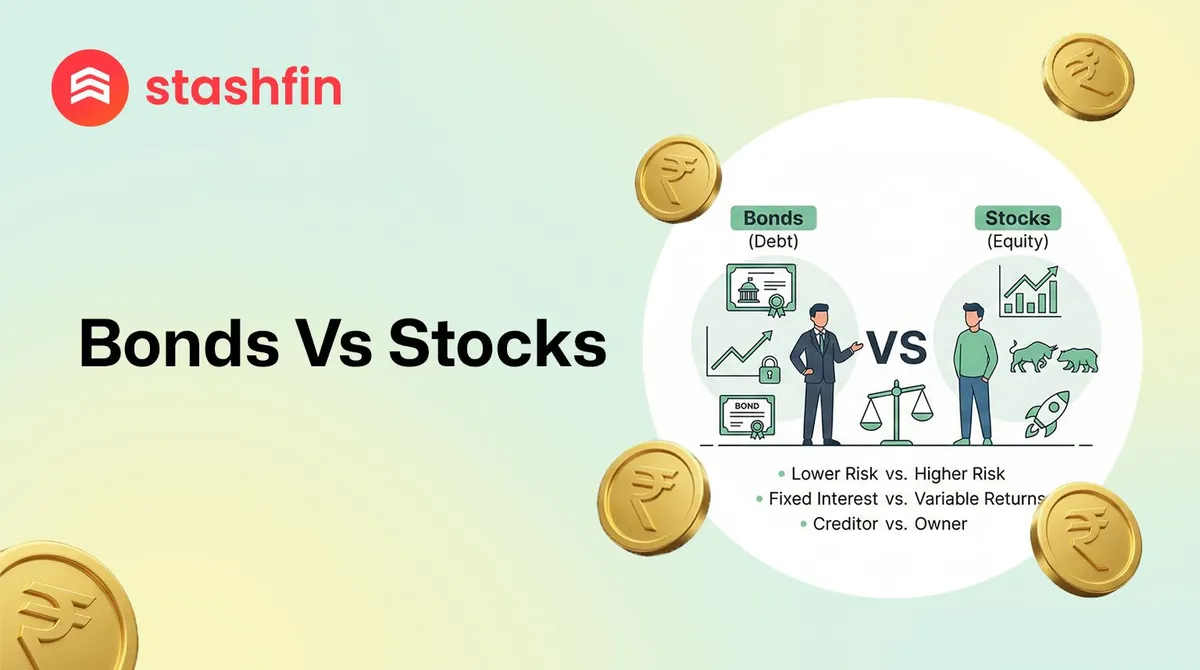
When you buy stocks, you are buying equity. You become a partial owner of the company. You profit if the company's value grows (capital appreciation) or if it pays dividends. However, your returns are never guaranteed, and your principal is subject to daily market fluctuations.
What are Bonds?
When you invest in bonds, you are a creditor. You are lending money to an entity (like Akara Capital) for a fixed tenure. In return, the issuer is legally bound to pay you periodic interest and return your full principal at maturity.
Bonds vs. Stocks: The 2026 Market Context
In January 2026, the RBI Repo Rate stands at 5.25%. This shift toward a neutral-to-dovish stance has created a unique environment for stocks and bonds:
- Equity Volatility: While the Nifty 50 remains strong, high valuations have made many investors jittery about a potential correction.
- Bond Yield Alpha: Corporate bonds like Akara Capital now offer an "Alpha" return of 14.5%, which significantly exceeds the average earnings yield of many large-cap stocks.
- Income Stability: In a year where global growth is cooling, the monthly cash flow of a bond provides a safety net that variable stock dividends cannot match.
Equities vs. Bonds: Risk and Return Matrix
Choosing which is better, stock or bond, depends on your risk appetite and time horizon.
| Feature | Stocks (Shares) | Corporate Bonds (Akara) |
|---|---|---|
| Investor Status | Owner (Shareholder) | Lender (Creditor) |
| Annual Return | Variable (Market-linked) | Fixed 14.5% p.a. |
| Risk Level | High (High Volatility) | Low-Medium (Credit Risk) |
| Priority in Default | Last in line | High (Paid before Owners) |
| Standard Tenure | Indefinite (No maturity) | 10 Months (Standard) |
| Income Type | Optional Dividends | Guaranteed Monthly Interest |
Features and Benefits of Stock (Equity)
- Unlimited Growth: No cap on how much a stock price can rise.
- Voting Rights: Influence corporate decisions and elect the board.
- Compounding: Ideal for 5-10 year long-term wealth building.
Features and Benefits of Bond (Debt)
- Capital Preservation: Defined maturity ensures your principal returns.
- Regular Cash Flow: Perfect for monthly expenses or reinvesting.
- Lower Volatility: Bond prices move less sharply than stocks, keeping your portfolio stable.
Why Stashfin for Your Bond Allocation?
Stashfin makes it easy to add the "stability leg" to your portfolio by offering high-yield corporate debt with institutional-grade transparency.
| Benefit | Stashfin | Traditional Stock Broking |
|---|---|---|
| Yield Focus | Optimised for 14.5% p.a. | Focuses on capital gains |
| Asset Type | Curated High-Yield Bonds | Usually only liquid stocks |
| Onboarding | 100% Digital & Paperless | Often requires heavy documentation |
| Payouts | Fixed Monthly Returns | Unpredictable (Dividend-based) |
How to Build a "Balanced" Portfolio
Don't choose one; use both. A common 2026 strategy is the 70/30 Rule:
- 70% in Stocks: For long-term growth and beating inflation over 5+ years.
- 30% in High-Yield Bonds: Use the 14.5% Akara Capital Bonds to provide a monthly income "cushion" and reduce the overall volatility of your wealth.


