


Understanding Comprehensive Credit Reporting and Its Impact
For decades, credit reporting in India was a "punitive" system. If you missed a payment, you were flagged. If you defaulted, you were blacklisted. But if you were a disciplined borrower who paid every EMI on time for ten years? The system barely acknowledged your excellence beyond a simple numerical score.

That has fundamentally changed. We have entered the era of Comprehensive Credit Reporting (CCR).
In 2026, your credit report is no longer just a "naughty list" of financial mistakes. It is a living, breathing digital biography that highlights your positive behaviors just as clearly as your slips. With the Reserve Bank of India (RBI) now mandating near real-time data updates, understanding CCR is no longer optional, it is the key to navigating the modern economy.
What is Comprehensive Credit Reporting (CCR)?
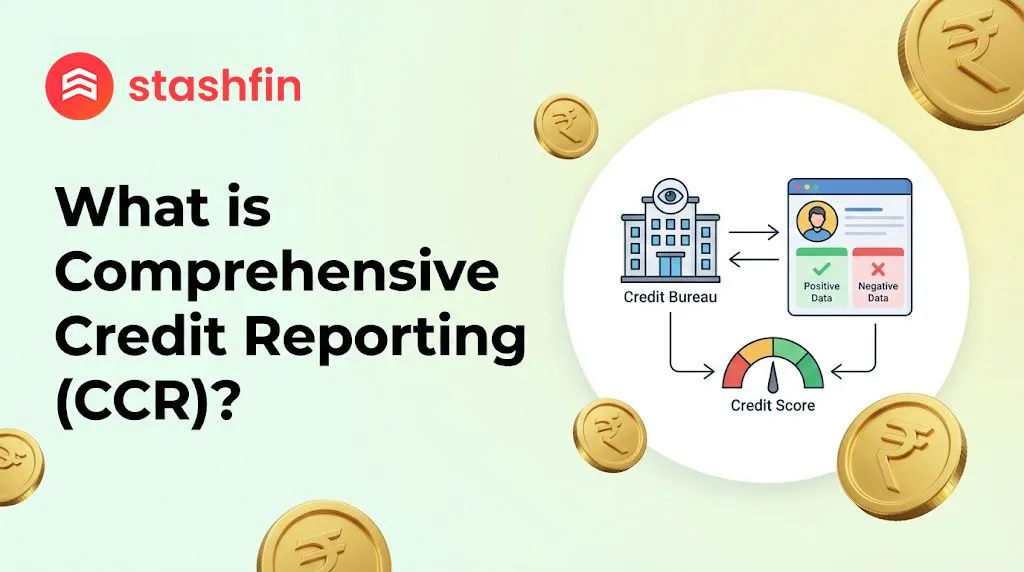
Comprehensive Credit Reporting is a data-sharing framework where lenders provide a full-spectrum view of a borrower's credit behavior to bureaus.
Unlike the "Negative Reporting" systems of the past, which primarily tracked defaults, bankruptcies, and court judgments, CCR includes positive data. This means every on-time payment, every responsible credit limit increase, and every successfully closed account works in your favor.
The "Positive Data" Revolution
Under CCR, the four major bureaus (CIBIL, Experian, Equifax, and CRIF High Mark) now track:
- Repayment History Information (RHI): A 24-month granular view of whether you paid on time, every time.
- Account Status: When you opened an account and, more importantly, when you successfully closed one.
- Credit Limits: Your highest available limit versus your actual usage, providing a clear picture of your Credit Utilisation Ratio.
- Product Diversity: Your experience with various credit types, including traditional loans and modern Buy Now Pay Later (BNPL) products.
How CCR Works in 2026: The Weekly Reporting Mandate
The biggest shift in 2026 is the speed of data. Following the RBI’s 2025 directives, the "monthly snapshot" is dead. As of July 2026, all banks and NBFCs are required to transition to weekly incremental reporting.
The Mechanics of Modern Reporting:
- Event Trigger: You make a payment on the 5th of the month.
- Incremental File: By the 9th (the next weekly reference date), the lender flags this "incremental change."
- Bureau Update: The credit bureau processes this data within 24-48 hours.
- Score Reflection: Your credit score adjusts almost in real-time.
This eliminated the "30-day lag" where a borrower would clear a massive debt but still see a "maxed out" status on their report for weeks, preventing them from taking a new, lower-interest loan.
CCR vs. Traditional Negative Reporting
To appreciate the strategic advantage of CCR, we must compare it to the legacy system it replaced.
| Feature | Legacy Negative Reporting | Comprehensive Credit Reporting (CCR) |
|---|---|---|
| Data Scope | Only defaults and serious delinquencies. | Both positive (on-time) and negative data. |
| Visibility | Lenders saw you as "clean" or "defaulted." | Lenders see your specific payment habits. |
| Reporting Frequency | Monthly (often with 45-day lags). | Weekly (Near real-time). |
| Recovery Speed | Years of "cleaning" required. | Fast recovery via consistent positive data. |
| Credit Access | Difficult for "New-to-Credit" users. | Easier access via alternative data/small wins. |
Why Comprehensive Credit Reporting is a Game-Changer
Faster Recovery from Financial Hardship
In the old system, a single default could ruin your credit for seven years. Under CCR, if you hit a rough patch but then spend twelve months making perfect, on-time payments, that positive trend is visible to lenders. They can see you have "corrected course," allowing you to access credit much sooner than before.Rewarding the "Silent" Good Borrowers
Millions of Indians pay their utility bills and small EMIs on time but were never "rewarded" with a high score because they didn't have a massive home loan. CCR captures these smaller positive signals, helping "New-to-Credit" individuals build a high score through sheer discipline.Precision in "Risk-Based Pricing"
Lenders in 2026 use CCR to offer Tiered Interest Rates.
- Borrower A (780 Score, Perfect CCR): Gets a personal loan at 10.5%.
- Borrower B (720 Score, Occasional CCR Lags): Gets the same loan at 13%.
Your disciplined data directly translates into lower interest costs.
The Role of AI and Machine Learning in CCR
With weekly data flowing into bureaus, human underwriters can no longer keep up. Credit bureaus now use AI to generate a Propensity Score. This score predicts not just if you will pay, but when you might experience stress based on subtle changes in your weekly utilisation patterns.
For example, if you suddenly start using 90% of your credit limit across three different BNPL apps in a single week, the AI flags this as "stress behavior" even before you miss a payment. This allows lenders to be proactive and you to be cautious.
Your Rights and Responsibilities in a CCR Environment
With more data comes the need for higher accuracy. The RBI has instituted a Compensation Mechanism to ensure bureaus and banks take CCR seriously.
- The 30-Day Rule: If you dispute an error (e.g., a payment marked as "late" when it was "on-time"), the bank and bureau must resolve it within 30 days.
- Delayed Rectification Penalty: If the error isn't fixed within 30 days, the lender is liable to pay you ₹100 per day as compensation.
- Mandatory Data Quality Index (DQI): Lenders are now graded on the accuracy of the data they send to bureaus. High-quality data leads to smoother approvals for you.
CCR to build your Creditworthiness
Comprehensive Credit Reporting has turned your financial behavior into a valuable asset. In 2026, you are no longer at the mercy of a static, lagging score. You have the power to influence your creditworthiness every week.


