


 Back
Back

What is Asset Allocation? A Simple Guide to Growing Your Wealth
Imagine you are making a fruit salad. If you only use apples, it might be okay. But if the apples go bad, you have no snack left. If you use apples, bananas, grapes, and berries, your snack is better. Even if the grapes are sour, you still have the rest of the fruit to enjoy.


Asset allocation is just like that fruit salad. It is a plan for your money where you do not put all your funds in one place. Instead, you split it up across different categories:
- Stocks: To help your money grow.
- Bonds: To keep your money safe.
- Cash/Gold: For stability and emergencies.
By doing this, you protect yourself. If one "fruit" in your money salad goes bad, the others keep you safe. This is how smart people keep their money growing for a long time.
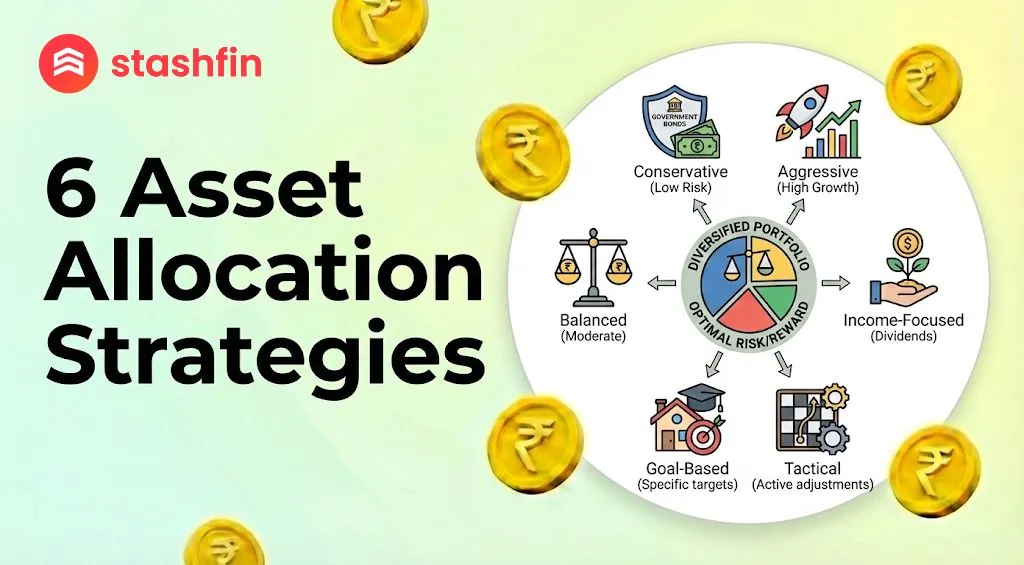
6 Simple Strategies for Your Money
There are many ways to split your money. Here are six simple paths you can take to manage your portfolio effectively.
1. The Strategic Mix (Set it and Forget it)
This is the most basic plan. You pick a mix that feels right and you stay with it regardless of market fluctuations.
- How it works: You decide on a fixed percentage for each bucket (e.g., 60% stocks, 40% bonds).
- The Rule: You do not change your mind because the news is scary.
- Why use it: It is very low stress and works well for long-term wealth building.
2. The Tactical Move (The Quick Change)
This plan is for people who like to pay attention to market trends. It is a bit like driving a car; usually, you go straight, but you steer if you see a pothole.
- How it works: You start with a basic mix but move funds if you see a great chance to make money.
- Example: If the stock market is very low and "on sale," you might move more money into stocks.
- Why use it: It helps you seek extra gains by being active and looking for deals.
3. The Age Rule (The 100 Method)
This is a simple mathematical formula to help you decide how much risk to take based on your current age.
- The Math: $100 - \text{Your Age} = \text{% in Stocks}$
- Example: If you are 30 years old ($100 - 30 = 70$), you put 70% in stocks and 30% in safe bonds.
- Why use it: It automatically makes your money "safer" as you get older and have less time to recover from losses.
4. The Core and Satellite (The Anchor Plan)
This plan uses a "middle" and "edges" approach, similar to a large ship surrounded by small scout boats.
- The Core: You put the most money (70-80%) into safe, broad funds. This is your steady anchor.
- The Satellites: You take the remaining small amount and put it into "exciting" sectors like AI technology or Gold.
- Why use it: You get the safety of a big fund with the potential for "big wins" from specific investments.
5. The Dynamic Shift (The Smart Robot)
In 2026, many people use computer algorithms to assist them. This is often called Dynamic Allocation.
- How it works: This plan changes constantly based on the "weather" of the economy.
- The Benefit: If the economy weakens, the plan automatically moves money into safe spots like gold or cash.
- Why use it: It acts as a moving shield, protecting you from market crashes before they happen.
6. The Risk-First Plan (The Safety Net)
While most plans look at how much you want to make, this plan looks at how much you can afford to lose.
- How it works: You look at each part of your portfolio and ask, "How much could this drop?"
- The Goal: You want each part of your mix to have the same amount of risk.
- Why use it: It provides a very steady balance, making it a popular choice for retirees.
Why You Need a Diversified Mix
Investing is not about being lucky once; it is about staying in the game for a long time. A proper asset allocation provides:
- Safety: When one asset class goes down, another often goes up, leveling your balance.
- Growth: Stocks help your money outpace the rising cost of living (inflation).
- Peace of Mind: A solid plan stops you from making emotional choices during market scares.
Remember: There is no "perfect" plan for everyone. The best plan is the one you can stick to for ten years or more.


