


 Back
Back

20 Lakh Personal Loan EMI for 10 Years: The Strategic 2026 Guide
When you require a high-ticket amount like ₹20 Lakhs, the immediate concern is the impact on your monthly liquidity. While standard personal loans usually cap their tenure at 5 or 7 years, certain lenders in 2026 have introduced 10-year repayment windows for premium borrowers.


Choosing a 120-month tenure is a major commitment. It significantly lowers your monthly EMI, but it increases your total interest outgo. This guide breaks down the math, the eligibility, and the long-term financial implications of a ₹20 Lakh personal loan for 10 years.
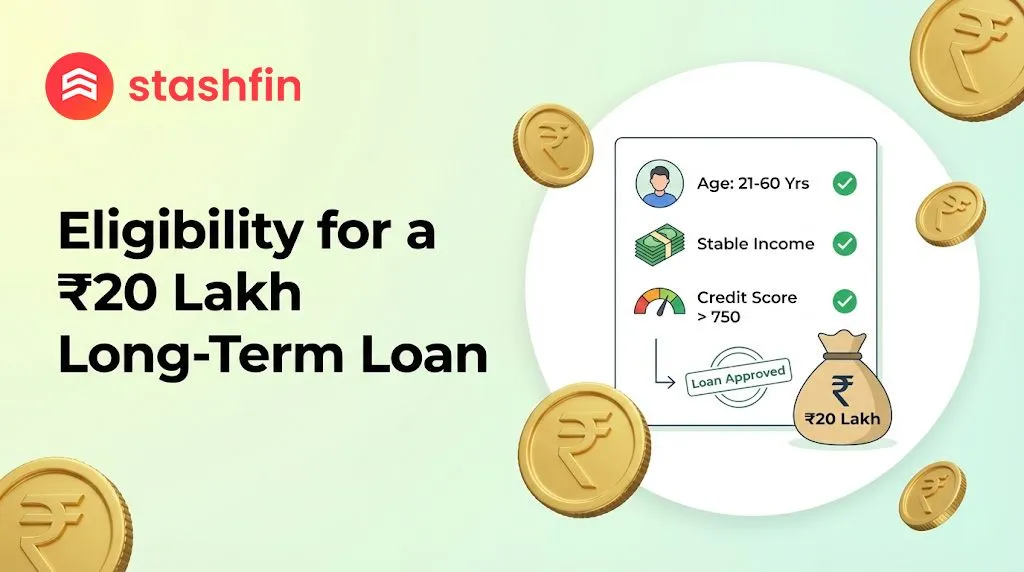
Eligibility for a ₹20 Lakh Long-Term Loan
Securing a ₹20 Lakh loan for a 10-year term requires a robust financial profile. Lenders view a 10-year unsecured commitment as high-risk, so they look for:
High Credit Score: A CIBIL score of 750 or above is typically the baseline for long-tenure approvals.
Stable Monthly Income: For a ₹20 Lakh loan, most lenders require a minimum net monthly salary of ₹50,000 to ₹75,000, ensuring your FOIR (Fixed Obligation to Income Ratio) stays below 40%.
Employment Vintage: Lenders prefer employees of Category A companies (MNCs, Top-tier Private Firms, or Government Departments) with at least 3–5 years of total work experience.
Age Limits: You must typically be between 23 and 58 years old. Lenders ensure that the loan tenure ends before your retirement.
Mandatory Documentation
The documentation for a high-value loan in 2026 is largely digital, but accuracy is paramount:
Identity & Address Proof: Aadhaar, PAN Card, and Passport/Voter ID.
Income Proof: Latest 3 months' salary slips and Form 16 for the last 2 years.
Bank Statements: Last 6 to 12 months’ bank statements showing salary credits.
Business Proof (for Self-Employed): 3 years of audited balance sheets and ITR filings.
The Strategic Trade-off: Pros and Cons of a 10-Year Tenure
Advantages:
Superior Cash Flow: The primary benefit is a lower EMI. Spreading ₹20 Lakhs over 10 years instead of 5 years reduces your EMI by nearly 40%, leaving you with more disposable income for daily expenses or investments.
Higher Eligibility: A lower EMI increases your chances of approval if you already have other existing liabilities.
Flexibility for Prepayment: Many modern lenders like Stashfin offer zero foreclosure charges. You can take the 10-year tenure for "safety" but pay it off earlier when you receive a bonus or windfall.
Disadvantages:
Massive Interest Outgo: You may pay back almost double what you borrowed.
Extended Debt Burden: You are carrying a liability on your credit report for a decade, which might limit your eligibility for a Home Loan or Car Loan in the future.
Interest Rate Risk: If you opt for a floating rate, a hike in the repo rate can significantly increase your tenure or EMI.
Comparing the Alternatives
Before locking in a 10-year personal loan, consider if these options serve you better:
Loan Against Property (LAP): If you own a home, a LAP usually offers interest rates of 8.5%–9.5% for tenures up to 20 years, significantly reducing your cost.
Top-up Home Loan: If you have an existing home loan, a top-up is the cheapest way to get ₹20 Lakhs, with rates often matching your home loan rate.
Step-Up EMI Plans: Some lenders allow you to start with a lower EMI that increases as your salary grows, helping you close the loan in 5–7 years instead of 10.
Tool for Liquidity Management
A ₹20 Lakh personal loan for 10 years is a tool for liquidity management. It is ideal for those who need a large sum for essential purposes, like home renovation or child's education, but cannot afford the high EMIs of a short-term loan.
However, given the high interest cost, the best strategy is to opt for the long tenure for safety, but actively make part-prepayments to close the loan within 5–6 years. This gives you the best of both worlds: a safety net of low EMIs and the cost-efficiency of a shorter loan.


